
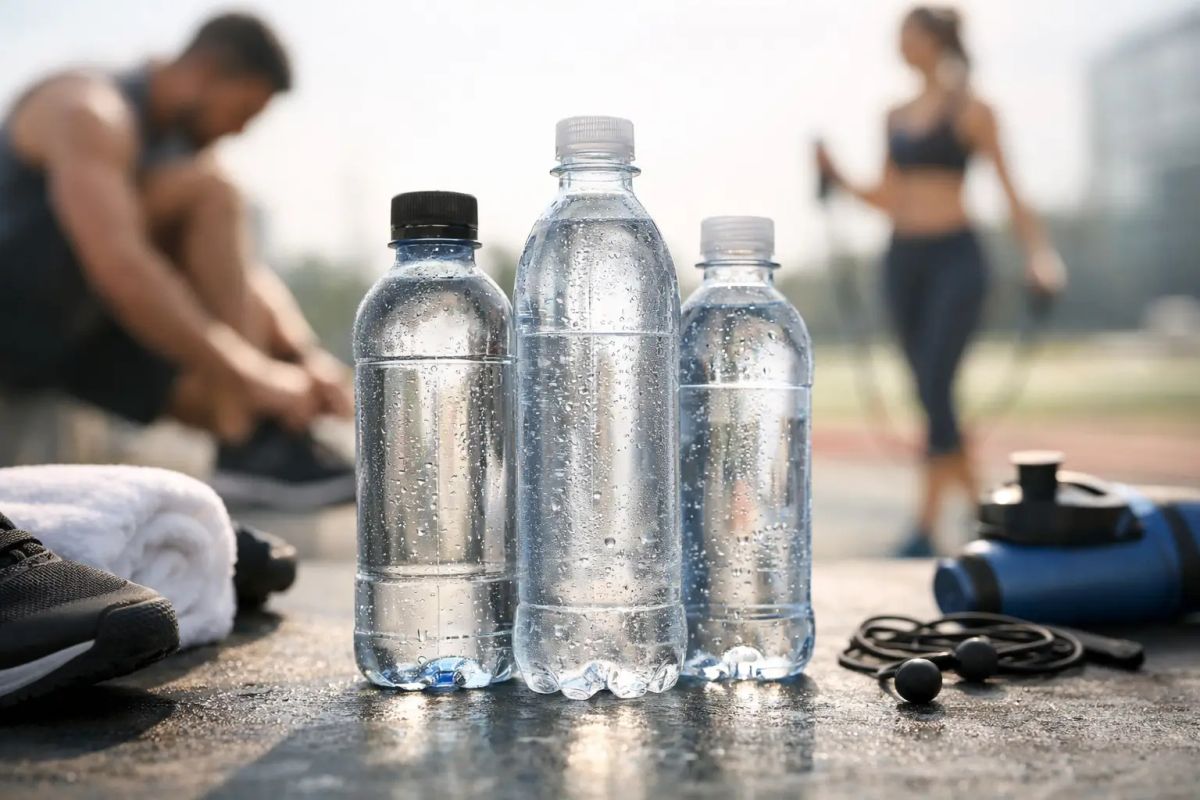
A bottle grabbed between a morning run, an airport connection, or a long day at the club can look like a simple purchase. Yet the best bottled waters for athletes are rarely defined by a dramatic front-label promise. The more revealing details are often quieter: source, mineral composition, carbonation, bottle format, and the way a water actually tastes when served cold.
For anyone who approaches training with intention, water deserves the same discernment given to coffee, shoes, or a pre-event meal. There is a world inside every bottle. Reading it well turns a routine choice into an informed one.
What Makes the Best Bottled Waters for Athletes?
There is no single best bottle for every athlete, every setting, or every palate. A still, low-mineral water may feel clean and unobtrusive in a gym bag. A naturally mineral-rich water may offer a more structured taste at lunch. Sparkling water can be a welcome change of pace at a restaurant, while its bubbles may simply be less appealing when you want something quiet and straightforward.
The useful question is not, “Which bottle wins?” It is, “Which water fits this moment?” Start with four considerations: still or sparkling, mineral profile, source character, and practical packaging.
Still or sparkling
Still water is the most versatile format. It has no carbonation to shape its texture or alter the way it pairs with food, so the mineral profile is easier to notice. Many people prefer it in fast-moving settings because it is uncomplicated: open, pour, drink.
Sparkling water brings a different experience. Carbon dioxide creates lift, brightness, and a fine or forceful mousse depending on the producer. It can make a table setting feel more deliberate and can be especially interesting alongside salty snacks or rich food. That said, sparkling is a taste preference, not a requirement. If you dislike the sensation of bubbles, no amount of elegant branding changes that.
Mineral profile
Every natural water has a composition. Calcium, magnesium, sodium, bicarbonate, sulfate, chloride, and silica are among the mineral markers that may appear on a label or technical analysis. Their amounts, and their relationship to one another, shape both the water’s identity and its sensory impression.
Calcium and magnesium often contribute a firmer, more mineral-forward palate. Bicarbonate can lend softness, a subtly creamy texture, or a rounded finish. Sodium may make a water seem more savory or lively, especially when present at a noticeable level. Sulfate can read as dry, crisp, or slightly bitter. None of these descriptors is inherently good or bad. They are the vocabulary of preference.
A water’s TDS, or total dissolved solids, is another helpful signal. It describes the total concentration of dissolved material, usually expressed in milligrams per liter. Lower-TDS waters often taste light and delicate. Higher-TDS waters can feel denser, more saline, more chalky, or more layered. TDS is not a quality score. It is a clue to style.
Source and provenance
Spring, mineral, artesian, purified, and sparkling are not interchangeable words. They point to different source stories and production approaches. A natural mineral water may carry a strong sense of place, reflecting a protected underground source and its geological journey. A purified water may offer a more neutral, consistent profile.
For a premium water drinker, provenance matters because it gives flavor context. The limestone, volcanic rock, glacial terrain, or deep aquifer associated with a source can influence the water’s mineral signature. Think of it as terroir in its most transparent form. The bottle is not just a vessel. It is an origin story you can taste.
Format and availability
The best choice is also one you can carry, chill, open, and finish comfortably. A lightweight PET bottle can suit a packed schedule. Aluminum may be convenient in venues where glass is not permitted. Glass feels at home at a dinner table or in a hospitality setting, but it is heavier and less practical for every outing.
Availability deserves honesty, too. A rare imported mineral water can be memorable, but a bottle you genuinely enjoy and can find consistently is often the smarter staple. Save the more distinctive waters for moments when you want to pay attention to them.
How to Read a Water Label Like a Buyer
Front labels tend to emphasize atmosphere: mountains, springs, purity, and pristine landscapes. Those details can be meaningful, but the back label or producer analysis is where the water becomes legible.
Look first for the source designation. Is it spring water, natural mineral water, artesian water, purified water, or a product with added carbonation? Then look for a mineral analysis, if provided. The most useful figures are calcium, magnesium, sodium, bicarbonate, sulfate, chloride, pH, and TDS.
pH is frequently marketed as a headline number, but it tells only one part of the story. It describes acidity or alkalinity at the time of measurement, not flavor, origin, or overall mineral structure. Two waters with similar pH can taste completely different because their dissolved minerals differ. Treat pH as context, not a verdict.
Sodium is another figure that benefits from perspective. A number on a label is simply part of the water’s composition. It may be barely perceptible in one bottle and lend a gently savory note in another. Comparing labels side by side is far more informative than treating any one number as universally desirable.
If a label lacks a detailed mineral panel, that does not automatically make the product poor. It just leaves you with less information for comparison. In that case, source type, taste, carbonation level, and packaging may guide the decision.
A Simple Selection Framework
Rather than chasing a ranking, build a small personal rotation. Keep one clean, still water for everyday convenience. Add one water with a more pronounced mineral character for meals or slower moments. If you enjoy carbonation, choose a sparkling bottle whose bubble size and finish you find refined rather than aggressive.
When comparing bottles, taste them at the same temperature and in the same type of glass when possible. A cold bottle can mute subtle flavor differences, while a slightly less chilled pour may reveal more texture and mineral character. Notice the first impression, mid-palate, and finish. Does it feel crisp, silky, saline, dry, chalky, sweet-leaning, or neutral? These are not pretentious questions. They are practical ways to recognize what you like.
For athletes who travel or spend time in changing venues, it can also help to separate “default” from “destination” water. Your default is the reliable bottle that works across ordinary days. Your destination bottle is the one you choose because its source, mineral structure, or presentation makes the occasion more interesting.
Avoid These Common Shortcuts
A flashy claim is not a substitute for composition. “Electrolytes” is often used as a catchall term, yet a thoughtful buyer should still ask which minerals are present and in what amounts. Likewise, high pH, a dramatic source story, or an expensive package does not automatically mean the water will suit your palate.
It is also easy to assume that more minerals always means better water. Not so. A low-mineral water can be exquisite in its restraint. A high-mineral water can be captivating for its depth. The right choice depends on what you enjoy and when you plan to drink it.
Finally, do not overlook freshness and storage. Heat, direct sunlight, and long periods in a car can compromise the pleasure of any bottled beverage. Choose bottles from well-kept displays, and serve them at a temperature that lets their character come through.
Let Curiosity Lead the Choice
Water Sommelier offers a practical way to make label reading more immediate. Point your phone camera at a bottle to identify the product and surface educational details about its mineral composition, pH, TDS, and source origin. Point. Shoot. Know.
The point is not to turn every bottle into a spreadsheet. It is to develop a sharper instinct. Over time, you may find that you favor soft, low-TDS waters for their clean finish, or that you return to bicarbonate-rich mineral waters for their rounded, culinary character. You may learn that fine bubbles feel elegant while large bubbles distract from the meal.
The best bottle is the one whose origin, composition, format, and taste make sense for the occasion. Read the label, notice the palate, and let each bottle teach you something new about what is in your glass.
Scan any bottle. Discover its minerals, origin, and character. Get the Water Sommelier app