
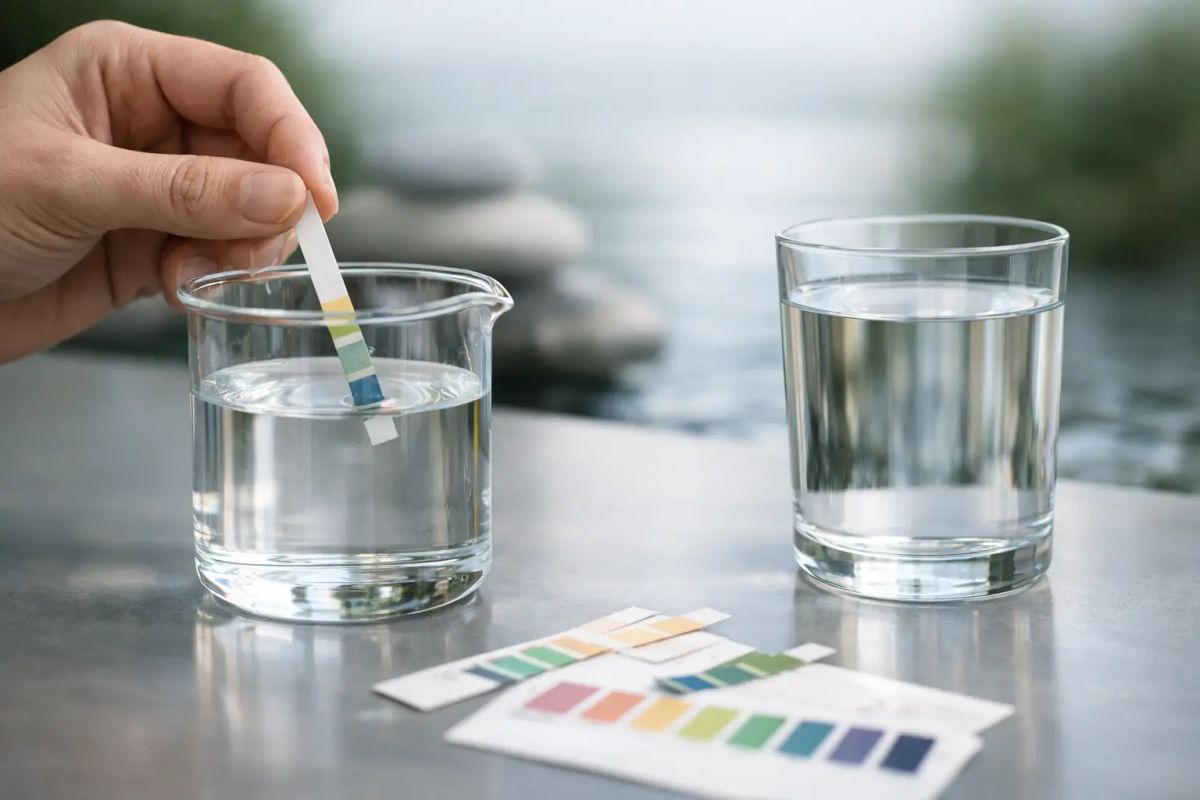
You pick up a bottle, scan the label, and see a number like 7.8 or 8.5. It looks decisive, almost like a verdict on quality. But if you have ever wondered what does water pH mean, the answer is more nuanced than marketing often suggests.
pH tells you how acidic or alkaline water is at the moment it is measured. That matters, but not in the simplistic way many people assume. In fine water, as in wine or coffee, one number can be useful without telling the whole story. The character of a water comes from balance - source, mineral composition, dissolved solids, and yes, pH.
What does water pH mean in simple terms?
pH is a scale that measures how acidic, neutral, or alkaline a liquid is. The scale runs from 0 to 14. A pH of 7 is considered neutral. Numbers below 7 are acidic, and numbers above 7 are alkaline.
With water, that means a bottle at 6.5 is slightly acidic, while one at 8.2 is slightly alkaline. Most bottled waters sit somewhere near neutral, though some natural sources fall higher or lower depending on the geology around them.
The key detail is that the pH scale is logarithmic. That sounds technical, but the practical takeaway is simple: a small change in pH is not small in chemical terms. Water with a pH of 8 is quite different from water with a pH of 7, even though the numbers appear close together.
Why pH shows up on premium water labels
pH has become one of the most visible numbers in the bottled water world because it is easy to print, easy to compare, and easy to market. But visibility is not the same as importance.
A high pH does not automatically make a water better. A low pH does not automatically make it worse. What pH can do is offer one clue about a water's profile and origin. Spring waters, artesian waters, volcanic waters, and mineral-rich sources can all land at different points on the scale based on the rocks and natural conditions that shape them.
For people who care about taste, pH can also hint at how a water may present on the palate. It is not a flavor on its own, but it can influence perception. Some lower-pH waters feel brighter or softer. Some higher-pH waters can seem rounder or flatter depending on their mineral balance. The experience is rarely about pH alone.
What does water pH mean for taste?
This is where the conversation gets more interesting.
Water is often described as if it has no taste, but anyone who regularly drinks premium bottled water knows that is not true. Some waters feel crisp and quick. Others are creamy, silky, chalky, saline, or almost sweet. pH plays a role in that sensory impression, yet minerals usually do more of the heavy lifting.
A water with a moderate alkaline pH and high bicarbonate may feel smooth and structured. A water with lower mineralization and a neutral pH may taste clean and light. Another with a similar pH but different calcium and magnesium levels can feel firmer, more textured, even more gastronomic.
That is why tasting water by pH alone is like judging a wine by alcohol percentage. Useful, yes. Complete, not even close.
pH and minerals - the relationship most people miss
The most common misunderstanding is treating pH as an isolated quality marker. In reality, pH is tied to chemistry.
Minerals in water, especially bicarbonate, calcium, and magnesium, help shape how stable and expressive that pH feels. A naturally sourced water with a higher pH often gets there because of the mineral environment it moved through underground. Limestone, volcanic rock, and other geological conditions leave signatures behind.
That means two waters can both have a pH of 8.0 and taste entirely different. One may feel elegant and velvety. Another may feel dense and mineral-driven. The number is the same. The composition is not.
This is one reason serious water evaluation looks at the full profile rather than a single claim on the front of the bottle. pH matters more when you understand what sits around it.
Is higher pH water always better?
No. And this is worth saying plainly.
Higher pH water is often positioned as premium, but premium is not defined by alkalinity alone. Some exceptional waters sit close to neutral. Others are naturally alkaline. What matters is authenticity of source, mineral harmony, and the drinking experience you want.
If you are pairing water with food, for example, the "best" pH depends on context. A delicate still water with a restrained profile may suit raw seafood or fresh cheese better than a bold, mineral-heavy bottle. A more structured water may stand up beautifully to richer dishes. In that setting, pH is part of the conversation, not the conclusion.
For athletes, wellness-minded drinkers, and people who track what they consume, pH can be one useful data point. But it should sit beside TDS, sodium, magnesium, calcium, and bicarbonate - not replace them.
What does water pH mean when you are choosing a bottle?
It means you have a clue, not a verdict.
If a bottle lists pH, read it as an introduction to the water's personality. A number near neutral may suggest a more understated style, though mineral content can still make it distinctive. A higher number may indicate an alkaline profile, often linked to certain source conditions and a rounder mouthfeel. But the label only starts the story.
To choose well, ask a more refined question: what kind of drinking experience do I want?
If you want a clean, unobtrusive water for all-day sipping, you may prefer lower mineralization and a balanced pH. If you enjoy more character in the glass, look at mineral content alongside pH. If you care about pairing, think about whether you want the water to refresh the palate quietly or bring its own structure to the table.
This is where a tool like Water Sommelier becomes genuinely useful. Instead of staring at one number, you can understand the whole composition - pH, minerals, TDS, origin, and tasting profile - in one view.
Why pH can change and why that matters
One subtle point often gets overlooked: pH is not always fixed in a dramatic, permanent way. It can shift slightly depending on storage, temperature, carbonation, and exposure to air.
Still water and sparkling water behave differently here. Carbonation tends to lower pH because dissolved carbon dioxide forms carbonic acid. That means a sparkling water can taste bright and lively even when its broader mineral profile is rich.
This is another reason pH should be interpreted with care. The number is real, but it exists inside a living context of source chemistry and sensory experience.
The smartest way to think about water pH
Think of pH as one lens, not the whole view.
It tells you something real about a water's acid-alkaline balance. It may hint at texture, source geology, and overall style. It can help you compare bottles with more intention. But on its own, it cannot tell you whether a water will taste delicate or powerful, whether it will pair well with food, or whether it reflects a beautifully balanced mineral composition.
People who truly understand water rarely stop at pH. They look at the architecture of the bottle - the calcium that gives shape, the magnesium that adds grip, the bicarbonate that can soften edges, the sodium that can add lift. That is where water becomes more than a commodity. It becomes a sensory category.
And that is the real answer to what does water pH mean. It means chemistry, certainly. But in the glass, it means something more elegant: one note in a much larger composition.
The next time you see pH on a label, treat it the way a sommelier treats a tasting note - useful, revealing, and never the whole story.
Scan any bottle. Discover its minerals, origin, and character. Get the Water Sommelier app