
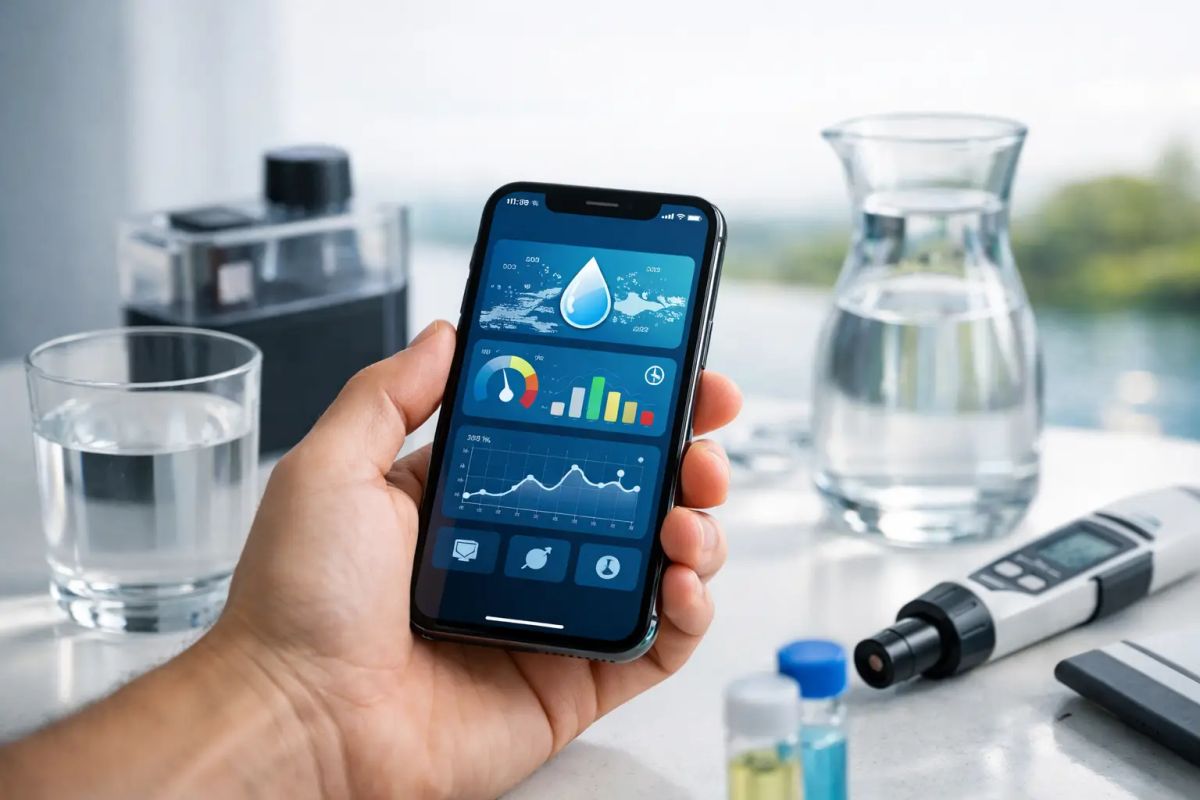
A water label can look elegant, minimalist, even reassuring - and still tell you very little at a glance. If you have ever stood in front of a shelf of bottled water wondering what actually separates one option from another, an ios water analysis app turns that moment into something far more useful. Point your camera, read the mineral profile, and understand what is in the bottle before you buy it or pour it.
That shift matters because water is not a blank liquid. It has structure, origin, mineral balance, and taste. Some waters feel crisp and light. Others arrive with more weight, salinity, or a chalky finish. For anyone who cares about daily intake, performance, dining, or simply drinking with more intention, the right app does more than scan a label. It translates composition into something you can use.
What an iOS water analysis app should actually tell you
Most people do not need more water information. They need better interpretation. Raw numbers alone can feel clinical, and if an app stops at listing calcium or sodium without context, it leaves the real question unanswered: what does this mean for me?
A strong app should present the core data clearly. That includes calcium, magnesium, sodium, bicarbonate, pH, and TDS. Those figures shape both sensory character and practical selection. Calcium and magnesium often influence perceived texture and structure. Sodium can affect taste and may matter to people who are paying closer attention to what they consume. Bicarbonate can shift how a water feels with food, especially richer meals.
Just as important is source information. Origin is not decorative copy. It tells you whether the water comes from a volcanic region, deep aquifer, alpine source, or another geological setting that influences its profile. If you already appreciate terroir in coffee or wine, the concept is familiar. Water expresses place too.
Then there is usability. The best experience is immediate. Scan the bottle. Read the composition. Understand the style of the water without opening a browser, searching through PDFs, or trying to decipher a tiny printed label under store lighting.
Why bottle scanning changes the experience
The appeal of an iOS water analysis app is not only convenience. It is confidence. When analysis is built into the moment of choice, you stop guessing.
That matters for different reasons depending on the person. A wellness-minded user may want a cleaner sense of mineral intake across the day. An athlete may look more closely at sodium or TDS when choosing between waters for different settings. A sommelier, chef, or food writer may care most about pairing potential and mouthfeel. A premium consumer may simply want to know whether the bottle in hand is delicate, structured, savory, soft, or effervescent in character.
A camera-based app also makes water legible in a way that feels modern. Instead of treating mineral analysis like a specialist hobby, it brings expert information into a format that fits everyday life. That is a meaningful distinction. The category becomes approachable without becoming simplistic.
Still, there is a trade-off. Scanning is only as good as the database and the interpretation behind it. A stylish interface is not enough if the information is thin, outdated, or stripped of sensory meaning. The best apps pair speed with substance.
The best ios water analysis app is not just a scanner
If all you want is a snapshot of a label, many tools can approximate that. But the best ios water analysis app should function more like a private guide. It should help you build taste memory, recognize patterns, and make smarter selections over time.
That means going beyond mineral tables. Useful features include tasting notes, compatibility guidance, curated collections, and personal journaling. Once you begin tracking what you enjoy, the data becomes more than technical. You start seeing your preferences with more precision. Maybe you lean toward low-mineral still waters with a softer texture. Maybe you prefer waters with a firmer mineral frame that stand up to food. Maybe sparkling waters with higher minerality feel more satisfying at the table.
This is where the category becomes unexpectedly rich. There is a world inside every bottle, but only if the app knows how to reveal it. An effective platform translates chemistry into taste, and taste into choice.
For that reason, the strongest apps serve both the analytical user and the sensorial one. They respect numbers, but they also understand that most people drink water, not spreadsheets.
What to look for in an iOS water analysis app
Quality starts with depth. If an app only surfaces one or two metrics, it leaves too much on the table. Look for a platform that includes the core minerals, pH, TDS, source origin, and a sense of flavor profile. If food pairing is relevant to your lifestyle, that feature can be surprisingly useful, especially in hospitality settings or at home when you want the water to suit the meal rather than disappear beside it.
The interface should feel calm and immediate. Water is a premium product, and the digital experience should reflect that with clarity rather than clutter. Numbers should be readable. Terminology should be precise. Explanations should be concise but not superficial.
Personalization is another dividing line. Recommendations based on your taste profile, saved favorites, and a tasting journal create continuity. Without those elements, each scan becomes a one-off interaction. With them, the app becomes a reference you return to.
Coverage matters too. If you shop across cities, travel often, or explore premium grocers and restaurants, a broader global database is genuinely valuable. A narrow catalog limits discovery and weakens trust.
Where this fits into modern food, wellness, and lifestyle culture
Water has moved well beyond utility. In fine dining, it already carries the language of selection and pairing. In wellness culture, it sits closer to ingredient awareness and intentional consumption. In premium lifestyle circles, it belongs to a larger shift toward knowing the provenance and composition of what we buy.
That does not mean every person needs to become a water expert. It means expertise should be available when curiosity strikes. An app that can identify a bottle, explain its mineral balance, and frame its taste profile meets that expectation elegantly.
This is especially relevant in cities where food culture and high-performance living often overlap. In New York, Los Angeles, Miami, Austin, or San Francisco, consumers are already used to making finer distinctions in coffee, wine, supplements, and dining. Water is a natural extension of that mindset.
And yet, the category still needs translation. Many people know they care about quality, but they do not know how to read the signals. That is exactly where a thoughtful app proves its worth.
A more intelligent way to read what is in your glass
The most compelling example in this space is Water Sommelier, which approaches bottled water with the seriousness of a tasting discipline and the ease of a modern mobile tool. Point your phone at a bottle and the app reveals mineral composition, pH, TDS, source origin, tasting profile, compatibility guidance, and pairing suggestions in a format that feels both polished and immediate.
What sets that experience apart is its point of view. It treats water as something to understand, not merely consume. For a user who wants clarity, taste intelligence, and a better sense of why one bottle feels different from another, that framing is far more useful than a generic scan-and-forget utility.
It also reflects a larger truth about the category. Water is subtle, but subtle does not mean insignificant. Once you can see the composition and connect it to flavor and function, the shelf looks different. The restaurant list looks different. Your own preferences become easier to articulate.
When an app is worth it and when it may not be
If you buy bottled water casually and never think twice about it, you may not use an analysis app every day. That is fair. Not every consumer wants this level of detail.
But if you are ingredient-conscious, performance-minded, hospitality-adjacent, or drawn to premium products with a story behind them, the value becomes obvious very quickly. The app shortens the distance between curiosity and understanding. It replaces vague branding language with specific, useful information.
The key is choosing one that respects both science and experience. Water is measurable, but it is also sensorial. The right app honors both sides.
The next time a bottle catches your eye, do not settle for packaging alone. Read the water the way you would read a label on wine, olive oil, or coffee. Taste starts long before the first sip, and better choices begin the moment you know what is in the glass.
Scan any bottle. Discover its minerals, origin, and character. Get the Water Sommelier app