
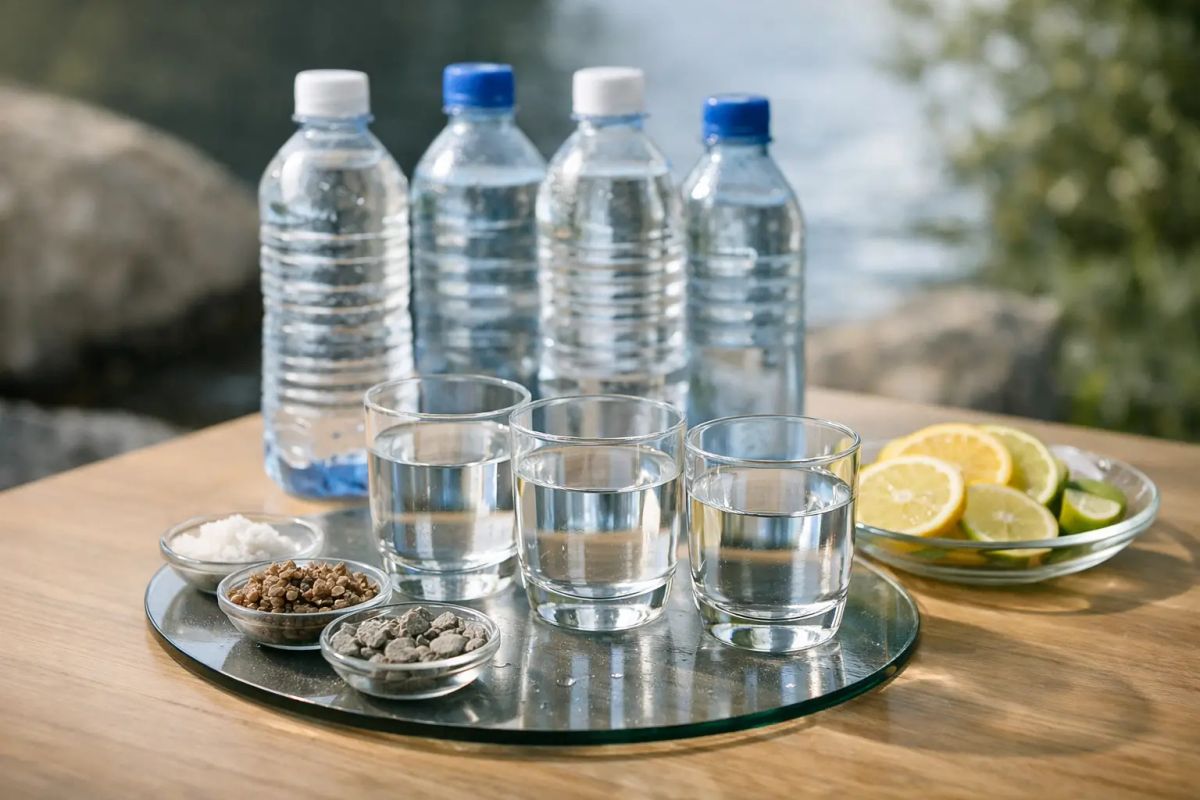
A bottle of water can look beautifully simple: clear liquid, a label, a source. Yet the question, what minerals are in bottled water, opens up a far more interesting story. Calcium can lend a soft, creamy structure. Bicarbonate can create a rounded, almost silky finish. Sodium may bring a subtle savory note. The numbers on the label are not merely nutrition facts. They are a map of where the water has traveled and how it will feel on the palate.
For anyone choosing water with the same intention they bring to coffee, wine, or a thoughtful meal, mineral composition is where the experience begins.
What Minerals Are in Bottled Water?
Bottled water may contain naturally occurring minerals acquired as water moves through rock formations, or minerals added after purification to create a consistent profile. The exact composition varies widely by source and style. A low-mineral spring water can taste light and delicate, while a naturally mineral-rich water may feel fuller, firmer, and more persistent.
Labels usually report minerals in milligrams per liter, written as mg/L. This measurement makes comparison possible, but it does not tell the whole sensory story. Two waters with similar total mineral content can taste very different depending on which minerals are present and how they interact.
The most common minerals and mineral-related measurements you will encounter are calcium, magnesium, sodium, potassium, bicarbonate, sulfate, chloride, silica, and total dissolved solids, or TDS.
Calcium: Structure and a Gentle Creaminess
Calcium is often one of the most recognizable minerals in bottled water. It contributes hardness and can give water a grounded, substantial texture. At moderate levels, calcium-rich water may feel smooth and gently chalky, particularly when compared with a very low-mineral water.
Its flavor influence is usually restrained rather than overt. Think of it as structure in a wine: not necessarily the first thing you notice, but a key part of how the whole experience holds together. Calcium levels vary dramatically, from just a few milligrams per liter to well over 100 mg/L in certain mineral waters.
Magnesium: A Mineral Edge
Magnesium contributes to hardness alongside calcium, but its sensory effect can be more distinctive. In higher concentrations, it may bring a dry, slightly bitter, or mineral-forward finish. That is not a flaw. In the right balance, magnesium adds character and length, giving water an assertive identity at the table.
For a crisp, clean profile, some people prefer lower magnesium levels. Others enjoy the complex, stony quality it can bring. Preference matters here. A water that feels elegantly energetic with salty food may seem too intense when sipped alone.
Sodium: The Savory Note
Sodium is often misunderstood because people see it only as a nutrition-label figure. In sensory terms, it is one of water's most influential minerals. At low levels, sodium can add softness and a faintly savory quality. At higher levels, the effect becomes more noticeable, occasionally reading as saline or broth-like.
There is no universally ideal sodium level. If you prefer a neutral, nearly weightless water for daily drinking, lower-sodium options may suit your palate. If you enjoy water with culinary presence, a modest sodium content can make the profile feel rounder and more expressive.
Potassium: Usually Quiet, Occasionally Noticeable
Potassium tends to appear in smaller amounts than calcium, magnesium, or sodium. It rarely defines the taste of a bottled water on its own, but it contributes to the overall mineral balance. When present alongside sodium and bicarbonate, it can support a more rounded profile.
Because quantities are often low, potassium is best viewed as part of the composition rather than the headline ingredient.
Bicarbonate: The Source of Roundness
Bicarbonate is not a mineral in the same sense as calcium or magnesium, but it is one of the most meaningful figures on a water label. It is a dissolved compound that often reflects water's journey through limestone and other carbonate-rich geology.
Waters higher in bicarbonate frequently taste soft, smooth, and buffered, with less sharpness on the finish. They can feel almost velvety. This makes bicarbonate a particularly useful number for people who care about mouthfeel, food pairing, and the difference between a water that refreshes quickly and one that lingers.
Sulfate and Chloride: Small Numbers, Real Influence
Sulfate can add dryness, firmness, or a faint mineral bite. In a balanced water, it may contribute a clean, brisk finish. At high levels, it can become more forceful and less universally appealing.
Chloride can add a lightly salty impression and enhance roundness, especially when paired with sodium. It is not the same as chlorine, which is a different substance and should not be confused with the chloride mineral listed on a bottled water analysis.
Neither sulfate nor chloride should be judged in isolation. Their effect depends on the entire composition. Water is a blend, not a collection of independent numbers.
Silica: A Quiet Marker of Texture
Silica, sometimes listed as silicon dioxide, is common in waters from volcanic or mineral-rich regions. It can contribute a soft, polished texture that many enthusiasts describe as silky or plush. Its taste is usually subtle, but it may help explain why a water feels unusually elegant despite modest levels of calcium and magnesium.
Silica is also a reminder that source origin matters. The geology beneath a spring shapes its mineral signature, creating a form of terroir that is as real in water as it is in food and wine.
How TDS Helps You Read a Bottle
TDS stands for total dissolved solids. It is the combined amount of dissolved minerals, salts, and trace compounds in water, typically measured in mg/L. It offers a useful first impression of intensity, but it is not a score of quality.
A water below roughly 50 mg/L TDS often tastes very light, clean, and fleeting. Between about 50 and 250 mg/L, many waters develop a balanced sense of body while remaining easy to drink. Higher-TDS waters can be boldly mineral, savory, dry, or creamy depending on their specific composition.
A high TDS number does not automatically mean a water will taste heavy. Nor does a low number guarantee a neutral flavor. Bicarbonate-rich water and sulfate-rich water can have similar TDS readings but entirely different personalities. Use TDS as the opening note, then read the individual minerals.
Natural Mineral Water vs. Purified Water With Added Minerals
The label can also tell you whether the minerals come from the source or are added after treatment. Natural spring and mineral waters typically retain a profile shaped by their local geology. That profile may vary slightly over time, though established brands work carefully to maintain recognizable character.
Purified waters may begin with a very low-mineral base, then have selected minerals added for taste and consistency. This is not inherently better or worse. It is a different style of water. One offers a sense of place and geological character; the other may offer a clean, controlled profile.
If source expression appeals to you, look for a detailed mineral analysis and clear origin information. If you prefer consistency and a lighter taste, a purified water with a straightforward mineral profile may be the better fit.
Choosing a Mineral Profile for the Moment
There is no single best bottled water. The best choice depends on your palate, the occasion, and what is on the table.
A low-mineral water can be a graceful companion for delicate tea, subtle seafood, or moments when you want little sensory interference. A calcium- and bicarbonate-forward water may feel more satisfying with a meal, particularly foods with richness, salt, or acidity. A water with higher magnesium or sulfate can bring a brisk, mineral-driven contrast to creamy dishes.
For athletes and people tracking their daily intake, the label provides a practical view of sodium and other minerals. For dining professionals, it provides a pairing language. For curious drinkers, it turns an ordinary choice into a more informed one.
The key is to avoid treating any one number as a verdict. A water's character lives in the relationship between its minerals, not in a single impressive-looking figure.
Read the Label, Then Taste With Attention
Start by checking the source and TDS, then look at calcium, magnesium, sodium, and bicarbonate. These four figures often reveal the clearest outline of a water's style. From there, notice sulfate, chloride, silica, and pH if listed.
Taste the water cool but not ice-cold, since extreme cold can mute its character. Take a small sip and let it move across your palate. Does it feel light or dense? Is the finish crisp, dry, creamy, saline, or almost sweet? Does the flavor disappear quickly, or does it stay with you?
Water Sommelier makes this process immediate: point your camera at a bottle, then see the mineral composition and tasting profile behind the label. The value is not just knowing the data. It is learning how to translate data into a choice you can actually taste.
Every bottle holds a record of minerals, place, and balance. Read it closely, and your next glass becomes more than water. It becomes a distinct expression of source.
Scan any bottle. Discover its minerals, origin, and character. Get the Water Sommelier app