
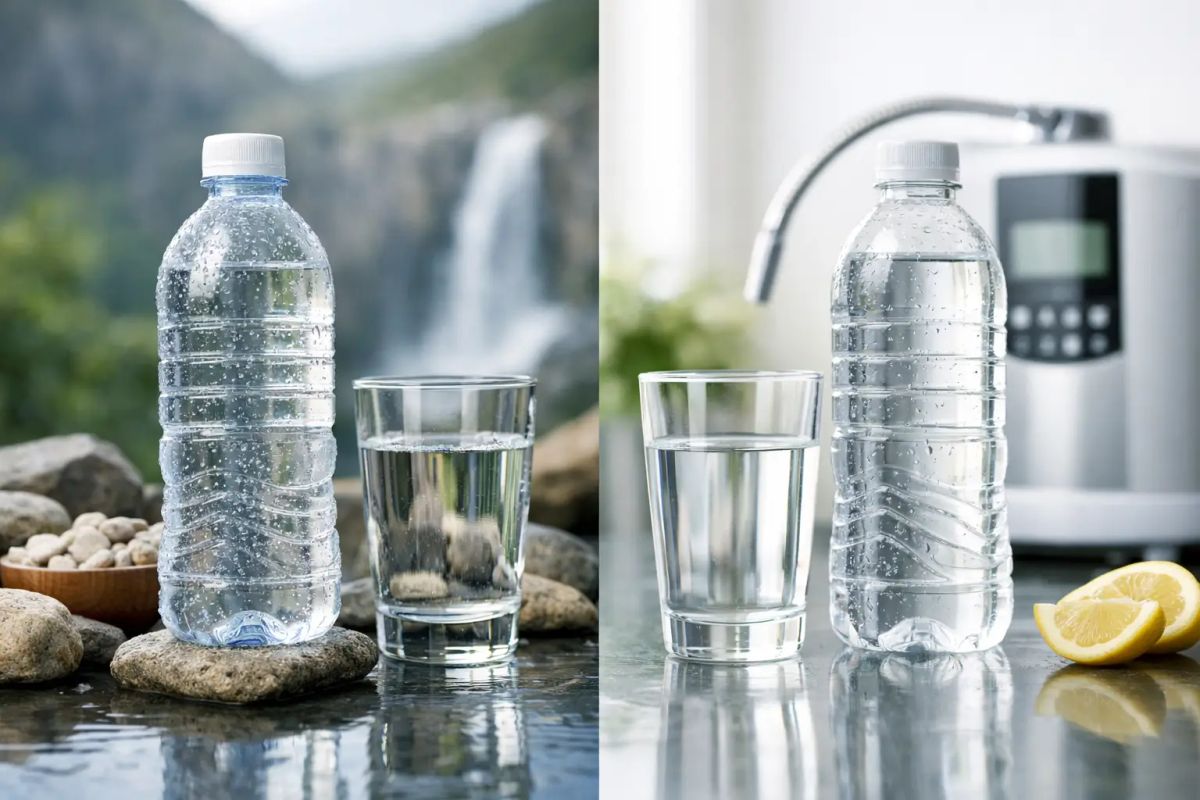
The label says pH 9.5, and suddenly the bottle feels like a better decision. Another bottle lists calcium, magnesium, bicarbonate, and dry residue at 180 degrees Celsius, and looks almost old-world by comparison. In the question of mineral water vs alkaline water, the real difference is not marketing polish. It is what is actually in the water, where it comes from, and how that shows up on the palate.
If you care about what you drink, this category deserves a closer look. Not all high-pH water is mineral water. Not all mineral water is notably alkaline. And a higher pH alone tells you far less than most front labels would have you believe.
Mineral water vs alkaline water: the core difference
Mineral water is defined by origin and composition. It comes from a protected underground source and contains naturally occurring minerals and trace elements in stable amounts. Those minerals are the point. They shape the water’s texture, structure, taste, and identity.
Alkaline water is defined primarily by pH. It has a pH above neutral, typically above 7, and often lands in the 8 to 10 range. That alkalinity may occur naturally, but in many cases it is created during processing or through the addition of alkaline compounds.
So the cleanest way to frame mineral water vs alkaline water is this: mineral water tells you more about content and source, while alkaline water tells you one thing first - pH.
That distinction matters because pH is only one data point. Two waters can share a similar pH and taste completely different. One may feel silky and chalky with a long mineral finish. Another may taste flat, thin, or slightly chemical depending on how it was treated or formulated.
Source matters more than most labels suggest
For mineral water, source is not decorative storytelling. It is the foundation of the product. As water travels through rock formations over time, it dissolves minerals in a pattern shaped by geology. That is why one natural mineral water may be rich in calcium and bicarbonate, while another leans toward magnesium or sodium.
This is where water starts to resemble wine, coffee, or olive oil. Place matters. Terroir matters. A bottle from a limestone-rich aquifer will present differently than one drawn from volcanic terrain. The result is not just a chemistry profile. It is a sensory signature.
Alkaline water, by contrast, may or may not have that kind of geographic identity. Some naturally alkaline waters do come from mineral-rich springs and aquifers. Others are purified waters that have been altered to raise pH. There is nothing inherently wrong with that, but it is a different category experience. One is expressing a source. The other is often expressing a target metric.
For a drinker who values provenance, that difference is substantial.
pH is real, but it is not the whole story
pH gets attention because it is easy to communicate. A number on the front of the bottle feels immediate and measurable. Yet pH on its own can be misleading when you are trying to understand quality, taste, or composition.
A water with a pH of 8.2 and a balanced mineral profile may be more interesting, more expressive, and more useful for your preferences than a water with a pH of 10 and very little else going on. High pH does not automatically mean high mineral content. It does not automatically mean better taste either.
What often matters more in the glass is the mineral architecture behind that pH. Bicarbonate can contribute to alkalinity, but so can other dissolved substances. Calcium and magnesium affect mouthfeel and structure. Sodium can soften or round the palate. TDS, or total dissolved solids, gives you a sense of overall concentration, though even that number needs context.
If you only compare waters by pH, you miss the composition that actually defines the drinking experience.
How mineral water and alkaline water taste
This is where the conversation becomes more interesting. Mineral water is often more distinctive because its dissolved minerals create texture and length. Depending on the composition, it can taste crisp, creamy, saline, chalky, soft, or almost sparkling even when still. Some feel broad and weighty. Others feel razor-clean and bright.
Alkaline water can also taste pleasant, but the category is more variable. Naturally alkaline waters with meaningful mineral content can feel elegant and composed. Processed alkaline waters may taste smoother than standard purified water, but they can also come across as neutral to the point of anonymity.
For food pairing, mineral structure matters more than pH marketing. A calcium-rich water can stand up beautifully to fresh cheeses and leafy greens. A water with higher bicarbonate and a broader mouthfeel may suit richer dishes. A lighter, low-mineral alkaline water may disappear nicely alongside delicate foods, but it may not offer much sensory contribution on its own.
This is why sommeliers and chefs do not stop at “alkaline” or “not alkaline.” They look at balance, intensity, finish, and how the water behaves with food.
Reading the label like an insider
When choosing between mineral water vs alkaline water, the back label is where the real story begins.
Start with the source. If the bottle clearly identifies a spring or protected underground origin, that signals a different standard of identity than a bottle centered mostly on purification or pH claims. Then look at the mineral analysis. Calcium, magnesium, sodium, potassium, bicarbonate, sulfate, and silica each contribute something different to taste and profile.
Next, check the pH, but read it in context. A moderately alkaline mineral water with a well-rounded profile may be more compelling than a very high-pH water with sparse mineral detail. TDS can help you estimate how light or concentrated the water may feel, although it does not tell you which minerals are present or whether the composition is harmonious.
This is also where a tool like Water Sommelier becomes genuinely useful. One scan can reveal whether a bottle is simply high in pH or actually rich in the minerals that shape flavor, origin character, and compatibility with your preferences.
Which one is better?
Usually, neither category wins outright. The better choice depends on what you value in the bottle.
If you care about natural composition, source authenticity, and flavor character, mineral water is often the more rewarding category. It offers more complexity and a clearer sense of identity. You are not just drinking “water with a number.” You are drinking a place.
If your priority is specifically a higher pH, alkaline water may meet that preference more directly. But even then, it is worth asking whether the alkalinity is natural, what minerals support it, and whether the taste justifies the label.
For athletes, wellness-focused consumers, and anyone paying attention to micronutrient intake, the mineral breakdown is often more actionable than pH alone. For fine dining professionals and curious drinkers, taste and pairing potential usually make natural mineral water the more expressive option. For someone who wants a very clean, simple profile with elevated pH, some alkaline waters may fit perfectly.
The point is not that one category is superior by default. It is that the language on the front of the bottle rarely tells the whole truth.
Mineral water vs alkaline water for everyday buying
A smart buying decision starts with a simple question: do you want character, or do you want a claim?
If you want character, reach for waters that disclose source and full mineral composition. Those details usually indicate a product with a more defined sensory profile. If you want a claim, such as high pH, make sure the rest of the label supports it with meaningful information rather than vague wellness language.
Price can complicate this. Some premium alkaline waters command luxury pricing based largely on branding and pH positioning, while some natural mineral waters deliver remarkable composition and taste at a similar or even lower cost. The only reliable way to judge value is to look past the headline metric.
That is especially true if you rotate bottles for different moments. A low-mineral still water may suit one setting, while a structured, mineral-rich water may be far more compelling at the table. Water is not one-dimensional, and buying it as if it were leaves a lot on the table.
There is a world inside every bottle, but only if you read beyond the front label. Mineral water and alkaline water can overlap, but they are not interchangeable ideas. One speaks in the language of geology, composition, and taste. The other often speaks in the language of pH. The more carefully you read that distinction, the more intentional your next bottle becomes.
Scan any bottle. Discover its minerals, origin, and character. Get the Water Sommelier app