
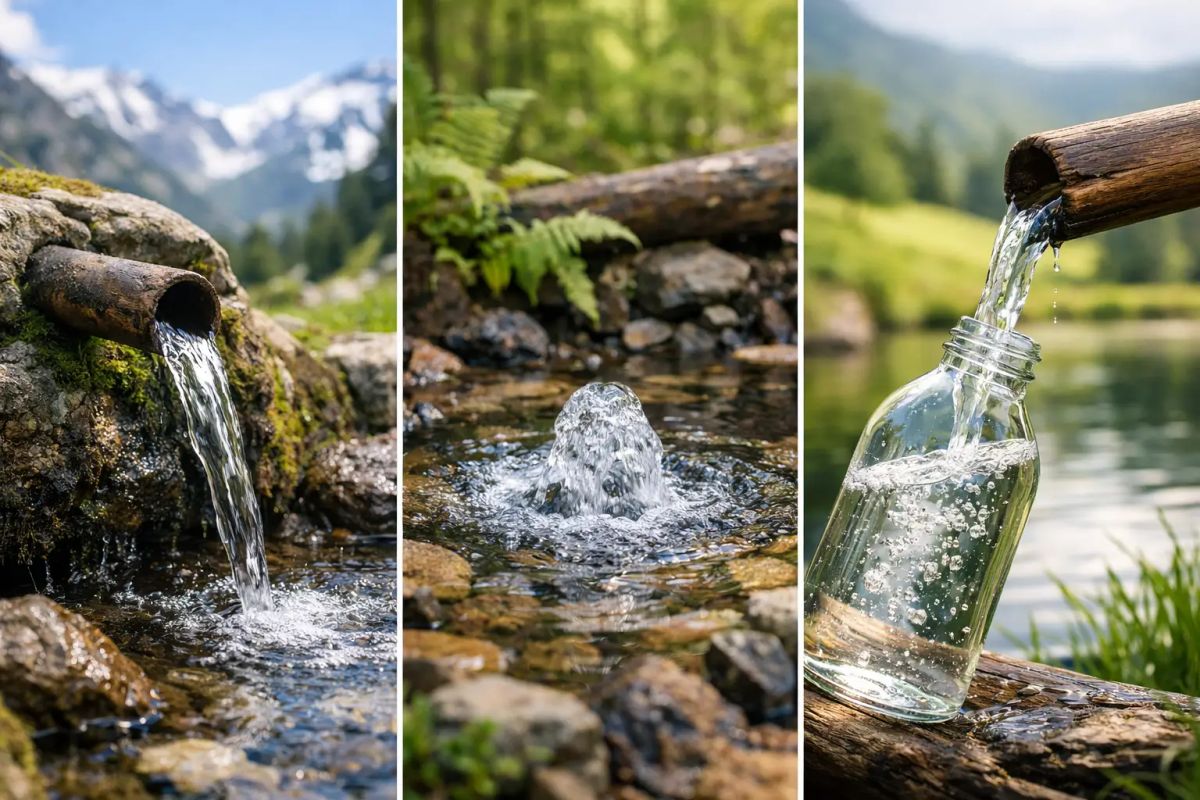
A bottle can say spring water and still tell you almost nothing about how that water will taste. One spring may rise through limestone and arrive with a soft, chalky elegance. Another may travel through volcanic rock and show more tension, more minerality, more structure on the palate. When people ask about spring water source differences, they are usually asking a deeper question - why do two waters with the same label category feel so different in the glass?
The answer starts underground. Spring water is not a style. It is an origin story.
Why spring water source differences are so noticeable
A spring is where groundwater reaches the surface naturally, but that simple definition hides enormous variation. Water can spend years or even decades moving through layers of rock before it emerges. Along that route, it dissolves minerals, picks up dissolved gases, and settles into a specific chemical profile shaped by pressure, temperature, and terrain.
That is why source matters so much. The spring is not just a location on a map. It is the final expression of a much larger geological system. If you care about taste, mineral composition, food pairing, or choosing a water that fits your preferences, the source is where the real story begins.
Two bottles can both be genuine spring water and still sit at opposite ends of the sensory spectrum. One may taste light and quick, almost crystalline. Another may feel creamy, savory, or faintly saline. Neither is more authentic. They are simply different because the land beneath them is different.
Geology is the first author of flavor
If wine has terroir, water does too. In water, terroir is often even more literal. The rocks a source passes through have a direct effect on what ends up dissolved in the bottle.
Limestone and chalk sources
Water from limestone-rich terrain often carries calcium and bicarbonate. That can create a rounded, gentle mouthfeel with a subtle chalky finish. These waters can feel calm and balanced, especially alongside delicate foods. The sensation is rarely dramatic, but it is often quietly elegant.
Volcanic sources
Volcanic geology tends to produce more angular, characterful waters. Depending on the source, you may find silica, magnesium, and other minerals that sharpen texture and add tension. These waters can feel vivid and structured, sometimes with a distinctly stony or flinty impression.
Granite and low-mineral sources
When water moves through harder, less soluble rock like granite, it may emerge with fewer dissolved minerals. The result can be a cleaner, lighter profile with very low total dissolved solids. These are often the waters people describe as pure, crisp, or almost invisible on the palate.
None of these profiles is inherently better. The right one depends on what you enjoy and how you plan to drink it. With oysters or sashimi, a highly mineral water can be thrilling. With a subtle tea or a fine white fish, it might be too assertive.
Spring water source differences go beyond minerals
Minerals get most of the attention, and for good reason, but they are not the full picture. Source differences also affect balance, texture, and the pace of the tasting experience.
A water with moderate calcium and magnesium may still feel very different depending on sodium, bicarbonate, and natural carbonation. Even pH, while often overemphasized in marketing, can influence the way water presents itself. What matters most is not one number in isolation but the relationship between them.
Think of water the way a sommelier thinks about a wine list. Acidity alone tells you something. Tannin alone tells you something. But harmony is what makes the experience memorable. The same principle applies here.
The route underground changes the result
Not every spring follows the same journey from rainfall to bottle. Some are fed by relatively shallow aquifers with faster turnover. Others come from deep, protected systems where water moves slowly through ancient rock. That underground travel time can affect both mineralization and consistency.
A longer route often means more contact with geological material, which can increase dissolved minerals. A shorter route may preserve a lighter profile. But this is not a fixed rule. A fast-moving source through highly soluble rock can still become richly mineralized, while a slow route through resistant stone may remain delicate.
This is where nuance matters. Source depth, recharge rate, seasonal conditions, and the composition of the aquifer all interact. If you have ever wondered why one spring water feels stable year-round while another seems to vary slightly by bottling period, this is often part of the answer.
Protection and bottling practices matter too
A beautiful source is only part of the story. The way a spring is protected and bottled can preserve or flatten its character.
The most respected spring waters are bottled close to the source to maintain their original composition. That helps retain the balance of dissolved minerals and any natural carbonation. It also reduces handling that might alter taste.
Protection of the catchment area matters just as much. A carefully managed source tends to deliver greater consistency and a clearer expression of place. For premium water, this is not a branding detail. It is quality control in its most essential form.
That said, consistency and individuality sometimes pull in different directions. A source with strong seasonal variation may be fascinating from a tasting perspective, but less predictable for someone who wants the same profile in every bottle. Again, it depends on what you value.
How spring water source differences show up in the glass
You do not need a lab to notice source differences, although data certainly helps. Start with sensory cues.
Low-mineral spring waters often feel quick, bright, and clean. They disappear fast. Medium-mineral waters tend to show more shape in the middle of the palate. High-mineral spring waters can feel weightier, with a longer finish and more obvious savory or stony notes.
Temperature changes perception too. Very cold water hides detail. Cool water reveals more texture and nuance. If you are tasting intentionally, let the bottle warm slightly and pay attention to mouthfeel, not just flavor. Water speaks through texture as much as taste.
This is especially useful for food professionals and anyone building pairings at home. A delicate spring water can frame a dish without interrupting it. A bolder, mineral-rich source can stand up to richer flavors, salt, fat, or intense umami.
What to look for on the label
If you want to understand spring water source differences before opening the bottle, the label can offer clues, though some brands are more transparent than others.
Look for the named source, country or region of origin, and a mineral analysis panel when available. Calcium, magnesium, sodium, bicarbonate, sulfate, pH, and TDS all help build a picture. You are not looking for a perfect score. You are looking for style.
A low TDS water is often lighter and subtler. Higher bicarbonate can suggest more roundness. Higher magnesium may bring a firmer, slightly bitter edge in some waters. Sodium, when present at notable levels, can add softness or a faintly savory character.
This is exactly why tools that translate mineral data into something intuitive are so useful. Water Sommelier, for example, helps turn a bottle label into a readable profile of taste, composition, and source character without making you do the chemistry in your head.
Which spring water source is best?
Usually, the better question is best for what.
For everyday drinking, some people prefer low-mineral spring waters because they feel effortless and clean. Athletes and high-intention wellness consumers may look more closely at mineral composition and choose according to their preferences. Sommeliers, chefs, and curious hosts often want contrast - a few different source styles for different meals, moods, or settings.
There is also the matter of occasion. The water you want at your desk may not be the one you want with caviar, steak tartare, or a citrus-driven tasting menu. Source differences become more interesting when you stop treating water as a single category and start treating it as a curated choice.
That shift changes everything. Instead of asking whether spring water is good, you begin asking what kind of spring, what kind of geology, what kind of mineral balance, what kind of finish. That is when water stops being background and starts becoming part of the experience.
The next time you pick up a bottle, pause at the source. There is a world inside every bottle, but it begins far below the glass.
Scan any bottle. Discover its minerals, origin, and character. Get the Water Sommelier app