
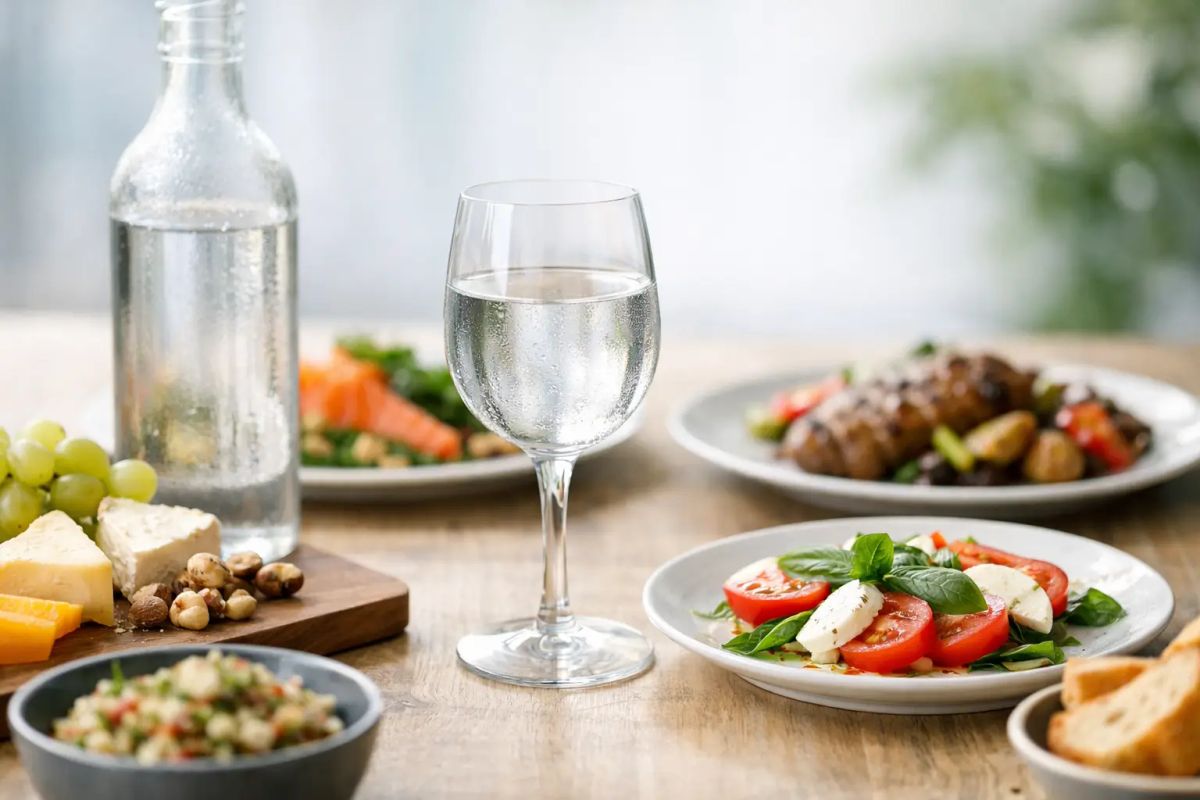
The wrong water can flatten a beautiful dish just as quickly as the right one can sharpen every detail on the plate. A precise water and food pairing guide is not about making dinner feel formal. It is about recognizing that water has texture, structure, salinity, weight, and finish - and those qualities change how food tastes.
In fine dining, this has been understood for years. But it matters just as much at home, whether you are serving oysters, roast chicken, aged cheese, or dark chocolate. There is a world inside every bottle, and once you start tasting water with the same attention you give wine or coffee, pairings become both more intuitive and more rewarding.
Why a water and food pairing guide matters
Most people still think of water as neutral. It is not. Natural mineral water carries dissolved minerals from its source, and those minerals shape both flavor and mouthfeel. Calcium can bring firmness and a chalky edge. Magnesium often adds a slight bitterness. Sodium can make a water taste rounder or softer. Bicarbonate can create a smoother, more buffered impression, especially alongside rich food.
That means water does more than cleanse the palate. It can echo a dish, soften it, or create contrast. A delicate water may preserve the sweetness of raw scallops. A more mineral-forward water can stand up to charred steak or a washed-rind cheese. The pairing works when the water has enough presence for the food, but not so much personality that it overwhelms it.
This is where nuance matters. Bigger is not always better. A high-mineral water can be thrilling with a fatty dish and clumsy with sashimi. A very soft water can feel elegant with fresh fruit and nearly invisible next to cured meat. The point is not prestige. The point is balance.
How to read water before you pair it
If you want to pair well, start with four traits: intensity, texture, carbonation, and finish.
Intensity comes from mineral content, often reflected in total dissolved solids, or TDS. Low-TDS waters tend to taste lighter, cleaner, and quieter. High-TDS waters usually taste more pronounced, structured, and persistent. As a rule, lighter dishes prefer lower-intensity waters, while richer dishes can handle more mineral weight.
Texture is what separates ordinary drinking from real tasting. Some waters feel silky. Others feel crisp, dense, creamy, or almost saline. That texture matters with food. Crisp waters sharpen fried dishes and fresh greens. Rounder waters can sit more comfortably beside butter sauces, soft cheeses, and roasted proteins.
Carbonation changes the entire pairing dynamic. Fine bubbles can refresh the palate without aggression. More forceful carbonation cuts through fat, salt, and richness with greater energy. Sparkling water is often a natural fit for fried foods, charcuterie, and creamy textures, but not every dish benefits from that lift. Some subtle flavors do better with still water.
Finish is the final clue. Does the water disappear quickly, or does it linger with mineral length? A long finish can either complement a layered dish or compete with it. A short finish is often better when the food itself is intricate and aromatic.
Water and food pairing guide by dish style
Raw seafood and delicate shellfish
For oysters, crudo, shrimp cocktail, and sashimi, look for still or gently sparkling waters with low to moderate mineralization. The goal is clarity. You want a water that supports salinity and sweetness without adding too much weight.
Waters with a clean, brisk profile and restrained sodium often work beautifully here. If the water is too hard or too bitter, the seafood can lose its delicacy. If it is too flat in character, it adds nothing. Think precision over power.
Oysters deserve special care. Their natural brine can pair well with water that has a faint mineral salinity of its own, but only if the water remains elegant. This is a pairing where terroir feels especially vivid.
Salads, vegetables, and bright starters
Green, herbaceous, or citrus-driven dishes usually pair best with light waters that feel crisp and transparent. Bitter greens, vinaigrettes, and fresh herbs can turn heavy water metallic or dull.
Choose still waters with a short finish or sparkling waters with fine bubbles. A mineral profile that leans too strongly into magnesium may amplify bitterness in arugula, radicchio, or asparagus. With vegetables, restraint is usually the wiser choice.
Poultry, white meats, and simply cooked fish
Roast chicken, turkey, grilled sea bass, and pork loin sit in the middle ground. They need more structure than raw seafood, but they rarely want the density that suits red meat.
This is where balanced mineral waters shine. Moderate calcium and bicarbonate can give enough body to meet the food, especially when there is skin, jus, or a cream-based accompaniment. If the preparation is lean and clean, keep the water quiet. If the dish is richer, move up in mineral depth.
Rich fish, butter sauces, and creamy dishes
Salmon, lobster with drawn butter, risotto, and cream sauces call for more authority. A softly textured low-mineral water may disappear here.
Look for waters with more body, a round mouthfeel, and perhaps a touch of carbonation if the dish is especially rich. Bicarbonate can be useful because it lends a composed, smoothing quality that works well with fat. The trade-off is that too much mineral structure can make delicate sauces taste heavy, so this is a category where balance is everything.
Red meat, grilled dishes, and umami-heavy plates
Steak, lamb, burgers, mushrooms, and dishes with char respond well to waters with real presence. Higher mineralization, firmer structure, and longer finish can all make sense here, especially when the plate carries smoke, fat, and salt.
Sparkling water often performs exceptionally well with these foods because carbonation resets the palate between bites. Still water can also work, particularly if it has depth and a slightly savory profile. What you want is a water that does not retreat when the food arrives.
That said, there is a threshold. If the water tastes too bitter or too mineral-dense, it can make grilled flavors feel harsher. Strong food needs strong water, but not aggressive water.
Cheese
Cheese is one of the most interesting categories in any water and food pairing guide because the range is so wide. Fresh mozzarella and chèvre want a very different water from aged cheddar, Comté, or blue cheese.
Fresh cheeses generally pair best with soft, low-mineral still water. You want freshness and lift. Hard-aged cheeses can handle a more mineral, structured water, and sparkling styles often help with the fat and salt. Blue cheeses are trickier. A strongly sparkling or highly mineral water can either create brilliant contrast or push the salt too far. Taste and adjust.
If you are serving a cheese board, one water rarely fits all. In that setting, neutral elegance is often better than forceful character.
Desserts and chocolate
Dessert pairings are often overlooked, yet water can either preserve a clean finish or make sweetness feel heavier. For fruit desserts, sorbet, and lightly sweet pastries, choose soft still water or very delicate sparkling water.
Chocolate changes the equation. Dark chocolate, especially with high cacao content, can pair surprisingly well with more structured waters that have depth and a slightly bitter or mineral edge of their own. Milk chocolate and creamy desserts usually prefer softer, rounder waters. Here again, it depends on whether you want contrast or harmony.
Still or sparkling?
Still water is usually the better choice when a dish is subtle, aromatic, or texturally refined. It lets nuance remain intact. Sparkling water is more assertive. It cuts, refreshes, and resets. That makes it particularly useful with fried food, rich sauces, salty snacks, and long meals where palate fatigue can creep in.
Neither is superior. They simply play different roles. If you are building a table around several courses, alternating between still and sparkling can make the entire experience feel more composed.
A simple way to pair with confidence
Start by matching intensity. Light dish, light water. Rich dish, more structured water. Then decide whether the plate needs harmony or contrast. Harmony means similar weight and temperament. Contrast means using carbonation or minerality to sharpen the experience.
Finally, taste for aftereffect. The best pairing is often revealed not on the first sip, but in the finish that follows the bite. If the food suddenly tastes sweeter, cleaner, more detailed, or more complete, you are close. If either the dish or the water seems muted, bitter, or heavy, adjust.
This is one reason tools that reveal mineral composition are so useful. When you can see calcium, magnesium, sodium, bicarbonate, pH, and total dissolved solids clearly, pairing stops being guesswork. It becomes a sensory decision informed by data.
Water deserves that level of attention. Not because every meal needs ceremony, but because taste becomes richer when you notice what was already there. The right bottle does not ask to be the center of the table. It simply makes everything around it taste more alive.
Scan any bottle. Discover its minerals, origin, and character. Get the Water Sommelier app