
A bottle can look pristine, cold, and premium - and still tell you almost nothing at first glance. Yet one small number often reveals a great deal: TDS. If you have ever asked what is water TDS, you are really asking a better question beneath it - what, exactly, is in this water, and how will it taste?
What Is Water TDS?
TDS stands for total dissolved solids. In water, that means the combined amount of dissolved minerals, salts, and other inorganic substances present in the liquid. The number is usually expressed in milligrams per liter, which is effectively the same as parts per million for most practical conversations about bottled water.
When you see a TDS value on a label or in a water analysis, it is not naming each mineral individually. It is giving you the overall concentration of dissolved material. Think of it as the water's density of mineral presence, not its full identity.
That distinction matters. Two waters can share a similar TDS and taste completely different because their mineral compositions are different. One may lean on calcium and bicarbonate for a structured, chalky impression. Another may carry more sodium and feel rounder, softer, almost silky. TDS gives you a useful headline. It does not give you the full tasting note.
What Counts as a Dissolved Solid?
Most of the dissolved solids people care about in premium water are naturally occurring minerals. These often include calcium, magnesium, sodium, potassium, bicarbonate, sulfate, and chloride. They come from the geology surrounding the source. As water moves through rock and soil, it absorbs mineral content over time. That is part of water's terroir - the environmental signature that shapes character in the glass.
This is why TDS is more than a technical metric. It is a clue to origin. A low-TDS water may have moved through one type of landscape. A higher-mineral water may reflect a very different geological path. The number does not tell the whole story, but it hints at the one behind the bottle.
How TDS Is Measured
There are two common ways TDS is discussed. The first is laboratory mineral analysis, which identifies and quantifies individual dissolved substances. That is the gold standard if you want a true composition profile.
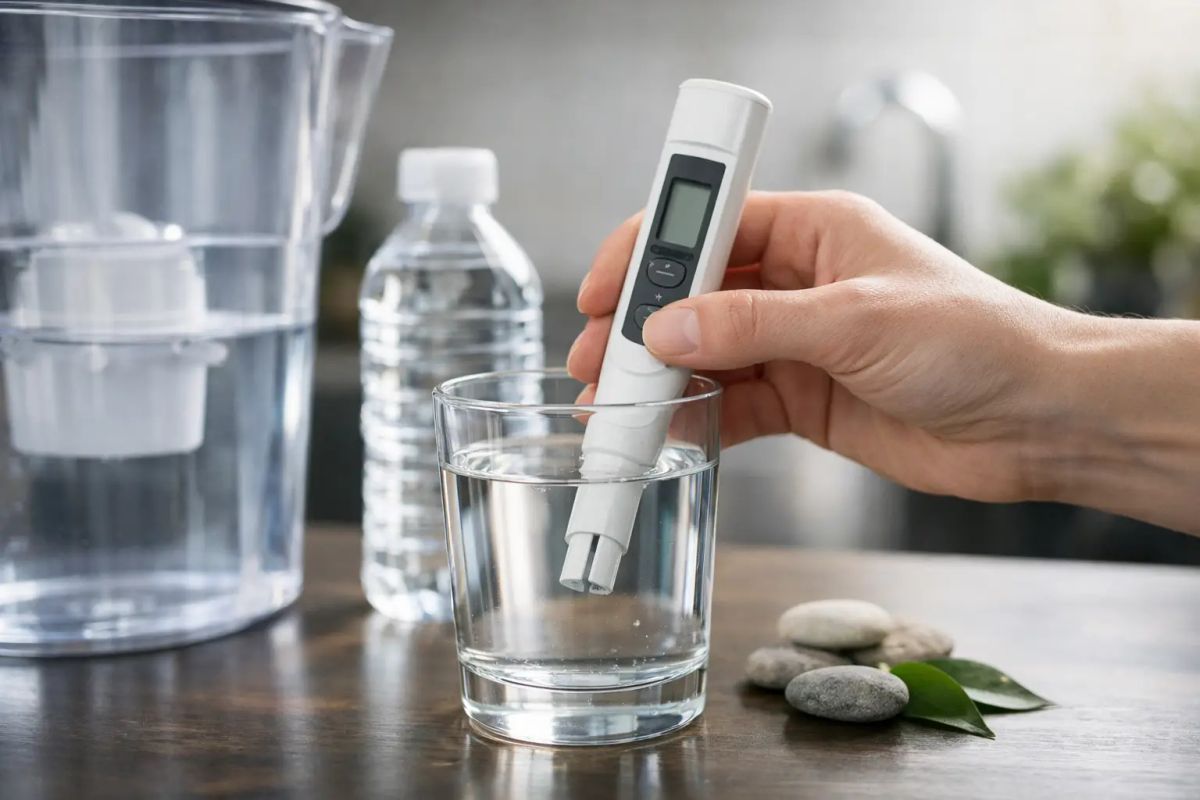
The second is a TDS meter, which estimates total dissolved solids by measuring electrical conductivity. Minerals dissolved in water help conduct electricity, so the meter uses conductivity as a proxy. It is fast and convenient, but it is still an estimate. Different dissolved substances conduct differently, so a meter can tell you roughly how mineralized a water is, not exactly which minerals are there.
That is an important trade-off. If your goal is quick orientation, a TDS reading is useful. If your goal is understanding taste, balance, and composition, you need more than one number.
Why Water TDS Matters for Taste
TDS matters because dissolved minerals shape texture, structure, and flavor perception. Water is not neutral in the way many people assume. It can feel crisp, creamy, bright, dense, savory, or almost weightless depending on its mineral profile.
Generally, lower-TDS waters tend to taste lighter and more delicate. They may feel clean and quiet on the palate, with a softer finish. This style often works well when you want subtlety - during focused tasting, alongside fine tea, or with foods where you do not want the water to compete.
Higher-TDS waters usually bring more presence. They can feel firmer, saltier, fuller, or more persistent. In some cases, they pair beautifully with richer dishes because they have enough structure to stand beside strong flavors. In other cases, they may taste too assertive if you prefer a very light drinking experience.
This is where nuance matters. More TDS does not automatically mean better water. Less TDS does not automatically mean purer or more refined water either. It depends on the drinking moment, your palate, and the mineral makeup behind the number.
What TDS Does Not Tell You
TDS is useful, but it is easy to overread it.
A TDS value does not tell you whether a water is balanced. It does not reveal whether calcium dominates over magnesium, whether bicarbonate softens acidity, or whether sodium adds a rounded, gastronomic quality. It also does not tell you how the water will pair with food, coffee, or wine service unless you understand the underlying mineral distribution.
Most importantly, TDS does not function as a standalone marker of quality. A beautifully balanced low-mineral water can be elegant and compelling. A highly mineralized water can be spectacularly complex. The reverse is also true. The number alone cannot make that judgment.
Low, Medium, and High TDS in Practice
There is no single perfect TDS range because taste is contextual. Still, broad categories can help frame expectations.
Low-TDS water often feels light, restrained, and easy to drink. Many people reach for it when they want clarity without much mineral imprint.
Medium-TDS water tends to sit in the versatile middle. It usually offers more texture and character while remaining broadly approachable. For many drinkers, this is where daily balance lives.
High-TDS water is more distinctive. It can be bold, structured, and memorable, especially when paired intentionally with food. Some people love that mineral presence. Others find it too forceful for everyday sipping.
The key is not chasing a category as if it were a score. The key is learning what kind of sensory experience you prefer.
Why Two Waters With the Same TDS Can Taste Different
This is where the conversation gets interesting.
Imagine two waters with a TDS of 300. On paper, they look similar. In the glass, they may be worlds apart. If one is rich in calcium and bicarbonate, it may taste firm, dry, and mineral-forward. If the other has more sodium and less calcium, it may come across as rounder and gentler, even with the same total dissolved solids.
That is why serious water analysis looks past TDS into composition. The ratio of minerals matters. pH matters. Source matters. Even temperature changes perception. TDS is the overture, not the full performance.
What Is Water TDS on a Bottle Label Really Telling You?
On a bottle label, TDS is usually serving as a shortcut. It gives drinkers an immediate sense of mineral intensity. A low number suggests a lighter profile. A high number suggests a more pronounced mineral character.
That makes it a helpful buying signal, especially if you already know your preferences. If you tend to love soft, understated waters, you will likely gravitate toward one range. If you enjoy waters with presence and a long finish, you may choose another.
Still, labels often leave out context. The smartest way to read TDS is to treat it as one lens among several. Look at the specific minerals if available. Consider the source. Think about occasion. A water for a tasting menu may not be the one you want after a workout or with a delicate seafood course.
How to Use TDS Like a Better Taster
Start by noticing pattern, not perfection. When you try different bottled waters, pay attention to TDS alongside your sensory impression. Does a lower number feel refreshing and quiet to you, or too thin? Does a higher number feel satisfying and structured, or a bit heavy?
Over time, the number becomes more meaningful because it connects to your own palate memory. This is where water becomes more than a commodity. It becomes a category with style, place, and preference.
If you want to go further, track TDS together with calcium, magnesium, sodium, bicarbonate, and pH. That fuller picture is where understanding turns into fluency. Water Sommelier approaches analysis exactly this way - not as trivia, but as a practical way to read what is in your glass and why it tastes the way it does.
So, What Should You Look For?
Look for fit. A number that suits the moment. A composition that matches your taste. A water that feels intentional rather than generic.
TDS is one of the most useful starting points because it translates the invisible into something legible. But the best drinking decisions come when you pair that number with curiosity. There is a world inside every bottle, and TDS is often the first hint that the world is worth noticing.
Scan any bottle. Discover its minerals, origin, and character. Get the Water Sommelier app.