
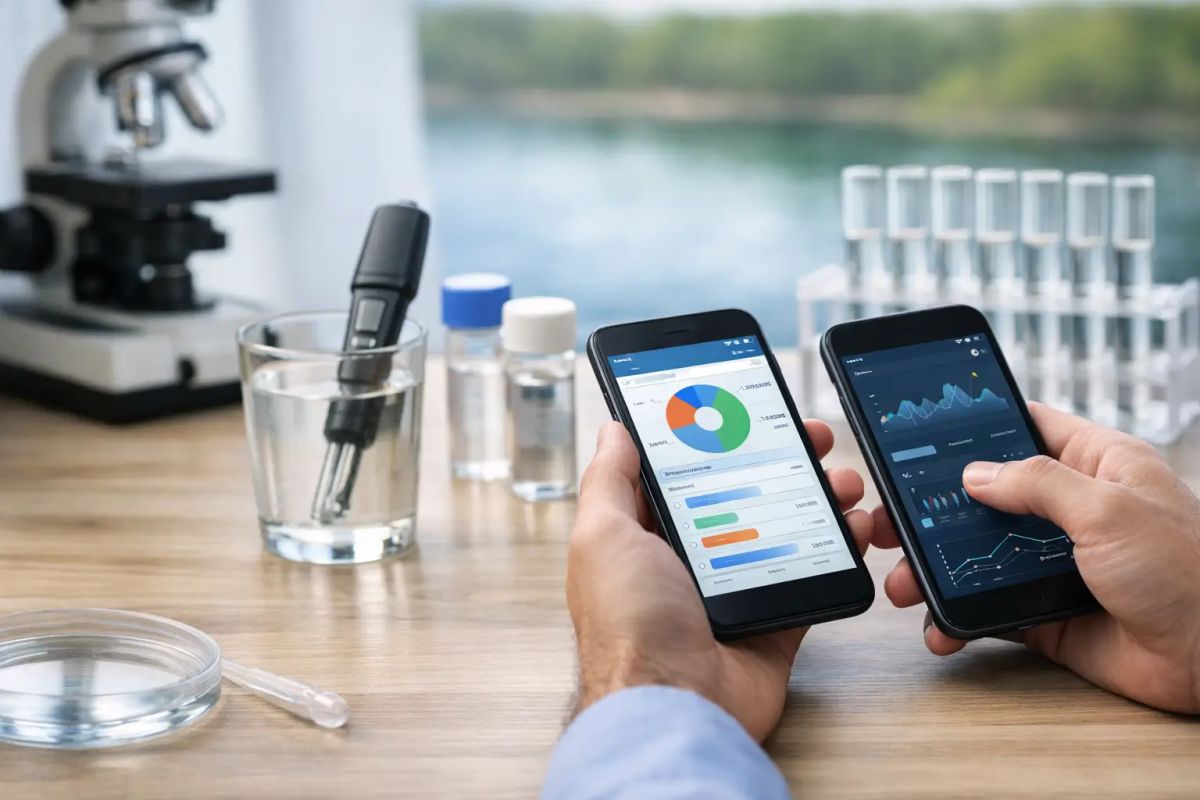
A bottle can look pristine and still tell you almost nothing at first glance. The water analysis app comparison that matters is not about which screen looks nicest. It is about whether an app can turn a label into a clear, credible picture of what is in your glass: mineral composition, origin, sensory character, and context for the way you live, train, dine, and choose.
Water is often treated as interchangeable. It is not. A low-mineral spring water may feel light and delicate; a calcium-rich water can have a firmer, chalkier structure; a high-bicarbonate profile may finish with a distinctive, rounded character. The right app makes these distinctions legible without reducing them to a confusing wall of numbers.
Water Analysis App Comparison: Start With the Data
The first question is simple: what does the app actually show? A useful water analysis tool should go beyond a single score or a vague claim of purity. Look for a full mineral profile that presents calcium, magnesium, sodium, bicarbonate, and total dissolved solids, commonly called TDS, in an understandable format. pH belongs in the picture too, but it should not be treated as the entire story.
Minerals create the structure of a water. Calcium can contribute body. Magnesium may bring a slightly savory or mineral-forward impression. Sodium can sharpen or soften the palate depending on the level and balance. Bicarbonate influences the water's buffering character and is often central to how a water feels alongside food. TDS gives a useful broad indication of mineral presence, but it cannot explain which minerals create that total.
That distinction separates meaningful analysis from superficial scanning. An app that reports only pH or TDS leaves out much of the character. An app that shows individual minerals, their units, and their relationship to one another gives you something you can actually use.
A camera scan is recognition, not laboratory testing
This is a point worth understanding before choosing any bottle-scanning app. Pointing a camera at a label does not chemically analyze the water inside the bottle in real time. Instead, the camera identifies the product and retrieves composition data from a structured product database or the producer's published analysis.
That is not a limitation when the system is transparent and well maintained. It is the practical way to identify bottled waters in a store, at a restaurant, or while traveling. The app should make it easy to see the source of its information, distinguish mineral data from tasting guidance, and account for the fact that labels and source analyses can occasionally change.
Compare Context, Not Just Numbers
Numbers matter. Context is what makes them valuable.
A thoughtful app translates a mineral panel into an experience. Rather than telling you that one water has 180 mg/L of bicarbonate and stopping there, it should help explain what a profile may suggest on the palate: crisp, soft, silky, saline, structured, or mineral-rich. These are not absolute judgments. Temperature, carbonation, glassware, and personal sensitivity all shape perception. Still, tasting language gives the data a human dimension.
Source origin matters for the same reason. A water's provenance can reveal whether it is shaped by glacial terrain, limestone aquifers, volcanic geology, or a protected spring. There is a world inside every bottle, and geology is part of its signature. For premium water drinkers and food professionals, this is not decorative information. It is the beginning of a more intentional choice.
An app becomes especially useful when it connects profile to occasion. A bright, low-TDS still water may suit a delicate seafood course. A more mineral-driven sparkling water can stand up to richer dishes or offer a compelling contrast to salty, cured flavors. These recommendations should be presented as informed possibilities, not rigid rules. Taste remains personal.
What to Look for in a Water App
When comparing options, evaluate the experience across five practical dimensions:
- Depth of composition: The app should show individual minerals and their measurements, along with pH and TDS, instead of relying on a simplistic rating.
- Bottle recognition and database coverage: Fast recognition is only useful if the database includes a broad range of bottled waters, from familiar staples to discovery-worthy international labels.
- Origin and producer detail: Source location, geology, bottling information, and water type add meaningful provenance to the profile.
- Tasting and pairing guidance: Sensory notes and food-pairing ideas turn technical data into choices you can make at a table or on a shopping trip.
- Personal utility: A tasting journal, saved favorites, curated collections, and recommendations make the app more valuable after the first scan.
The best experience is not necessarily the one with the most charts. It is the one that makes sophisticated information feel immediate. You should be able to scan a bottle, understand its profile in seconds, and return later to compare it with waters you have enjoyed before.
The value of a personal tasting record
Your preferences rarely fit into a universal ranking. One person may gravitate toward featherlight, low-mineral still waters. Another may prefer assertive sparkling waters with a pronounced mineral finish. A personal journal turns occasional curiosity into a useful record of your own palate.
Over time, note what you drank, where you encountered it, what you ate alongside it, and what stood out. You may find that a particular mineral balance feels right before a long day of meetings, that a certain sparkling style belongs with oysters, or that you consistently favor clean, quiet profiles with subtle sweetness. This is the same pleasure that makes wine notes, coffee journals, and restaurant memories worth keeping.
For athletes and wellness-minded users, the most helpful app will also present dietary context with care. Sodium, mineral concentration, and carbonation preferences can be relevant to personal routines, but no app should pretend that one bottle is universally right for everyone. The useful question is not, “Which water is best?” It is, “Which profile suits this moment and my preferences?”
Avoid the Most Common Comparison Mistakes
A few shortcuts can make a water analysis app look more authoritative than it is.
First, do not mistake a high pH number for a complete quality verdict. pH describes acidity or alkalinity, while mineral composition, origin, taste, and your own preferences fill out the larger picture. Second, do not assume a higher TDS number automatically means a better water. It may indicate a more mineralized profile, but the individual mineral balance and sensory result are what matter.
Third, be cautious with apps that turn nuanced information into dramatic health promises. Water composition can support more informed consumer choices, especially for people watching certain dietary inputs, but it is not a cure, diagnosis, or substitute for professional medical guidance. Clear data is more useful than exaggerated claims.
Finally, consider the difference between a static reference tool and a living companion. If you only want to look up one label once, a basic directory may be enough. If you want to recognize bottles quickly, explore global sources, compare mineral profiles, build a tasting history, and receive thoughtful suggestions, choose an app designed for repeat discovery.
A Better Standard for Bottle Selection
Water Sommelier is built around that higher standard: point your camera at a bottle, identify it quickly, and see the mineral composition, pH, TDS, origin, tasting profile, and pairing potential in one clear view. The goal is not to make water feel complicated. It is to make the details available when they matter.
For a dinner in New York, a recovery-focused routine in Austin, or a hotel minibar discovery in another country, the most useful app respects both precision and pleasure. It gives you the facts, then helps you notice what those facts feel like.
The next time you choose a bottle, pause before defaulting to the familiar label. Read its profile, consider its source, and taste with attention. A better water choice can begin with a scan, but it becomes memorable when you recognize the character in the glass.
Scan any bottle. Discover its minerals, origin, and character. Get the Water Sommelier app