
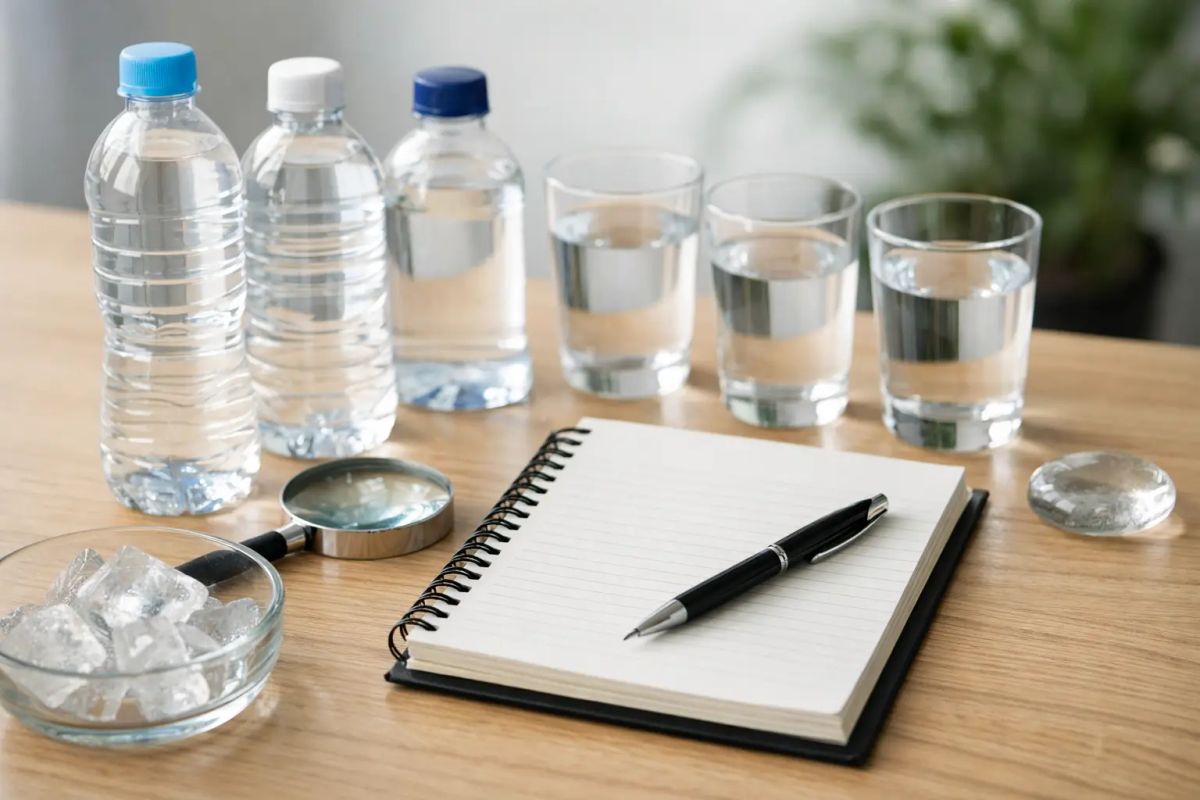
The second bottle rarely tastes like the first one you loved. Not because your memory failed, but because water is subtler than most people expect. A bottled water tasting journal gives that subtlety a structure. It turns a passing impression - crisp, soft, chalky, saline, bright - into something you can revisit, compare, and actually learn from.
For anyone who cares about what is in the glass, this is where appreciation becomes discernment. You stop asking whether a water is simply good and start noticing why it feels silky, why it finishes clean, or why one bottle flatters food better than another. There is a world inside every bottle. A journal helps you read it.
Why a bottled water tasting journal changes the experience
Most people can tell when two waters taste different. Fewer can describe that difference with confidence. That gap matters. Once you begin recording your impressions, patterns emerge quickly. You may notice that you prefer waters with a round mouthfeel and moderate mineral presence, or that highly saline profiles feel more compelling with food than on their own.
A journal also protects you from the vagueness of memory. Even experienced tasters misremember texture, intensity, and finish if they rely only on recall. Writing a short note after each bottle creates a personal reference point. Over time, your own taste becomes more legible.
This is especially useful if you are choosing water for specific contexts. A runner may prefer a particular mineral profile after training. A hospitality professional may want a still water that does not interfere with a delicate dish. A wellness-minded buyer may simply want to understand what distinguishes one premium bottle from another before making it part of a regular routine. Different goals, same benefit - better observation.
What to record in your bottled water tasting journal
A good journal is not a chemistry lab report, but it should be more than a one-word opinion. The strongest entries combine objective facts with sensory notes.
Start with the basics: brand, source, still or sparkling, bottle format, and serving temperature. Temperature matters more than many people realize. Very cold water can mute aroma and texture, while slightly cooler-than-cellar temperatures often reveal more character.
Then record the mineral data if it is available on the label or through a trusted source: calcium, magnesium, sodium, bicarbonate, pH, and TDS. You do not need to treat these numbers as abstract science. They are often the clearest explanation for what you taste. High bicarbonate can suggest structure and breadth. Elevated calcium may contribute firmness. Sodium can read as roundness or a faint savory edge, depending on balance. TDS often signals intensity, though intensity does not always mean elegance.
After that, focus on the sensory side. Note the first impression, the mid-palate, and the finish. Does the water arrive sharp or gentle? Does it feel airy, dense, creamy, glassy, metallic, velvety, or brisk? Does the finish disappear quickly, or linger with a mineral echo?
Finally, give the bottle context. When did you drink it? On its own, with food, after exercise, during travel, at a restaurant? Water does not exist in a vacuum. A bottle that feels too assertive on its own may become exact and refreshing beside oysters or rich cheese.
How to taste bottled water with more precision
The ritual does not need to be complicated, but consistency helps. Use the same type of glass when possible. Taste at a similar temperature. If you are comparing multiple waters, begin with the lower TDS profile and move upward. This keeps stronger mineral signatures from flattening subtler ones.
Take a small sip first, then a slightly larger one. Let it move across the palate. Notice texture before chasing flavor language. With water, mouthfeel often tells the truth faster than adjectives do.
Pause before writing. The best note is not always the first one. Sometimes the finish reveals more than the opening. A water may seem neutral at first, then show chalk, sweetness, salinity, or a stony dryness several seconds later.
And be careful with overstatement. Not every bottle needs dramatic tasting prose. Some waters are beautiful because they are restrained. A quiet water can be just as expressive as a bold one, especially if balance is the point.
A simple scoring method that stays useful
Scoring can help, but only if it remains consistent. A 100-point scale looks serious and often says very little. For personal use, a five-part framework is usually more revealing.
Rate appearance of carbonation if sparkling, texture, mineral intensity, balance, and finish. Then add one overall preference score. This lets you separate admiration from personal taste. You may recognize that a water is balanced and well-structured while still preferring something softer.
This distinction matters. Tasting is not about pretending all preferences are universal. It is about becoming precise enough to know what you like and why.
Digital or paper - which journal works better?
A paper notebook has romance on its side. It slows you down. It feels deliberate. For some people, that is exactly the point. If tasting is part of a dinner table ritual or a travel habit, handwriting can make the practice feel more intimate.
But digital journals are usually better for comparison. Searchable notes, saved mineral data, personal profiles, and the ability to revisit bottles months later make a real difference once your tasting history grows. If you are scanning labels, comparing brands across categories, or tracking how your preferences change over time, digital wins on usefulness.
This is where an app-based approach becomes especially strong. A platform like Water Sommelier can combine the sensory pleasure of tasting notes with the hard data behind them, so your journal does not just capture impressions - it explains them. Point. Shoot. Know. Then taste with more confidence.
The language that makes water easier to describe
Many people stall because they think they need sommelier vocabulary. You do not. You need repeatable language. Start with contrasts.
Instead of hunting for a perfect poetic phrase, ask whether the water feels soft or firm, light or dense, neutral or savory, quick or lingering, fine-bubbled or aggressive. Those oppositions create clarity. From there, your vocabulary expands naturally.
It also helps to borrow from touch as much as from flavor. Water is often better described through texture than taste. Terms like silky, grippy, creamy, polished, sharp, and dry are often more accurate than trying to force fruit or floral notes where they do not belong.
That said, sensory associations can still be useful when they are honest. A water may suggest wet stone, sea spray, chalk, or snowmelt. The point is not to sound impressive. The point is to capture the experience in a way your future self will immediately understand.
Common mistakes that flatten your notes
The first mistake is tasting everything ice-cold. It makes many waters seem more similar than they are. The second is ignoring glassware and drinking straight from the bottle every time. Convenient, yes. Ideal for observation, not quite.
Another common mistake is writing only whether you liked it. Preference without description gives you very little to work with later. "Loved it" does not help much six months from now. "Silky texture, medium minerality, clean short finish, excellent with shellfish" does.
The last mistake is expecting every bottle to perform the same way in every setting. Some waters are contemplative. Some are made for the table. Some feel best when you want clarity and restraint. Some are all about mineral presence and gastronomic impact. Context is not a side note. It is part of the tasting.
What your journal starts to reveal over time
After ten entries, you have notes. After fifty, you have a palate. Patterns become difficult to ignore. You may realize you consistently favor low-to-mid TDS still waters for daily drinking but enjoy higher-mineral sparkling bottles with richer food. You may notice that origin matters less to you than texture, or that sodium shifts your preference more than pH ever does.
That is the real pleasure of keeping a journal. It gives shape to instinct. It helps you buy more intelligently, order more confidently, and speak about water with the same nuance people already bring to coffee, tea, and wine.
And once you start paying attention, even a familiar bottle can surprise you. Not because it changed, but because you did. The journal is simply proof that your palate is becoming more exact, one glass at a time.
Scan any bottle. Discover its minerals, origin, and character. Get the Water Sommelier app