
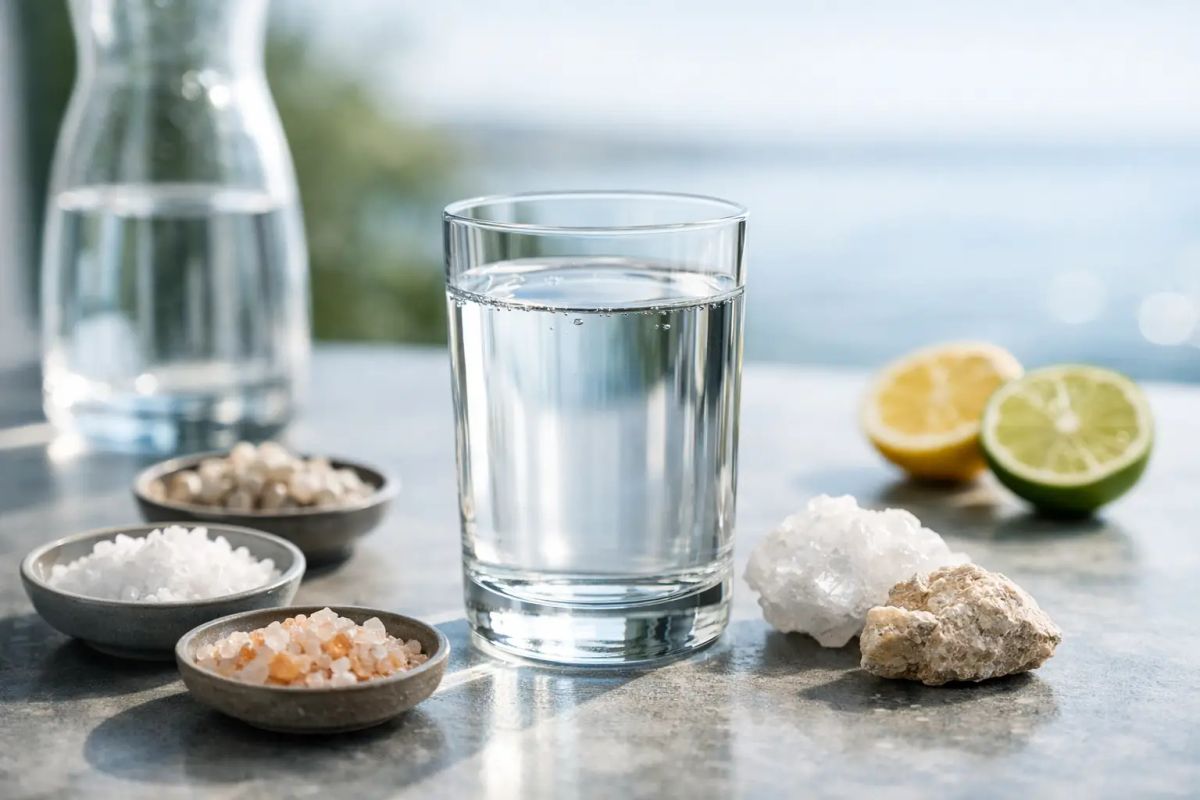
A bottle of water can look perfectly simple until you read its label. Then the details begin to speak: calcium, magnesium, sodium, bicarbonate, total dissolved solids. This guide to water mineral balance helps you read those details not as a scorecard, but as a map of a water’s origin, texture, and character.
There is a world inside every bottle. Some waters arrive light and crisp, finishing almost silently. Others feel rounder, more structured, or distinctly saline. Those differences are not marketing poetry alone. They are often the sensory expression of dissolved minerals gathered as water moves through rock, soil, and aquifers before it is bottled.
What Water Mineral Balance Actually Means
Water mineral balance describes the relationship among the dissolved minerals and compounds in a water, rather than the presence of any one mineral in isolation. A label may list calcium and magnesium in milligrams per liter, sodium as a separate figure, and bicarbonate as part of the water’s composition. Together, those numbers offer a useful portrait of style.
There is no single “best” mineral balance. A low-mineral water can be delicate and clean. A more mineral-forward water can be textured, savory, and persistent. Preference depends on the occasion, the food on the table, and the sensory experience you want from the glass.
Think of it like coffee or wine. A number does not tell the whole story, but it can help you anticipate what you may taste. Mineral data gives you a vocabulary for moving beyond “I like this one” to “I like its soft texture, dry finish, and restrained salinity.”
The Main Minerals to Read on a Water Label
Calcium: Structure and a Firm Finish
Calcium is commonly found in waters that have traveled through limestone or other calcium-rich geology. In the glass, it is often associated with a more substantial, structured impression. Depending on the wider composition, a calcium-forward water may feel crisp, chalky, or quietly firm at the finish.
Calcium is rarely the whole story. Its character changes alongside bicarbonate, magnesium, and total mineral content. Two waters with similar calcium figures can still taste quite different because their surrounding mineral compositions are different.
Magnesium: Texture and Gentle Bitterness
Magnesium can bring a subtle mineral edge and, at higher levels, a mild bitterness. It may also contribute to a fuller mid-palate, giving the water more presence than a very low-mineral alternative.
For some drinkers, that edge is part of the appeal. It can make a water feel serious and gastronomic, particularly beside rich or salty food. For others, a lower-magnesium profile may feel more neutral and refreshing. Neither is inherently superior. They are simply different styles.
Sodium: Salinity, Not a Verdict
Sodium is one of the most immediately recognizable figures on a bottled-water label because it can influence a water’s perceived salinity. In modest amounts, it may add softness or a faint savory note. At more noticeable levels, the water can read as distinctly saline.
It is useful to separate sensory interpretation from assumption. Sodium on a label is a compositional fact, not a universal judgment about quality. If you prefer a clean, nearly invisible profile, you may gravitate toward lower-sodium waters. If you enjoy a more expressive, mineral-driven glass, a touch of salinity may be part of the attraction.
Bicarbonate: Roundness and Buffering Character
Bicarbonate is frequently associated with waters from limestone landscapes and can contribute to a rounder, softer impression. It also helps explain why certain waters feel composed and settled rather than sharp.
In tasting terms, bicarbonate can act like a background note that gives the composition shape. When paired with calcium and magnesium, it often signals a water with more mineral presence. The label may list it as bicarbonate, hydrogen carbonate, or a related analysis term, depending on the producer.
Sulfate, Chloride, and Silica: The Fine Print Worth Reading
These are the details that make label-reading more interesting. Sulfate can add dryness or a mineral snap. Chloride can contribute a faint saline quality. Silica is often present in smaller amounts and can be part of a water’s overall profile, though it is not a shortcut to predicting flavor on its own.
A label does not need every possible measurement to be useful. Start with the elements it does provide, then compare bottles over time. Patterns become clear quickly when you taste with attention.
pH and TDS: Useful Context, Not a Quality Ranking
Two figures are often treated as if they settle the question of quality: pH and TDS. They do not. They are useful descriptors, but neither can tell you whether you will enjoy a water.
pH measures how acidic or alkaline a water is on a scale. It can be part of the product’s profile, yet it does not define taste by itself. The mineral composition, carbonation level, serving temperature, and even the glass all shape perception.
TDS, or total dissolved solids, measures the combined amount of dissolved material in the water. Lower TDS often corresponds with a lighter, more restrained sensory profile. Higher TDS can suggest more mineral intensity and a longer finish. But TDS does not reveal which minerals are present. A water with a similar TDS figure to another may taste entirely different because calcium, bicarbonate, sodium, and sulfate are arranged differently within that total.
Treat pH and TDS as orientation points. The mineral list is where the more revealing story begins.
How to Use a Guide to Water Mineral Balance at the Table
The most satisfying way to understand water is through comparison. Choose two or three bottled waters with visibly different mineral profiles and pour them into clean, odor-free glasses. Taste them at a similar cool temperature, not ice-cold, which can mute character.
Take a small sip and notice the opening impression. Does it feel light, silky, crisp, round, saline, dry, or mineral-rich? Then pay attention to the finish. Does the flavor disappear quickly, or does it linger? Read the labels after your first taste, then return to the glasses. This simple sequence keeps the data from deciding the experience before you have had it.
For dining, consider contrast and harmony. A delicate, low-mineral still water can sit quietly beside subtle seafood or fresh produce. A more structured water may hold its own beside aged cheese, roasted dishes, or richer sauces. Sparkling waters bring another variable: carbonation can sharpen perception and refresh the palate between bites.
There are no fixed pairing rules. A minerally water that feels perfect with one dish may feel too assertive with another. The pleasure is in noticing the difference.
Build Your Own Water Vocabulary
Keep your observations simple and specific. Instead of calling a water “good,” try words such as soft, stony, brisk, creamy, saline, dry, airy, or long-finishing. Over a few bottles, you will begin to connect those impressions to what is printed on the label.
This is where a water-intelligence tool can add practical context. Water Sommelier lets you point your phone camera at a bottle to help identify it and surface educational information about mineral composition, pH, TDS, and source origin. The purpose is not to replace your palate. It is to give that palate a clearer frame of reference.
The goal is curiosity, not perfection. A label is an invitation to pay closer attention, and every bottle offers another chance to learn what you value in the glass.
Scan any bottle. Discover its minerals, origin, and character. Get the Water Sommelier app