
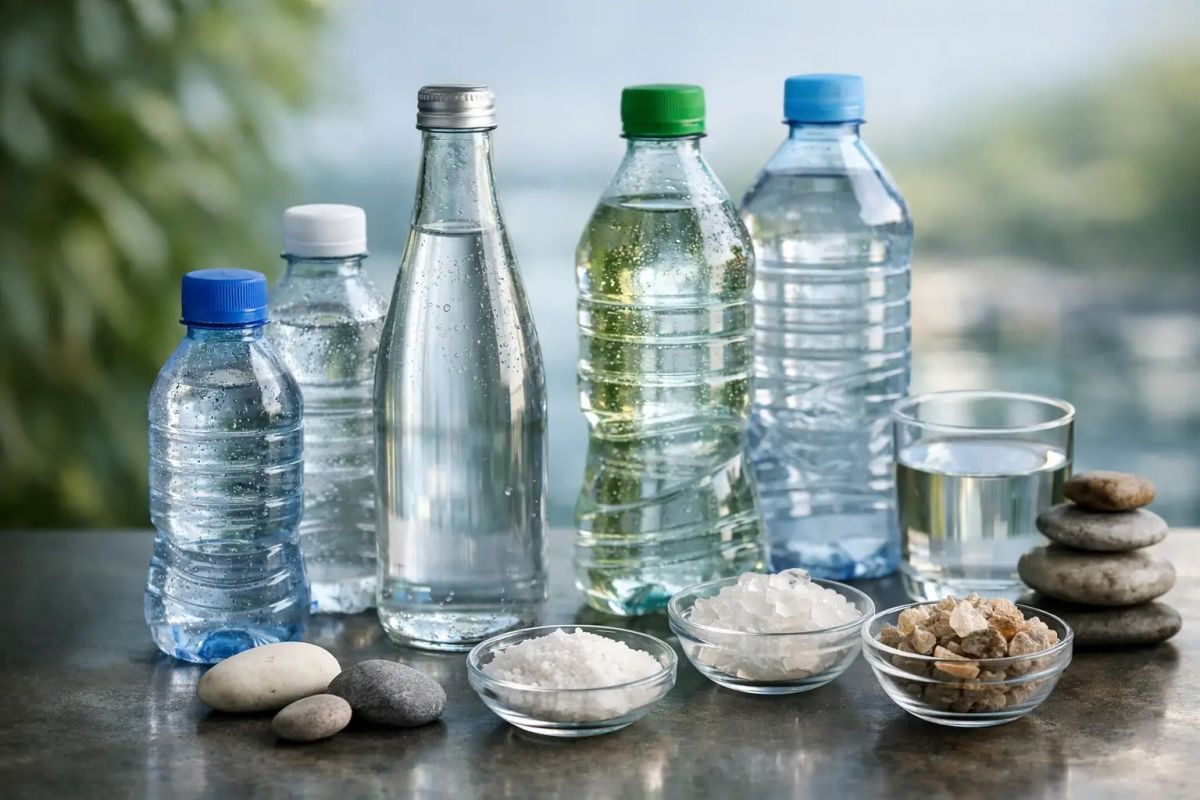
Some bottled waters feel crisp and barely there. Others land with a soft, chalky weight or a faint saline edge that lingers after each sip. That difference is not branding. It is chemistry. A smart bottled water mineral comparison tells you why one bottle tastes delicate with oysters, another stands up to steak, and a third simply works better for your own preferences.
Water is never just water. It carries a mineral signature shaped by geology, source depth, and time underground. For anyone who reads labels, tracks intake, thinks about performance, or cares how a beverage behaves at the table, those numbers matter. They explain structure, taste, and overall character in the glass.
How bottled water mineral comparison actually works
Most people look at a bottle and see a few familiar terms - calcium, magnesium, sodium, bicarbonate, pH, TDS. The mistake is treating each number in isolation. What matters is the balance between them.
Calcium often brings firmness and a subtle chalk-like texture. Magnesium can add bitterness when it climbs, but in the right range it contributes freshness and precision. Sodium softens edges and can create a rounder, smoother impression. Bicarbonate is a major driver of perceived softness and buffering capacity, often making water feel broad and calm on the palate.
Then there is TDS, or total dissolved solids. TDS is not a flavor note by itself. It is a measure of the total mineral content dissolved in the water. Higher TDS often means more weight, more persistence, and more presence. Lower TDS usually feels lighter, cleaner, and more transparent. Usually, not always. Two waters can share a similar TDS and taste completely different because their mineral profiles are built differently.
pH also gets a lot of attention, sometimes more than it deserves. It can influence perception, but it is not the whole story. A water with a moderate pH and excellent mineral balance may taste far more refined than a water with a headline-friendly pH value but little structure.
The key minerals and what they change in the glass
A useful bottled water mineral comparison starts with understanding what each major component does sensorially.
Calcium
Calcium is often associated with structure. In moderate to elevated levels, it can give water a firmer mouthfeel and a more defined finish. Some tasters describe calcium-rich waters as precise or stony. In very low-mineral waters, that structural backbone is often missing, which can make the experience feel fleeting.
Magnesium
Magnesium is one of the most influential minerals for taste. It can bring liveliness and tension, but if the level is relatively high compared with the rest of the profile, bitterness may become more noticeable. This is not automatically a flaw. With rich food, that slight edge can be useful.
Sodium
Sodium carries baggage because people hear the word and react nutritionally before they think sensorially. In taste terms, sodium can make a water feel polished and supple. It can also amplify a gentle savory quality. Some premium waters with modest sodium levels are exceptionally elegant at the table because they soften acidity in food and round out the palate.
Bicarbonate
Bicarbonate plays a major role in mouthfeel. Waters with higher bicarbonate levels often seem smoother, broader, and more cushioning. They can feel especially composed with rich meals or sparkling formats. If you prefer a softer, less sharp style, bicarbonate is a number worth watching.
Sulfates and other trace elements
Not every label highlights sulfates, silica, or potassium, but they can still affect taste and texture. Sulfates may lend a drier impression. Silica is often associated with a silky mouthfeel. These details are part of why serious water tasting rewards attention.
Low, medium, and high mineral waters are not "better" or "worse"
The easiest mistake in bottled water mineral comparison is assuming that more minerals means better water. It depends on what you want.
Low-mineral waters tend to feel clean, delicate, and quiet. They are often ideal when you want minimal interference - during a tasting, alongside subtle food, or when you simply enjoy a lighter style. They can be beautiful, but some people find them too neutral.
Medium-mineral waters often offer the most versatility. They have enough structure to be interesting, yet not so much intensity that they dominate the palate. For everyday drinking, this range is often where balance shines.
High-mineral waters can be dramatic. They may feel dense, saline, chalky, or deeply textured. Some are extraordinary with food and unforgettable on their own. Others can seem too assertive if you prefer something restrained. This is where taste becomes personal.
Bottled water mineral comparison for different goals
Context matters. The right bottle for one moment may be the wrong one for another.
For health-conscious label readers, the practical move is to compare calcium, magnesium, sodium, and total mineral load instead of focusing on a single marketing phrase. If you are building a daily routine around intentional choices, consistency matters more than hype.
For athletes and performance-focused drinkers, mineral composition can be part of a broader strategy, but there is no universal best bottle. A water with noticeable sodium and a fuller mineral profile may appeal in one setting, while a cleaner, lower-mineral water may suit another. The use case changes the answer.
For dining professionals, chefs, and food writers, the comparison becomes more sensory. Mineral profile affects how water interacts with salinity, fat, acid, and delicate aromatics. A fine still water with low to moderate mineralization may flatter raw seafood or fresh cheese. A bolder sparkling water with more bicarbonate and sodium can reset the palate during richer courses.
For premium lifestyle consumers, the experience matters as much as the data. Origin, terroir, bottle design, carbonation texture, and mineral structure all shape perception. That is not indulgence for its own sake. It is the recognition that water, like wine or coffee, has identity.
How to read a label without getting lost
Start with the source. Spring, artesian, volcanic, glacial - these terms hint at origin, but the numbers tell the real story.
Next, look at TDS. This gives you a quick sense of overall intensity. Then check the main minerals: calcium, magnesium, sodium, and bicarbonate. Ask a few basic questions. Is this profile light and restrained, or broad and substantial? Is sodium low or does it play a real sensory role? Is magnesium likely to add freshness or bitterness? Does bicarbonate suggest softness and weight?
After that, consider pH as supporting context, not the headline. Finally, connect the label to experience. If a water tastes soft and creamy, see whether bicarbonate or silica is part of the picture. If it tastes sharp or intensely mineral, look at magnesium, sulfates, or elevated TDS.
This is where technology becomes useful. Instead of memorizing chemistry tables in a grocery aisle or at a restaurant, you can scan a bottle and see the full composition in seconds. Water Sommelier approaches bottled water with the same precision and curiosity usually reserved for wine lists, making mineral data easier to understand and easier to use.
Bottled water mineral comparison and food pairing
One of the most overlooked reasons to compare minerals is pairing. Water can either disappear beside a dish or actively improve the meal.
Delicate foods usually benefit from restraint. Think sashimi, crudo, fresh greens, simple white fish. A lower-mineral still water keeps the focus on nuance. Heavily mineralized water may flatten those details.
Rich, fatty, or salty dishes can welcome more structure. A sparkling water with stronger mineral presence can cleanse the palate and keep each bite feeling distinct. Cream sauces, fried food, aged cheese, and grilled meats often stand up well to this style.
Dessert is trickier. A very assertive mineral profile can clash with sweetness, while a gentler water may feel more harmonious. Again, it depends. The point is not to memorize fixed rules. It is to notice that water has a seat at the table.
What a better comparison leads to
When you begin making a real bottled water mineral comparison, you stop choosing by packaging alone. You start noticing style. You recognize why one bottle tastes almost invisible and another feels architectural. You find what suits your palate, your meals, and your routines.
There is a world inside every bottle, but it does not need to stay abstract. Read the numbers. Taste with attention. Let preference become informed rather than accidental. The best bottle is rarely the one with the loudest claims. It is the one whose mineral profile fits the moment in your glass.
Scan any bottle. Discover its minerals, origin, and character. Get the Water Sommelier app