
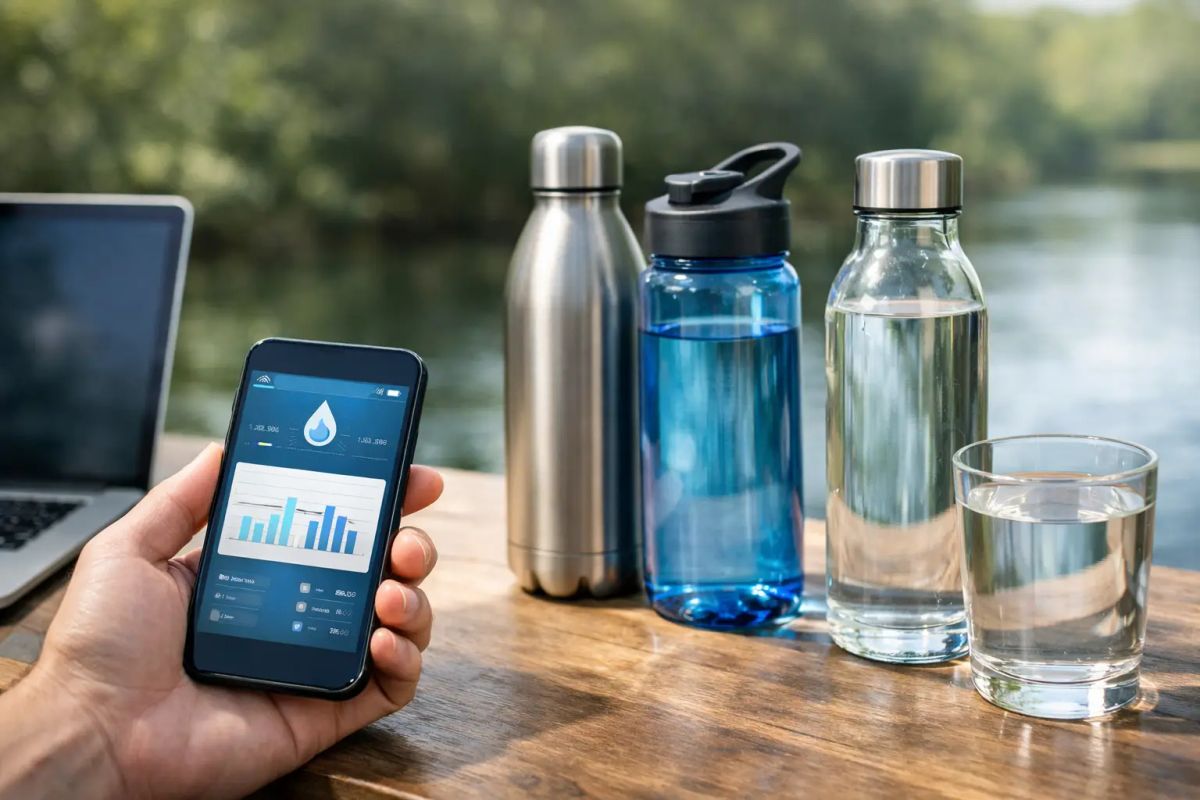
A bottle can look pristine and still leave you with almost no useful information at the moment of choice. The right water quality app review should answer the questions a front label rarely does: What is actually in this water? Where did it come from? How will its mineral profile shape the taste? And is it the right bottle for this meal, moment, or personal preference?
Water is not a blank canvas. There is a world inside every bottle - geology, source, minerals, texture, and character. A worthwhile app makes that world legible in seconds without turning a simple purchase into a chemistry exam.
What a Water Quality App Should Actually Review
The phrase “water quality” can mean different things depending on the app. For bottled water enthusiasts, the most useful tools do more than assign a vague score or display a generic pH badge. They translate a specific bottle’s available source and composition data into information you can use.
Start with mineral composition. Calcium, magnesium, sodium, potassium, bicarbonate, sulfate, chloride, silica, and TDS all contribute to a water’s identity. A mineral table is valuable, but it becomes genuinely useful when the app explains what those numbers suggest about palate weight, mouthfeel, finish, and overall balance.
A high-quality review experience also distinguishes among source origin, declared composition, and sensory interpretation. A mountain spring, deep artesian aquifer, volcanic source, and mineral spring may produce very different styles of water. The goal is not to crown one style as universally superior. It is to help you recognize the profile you enjoy and select it with intention.
This is especially relevant when two bottles occupy the same shelf but deliver entirely different experiences. One may be light, crisp, and low in minerals. Another may be creamy in texture, rich in bicarbonate, and built for a long meal. Neither is automatically the better choice. Context matters.
The Features That Separate a Useful App From a Pretty Label Reader
Camera recognition is often the most immediate test. If an app asks you to manually search every brand and bottle, the experience can become a chore. A capable scanner lets you point your phone at a label, recognize the product, and surface the relevant details quickly. The convenience is not trivial. It is what makes informed selection realistic when you are standing in a hotel minibar, specialty grocer, restaurant, or airport lounge.
Recognition alone is not enough. The real value sits behind the scan: a clearly organized profile that presents mineral levels, pH, total dissolved solids, and source information in plain language. Technical data should remain precise, but it should not be stranded in a spreadsheet-like interface. Look for visual hierarchy that lets you see the essentials at a glance, then explore more deeply when curiosity calls.
A thoughtful app should also offer an interpretation of flavor. Mineral composition influences whether water reads as silky, rounded, bright, dry, saline, delicate, or lingering. Sensory language is not decoration. It connects chemistry to the actual experience in your glass.
Food pairing is another mark of a more considered platform. Water can either refresh the palate or compete with a dish, depending on its minerality and character. A delicate still water may suit subtle seafood, while a more structured mineral water can stand beside rich cuisine or aged cheese. Pairing suggestions should feel like guidance from a skilled beverage professional, not a rigid rulebook.
Finally, consider whether the app helps you remember what you liked. A personal tasting journal turns casual sampling into a useful record. Over time, notes on bottles, meals, occasions, and preferred styles can reveal patterns that no one-size-fits-all ranking can capture.
A Water Quality App Review Needs Context, Not Just Scores
Scores are tempting because they make decisions feel easy. Yet a single number often obscures more than it reveals. Is a low-sodium water being rated for someone who prioritizes that attribute? Is a higher-TDS water being judged against a preference for a clean, featherlight finish? Is sparkling water being compared fairly with still water?
The best water quality app review treats data as context. It lets users decide what matters to them, whether that is a particular mineral balance, source type, carbonation style, dietary preference, or tasting profile. It can highlight compatibility without implying that one bottle is objectively right for every person.
This is also where transparency matters. Mineral composition can vary modestly by source conditions, bottling run, market, or the producer’s most recent published analysis. An app should present information responsibly and avoid pretending every number is permanently fixed. When available, clear sourcing and product-specific detail inspire more confidence than broad claims.
For travelers and collectors, database depth matters just as much as interface polish. A useful app should recognize familiar premium labels as well as less obvious discoveries from international restaurants, specialty shops, and hospitality settings. A large catalog expands the pleasure of discovery, particularly when you encounter a bottle you have never seen before.
Where Water Apps Can Fall Short
No app can create detail that a producer has not published or identify every bottle perfectly from a partial, reflective, or damaged label. Camera scanning depends on image quality, packaging variations, and a database that keeps growing. A reliable app should make it easy to search manually when recognition is uncertain rather than treating a missed scan as a dead end.
There is also a difference between bottled-water discovery and laboratory testing. An app that presents published bottle data and tasting guidance is a powerful selection tool, but it is not a substitute for independent laboratory analysis of an unknown liquid. Knowing which job you need the app to perform prevents misplaced expectations.
Taste recommendations deserve the same measured view. They are useful starting points, especially for food and beverage professionals building a service ritual, but palate remains personal. Some people love a mineral-forward finish; others prefer quiet, low-mineral water. The strongest recommendation engine learns from your choices instead of insisting on a universal ideal.
How Water Sommelier Approaches the Choice
Water Sommelier is built around a simple premise: a bottle of water deserves the same informed attention we give wine, coffee, or tea. Its camera-based experience is designed to reveal a bottle’s mineral composition, pH, TDS, source origin, tasting profile, food-pairing ideas, and personal compatibility details without asking users to decode a dense technical panel.
The appeal is the balance between immediate utility and deeper appreciation. Scan a bottle when you need an answer now. Return later to compare styles, build a tasting journal, or explore a collection through the lens of terroir and sensory character. “Point. Shoot. Know.” is a concise promise, but the lasting value lies in learning what your own palate recognizes and returns to.
For an athlete choosing a bottle after training, sodium and mineral information may be the deciding detail. For a sommelier planning a tasting menu, texture and pairing potential may matter more. For a frequent traveler, source and flavor profile can make an unfamiliar hotel-room bottle feel like a small discovery rather than an afterthought.
Choose the App That Makes You More Discerning
A good water app should leave you with more than a database entry. It should make the next bottle easier to understand, the next meal more considered, and your own preferences more precise. Look for fast recognition, complete published composition data, clear source information, an intelligible tasting profile, and enough context to make recommendations useful rather than prescriptive.
Then give yourself permission to taste closely. Notice the first impression, the texture across the palate, and the finish after a bite of food. The most valuable app is not the one that tells you what to like. It is the one that teaches you how to notice.
Scan any bottle. Discover its minerals, origin, and character. Get the Water Sommelier app