
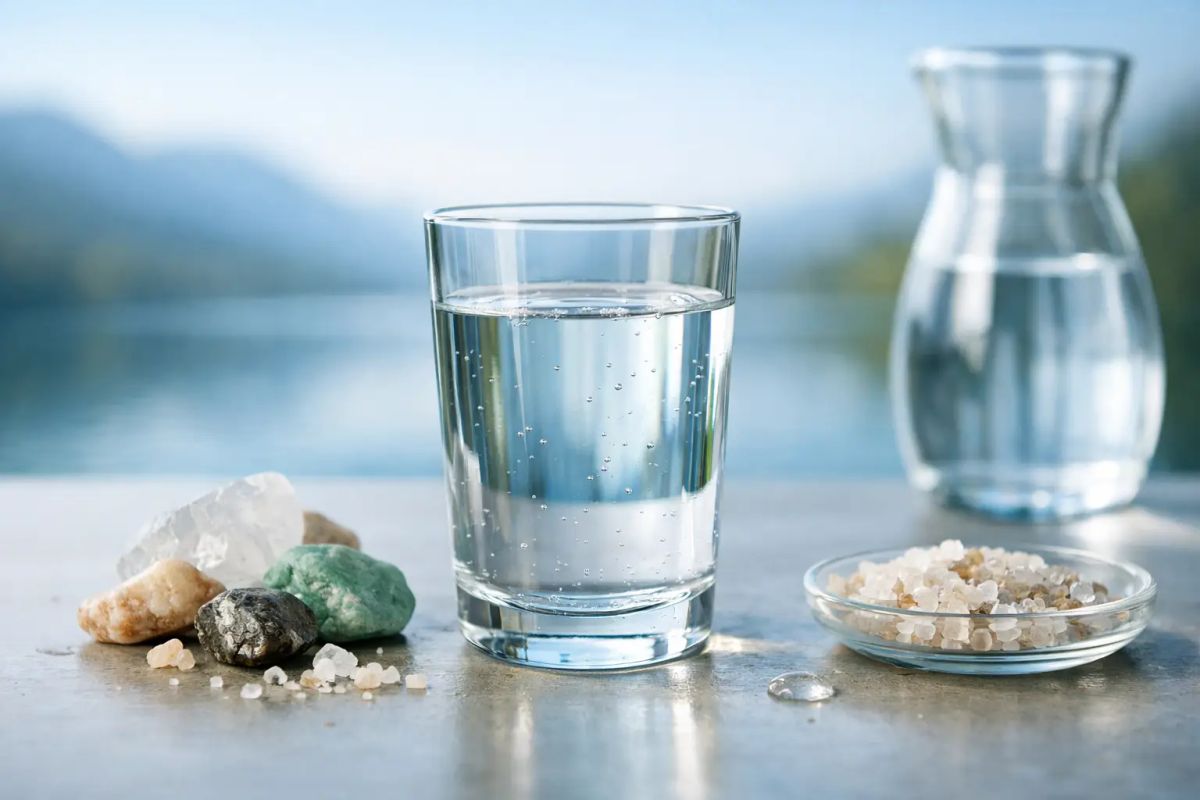
You taste it before you can name it. One water feels crisp and light. Another seems round, silky, even slightly salty. That difference is not marketing language - it is mineral composition. If you have ever asked what is mineral composition in water, the short answer is this: it is the specific mix and concentration of dissolved minerals that gives a water its taste, texture, and functional profile.
For anyone who cares about wellness, performance, or the finer points of food and drink, this is where water becomes more than hydration. There is structure inside every bottle. Minerals shape how water lands on the palate, how it pairs with a meal, and whether it feels delicate, assertive, soft, or intensely vivid.
What Is Mineral Composition?
Mineral composition refers to the amount and balance of naturally occurring dissolved minerals in water. These usually include calcium, magnesium, sodium, potassium, bicarbonate, sulfate, chloride, and sometimes trace elements such as silica or fluoride, depending on the source.
Think of it as the water's internal architecture. Two waters can look identical in the glass and still drink completely differently because their mineral profiles are different. A bottle drawn from limestone-rich geology will not express itself the same way as water filtered through volcanic rock or glacial terrain.
This is why origin matters. As water moves through layers of earth over time, it dissolves minerals from the surrounding rock. That journey creates a composition that is as much about place as it is about chemistry. In that sense, water has terroir.
Why Mineral Composition Matters More Than Most People Realize
Most people first notice mineral composition through taste. Calcium can bring a clean, chalky firmness. Magnesium often adds a slight bitterness or tension. Sodium can make water feel softer and more rounded, while bicarbonate can create a smoother, more buffered character.
But taste is only part of the story. Mineral composition also affects mouthfeel, perceived freshness, and the way water performs in different settings. A low-mineral water may feel elegant and almost weightless alongside delicate seafood. A higher-mineral water can stand up to richer dishes, cured meats, or long tasting menus where structure matters.
For wellness-minded consumers, the topic becomes even more personal. Some people prefer magnesium-rich waters for daily intake. Athletes may pay closer attention to sodium and total mineral load after heavy training. Others may seek lower-sodium or lower-TDS waters depending on their habits, goals, or guidance from a healthcare professional. There is no single best profile for everyone. Context changes the answer.
The Main Minerals Found in Water
When people ask what is mineral composition, they are often really asking which minerals matter most. A few play an outsized role in both flavor and function.
Calcium
Calcium is one of the most influential minerals in bottled mineral water. It can give water firmness and a clean, structured finish. In higher concentrations, it may contribute to a more pronounced mineral taste.
Magnesium
Magnesium often adds character. It can create a slightly bitter edge, but in balance it brings energy and precision to the palate. Some of the world's most distinctive waters owe part of their personality to magnesium.
Sodium
Sodium is frequently misunderstood. In water, it does not automatically mean the bottle will taste salty. At moderate levels, sodium can soften the palate and make the water feel smoother or more supple.
Bicarbonate
Bicarbonate influences smoothness and balance. Waters high in bicarbonate can feel rounded and calm, sometimes with a gentle buffering effect that changes how acidity is perceived when paired with food.
Sulfate and Chloride
Sulfate may add dryness or a sharper mineral edge. Chloride can contribute to fullness and, depending on the profile, a subtle savory impression. Neither is inherently good or bad. It depends on proportion.
Silica and Trace Elements
Silica is prized by many water enthusiasts for the silky texture it can bring. Trace elements, even in very small amounts, may add nuance to a water's overall sensory expression.
Mineral Composition and TDS Are Not the Same Thing
This is where confusion often starts. TDS, or total dissolved solids, measures the total amount of dissolved substances in water, usually expressed in milligrams per liter. It gives you a sense of overall concentration.
Mineral composition tells you what those dissolved substances actually are.
That distinction matters. Two waters can have a similar TDS and taste nothing alike because one is driven by calcium and bicarbonate while another leans on sodium, sulfate, or magnesium. TDS tells you how much. Mineral composition tells you what kind.
If you care about flavor, pairing, or personal suitability, composition is the more revealing lens.
How Mineral Composition Shapes Taste and Texture
Water tasting is often described in broad terms like refreshing or smooth, but those sensations come from chemistry. Mineral composition affects first impression, mid-palate texture, and finish just as clearly as acidity and tannin do in wine.
Low-mineral waters often feel light, clean, and quick on the palate. They can be especially appealing when you want neutrality - during travel, between courses, or with subtle dishes.
Moderate-mineral waters tend to offer more presence. They may feel balanced, versatile, and gastronomically useful. This is often where people begin to notice distinct texture.
High-mineral waters can be dramatic. They may taste vivid, savory, chalky, saline, creamy, or brisk depending on the profile. For some drinkers, that intensity is deeply appealing. For others, it is an acquired taste. Neither reaction is wrong.
What Is Mineral Composition on a Label?
On a bottled water label, mineral composition usually appears as a list of minerals with values in milligrams per liter. You may see calcium, magnesium, sodium, bicarbonate, sulfate, chloride, potassium, silica, and a TDS figure. Some brands provide detailed lab analysis, while others offer only the basics.
The challenge is that raw numbers do not always feel intuitive. A label can tell you a water has 80 mg/L of calcium and 25 mg/L of magnesium, but it does not tell you whether the water will feel crisp, creamy, austere, or broad on the palate.
That is where interpretation matters. Numbers become useful when they are translated into experience: taste profile, likely texture, food affinity, and practical fit for your lifestyle.
Choosing Water Based on Mineral Composition
The right water depends on what you want from the bottle.
If your priority is subtlety, a low-mineral profile may be ideal. If you want a water that feels more substantial and expressive at the table, a moderate or high-mineral composition may be more satisfying. If you are thinking about exercise, recovery, or daily mineral intake, specific mineral levels may matter more than overall elegance.
This is also why comparison matters. A water that tastes extraordinary on its own may not be the best choice with oysters, espresso, or a delicate white fish. Another may be less impressive alone and perfect in service. Water is not one-dimensional. It performs differently across contexts.
For consumers who want immediate clarity, tools that scan and interpret label data can make the category far easier to navigate. Water Sommelier, for example, helps translate composition into something useful and sensory - not just technical.
Why There Is No Single Ideal Mineral Profile
People often want a definitive answer: which mineral composition is best? The more honest answer is that excellence depends on purpose.
A runner finishing a hard session may want something different from a diner pairing water with caviar. A person seeking very low sodium may choose differently from someone exploring mineral-rich European waters for taste. Source, mineral balance, pH, carbonation, and personal sensitivity all shape preference.
The same trade-off appears in flavor. Higher mineral concentration can mean more character, but also more assertiveness. Lower mineral concentration can feel pure and elegant, but occasionally too quiet for those who enjoy intensity. The best bottle is the one that suits the moment.
Reading Water More Like a Sommelier
Once you understand mineral composition, water stops being invisible. You begin to notice how geology becomes texture, how chemistry becomes finish, how one bottle brightens a meal while another softens it.
That shift changes the experience of drinking water. You are no longer choosing at random. You are choosing for palate, occasion, and personal intent.
And that is where water gets interesting. Not because every bottle needs to be complicated, but because every bottle has a point of view. Learn to read the minerals, and the water starts speaking clearly.
Scan any bottle. Discover its minerals, origin, and character. Get the Water Sommelier app.