
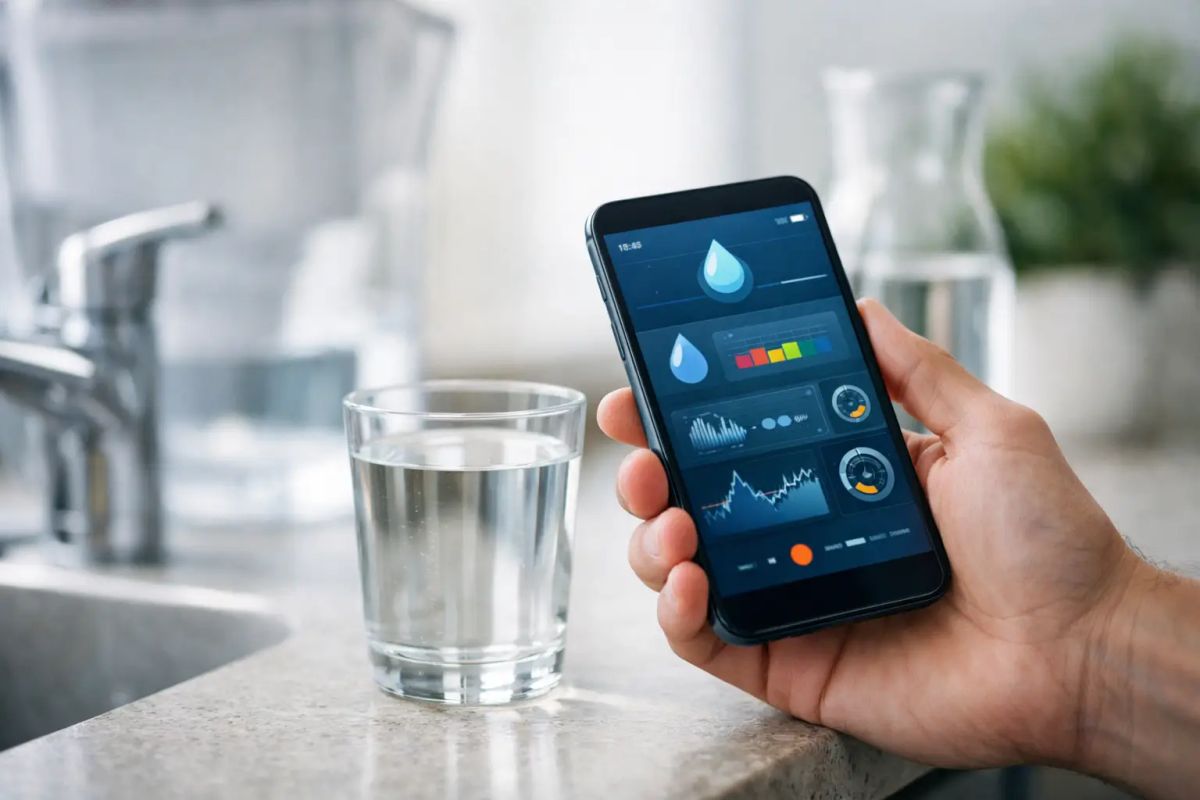
You pick up a bottle, glance at the label, and get the usual soft promises - pure, natural, premium, balanced. It sounds reassuring until you realize none of those words tells you what is actually in the water. That is where a water scanner app becomes useful. The right one turns a bottle into something legible, translating branding into mineral composition, origin, and sensory character you can actually use.
Water has long been treated as invisible luxury. Present at every table, rarely examined. Yet there is a world inside every bottle: calcium that adds structure, magnesium that sharpens the palate, sodium that changes mouthfeel, bicarbonate that affects balance, and source geology that shapes the entire profile. If you care about what you drink, a scanner should do more than identify a brand. It should teach you how to read water with confidence.
Why a water scanner app matters
Most people do not need more marketing around water. They need clarity. A bottle may look elegant and still tell you very little about its composition. Even when numbers are printed on the label, they are often buried in fine text and stripped of context. Is 110 mg/L of calcium high? Is low sodium always preferable? What does a pH of 7.8 really mean when you are choosing a bottle for dinner, after training, or for everyday drinking?
A good water scanner app closes that gap between data and meaning. It saves time, yes, but its real value is interpretation. It lets you point your camera, recognize the bottle, and immediately understand the water as a profile rather than a package.
That matters to several kinds of drinkers. The wellness-minded user may want consistency and transparency. An athlete may care about mineral levels in relation to routine and recovery. A sommelier, chef, or food writer may want to choose water with the same precision they bring to wine, coffee, or tea. And for anyone with a premium lifestyle mindset, details matter. If you are going to spend money on bottled water, it is reasonable to expect more than vague language and a mountain silhouette.
What a water scanner app should actually reveal
At minimum, a scanner should identify the bottle correctly and display a reliable mineral breakdown. That means calcium, magnesium, sodium, and bicarbonate should not be treated as advanced extras. They are the foundation of how water feels and tastes.
Calcium often contributes firmness and structure. Magnesium can add a slight edge or brightness. Sodium, depending on level, can make water feel rounder, softer, or more savory. Bicarbonate helps shape overall balance and can affect how a water performs with food. None of these figures means much in isolation, which is why raw numbers alone are not enough. A useful app explains the profile in plain language.
pH and TDS also matter, though they are often misunderstood. pH gives a sense of acidity or alkalinity, but it does not tell the whole story of taste. TDS, or total dissolved solids, indicates how much mineral material is present overall. Higher TDS can suggest a more pronounced, textured drinking experience, while lower TDS often feels lighter and cleaner. But neither is inherently better. It depends on your preference and context.
Source origin is another essential layer. Water is not just chemistry. It is geography. Aquifer depth, rock composition, and regional terroir all influence what ends up in the glass. The best apps respect that and present water as both data and place.
The difference between information and guidance
This is where many tools fall short. They present a scan result like a static label archive. Useful, but incomplete. A better experience offers guidance.
If a bottle is high in calcium and bicarbonate, what kind of food might it suit? If it is very low in TDS, is it likely to feel delicate or neutral? If sodium is present at a notable level, how might that affect taste perception? These are the questions that turn a scan from novelty into decision-making.
A thoughtful water scanner app should help you answer them without sounding clinical. Water is both technical and sensorial. The best platforms understand that the user does not simply want numbers. They want to know what those numbers mean at the table, during travel, after exercise, or while building a personal routine.
That is why tasting language matters. Describing a water as crisp, chalky, silky, dense, clean, or rounded gives shape to the experience. It allows users to develop preference, not just awareness. Over time, that creates a more literate drinker - someone who can recognize patterns in what they enjoy.
What to look for before you trust a scan
Accuracy comes first. If an app recognizes a bottle inconsistently or shows incomplete records, the experience breaks immediately. Water data should feel curated, not scraped together.
Depth is the second test. If the scan stops at brand recognition, it is not doing enough. If it offers only pH and a generic quality score, it is probably oversimplifying. Water deserves more nuance than a traffic-light rating.
The third test is usability. Technical depth is valuable only if it is readable. You should be able to scan a bottle and understand the result in seconds, then explore deeper if you want to. Good design matters here. The interface should feel calm, immediate, and intelligent.
Finally, look for a point of view. Not hype - curation. Water is a category with style, culture, and sensory range. The strongest apps treat it that way. They help you discover bottles, compare profiles, save favorites, and build your own taste memory.
A water scanner app is most useful when it becomes personal
One scan is interesting. Ten scans begin to reveal your palate.
Maybe you consistently prefer medium-mineral waters with gentle texture and low sodium. Maybe you enjoy sharper, more structured profiles with higher magnesium. Maybe certain waters work beautifully with seafood, while others feel better on their own. These patterns are easy to miss if each bottle is consumed and forgotten.
This is where personal tasting features make a real difference. A scan should not end with information delivery. It should invite reflection. Notes, saved bottles, collections, and recommendations help transform passive consumption into active preference.
For professionals in hospitality, this is especially valuable. Water pairing is still underused in American dining, despite the fact that mineral structure can support or clash with a dish just as wine can. A refined scanner helps bridge that gap, making water service more intentional without making it intimidating.
For everyday users, the value is simpler but no less meaningful. You stop buying blindly. You start choosing with language, evidence, and taste.
When a scanner is worth downloading
Not every drinker needs a deep archive of mineral data. If you only want a bottle because it is cold and convenient, a scanner may feel excessive. But if you have ever stood in front of a shelf wondering what separates one premium bottle from another, then yes, it is worth it.
The same goes if you care about consistency. Many people track food, coffee, wine, and supplements with care, yet treat water as an afterthought. A scanner brings water into focus without making the process heavy. Point. Shoot. Know.
One strong example is Water Sommelier, which approaches bottled water with the seriousness of a tasting discipline and the ease of a modern mobile tool. It identifies mineral composition, pH, TDS, source origin, compatibility, tasting profile, and food pairing cues in one place. That combination matters because it respects both sides of the category: science and pleasure.
A final word of caution: the best app for you depends on what you value. Some users want rapid label clarity. Others want sensory education. Others want a tasting journal and discovery engine. The smartest choice is the one that meets your curiosity at the level you actually live.
Water does not have to remain the least examined thing on the table. Once you can read it, you start to notice texture, balance, place, and character everywhere. And after that, a bottle is never just a bottle again.
Scan any bottle. Discover its minerals, origin, and character. Get the Water Sommelier app