
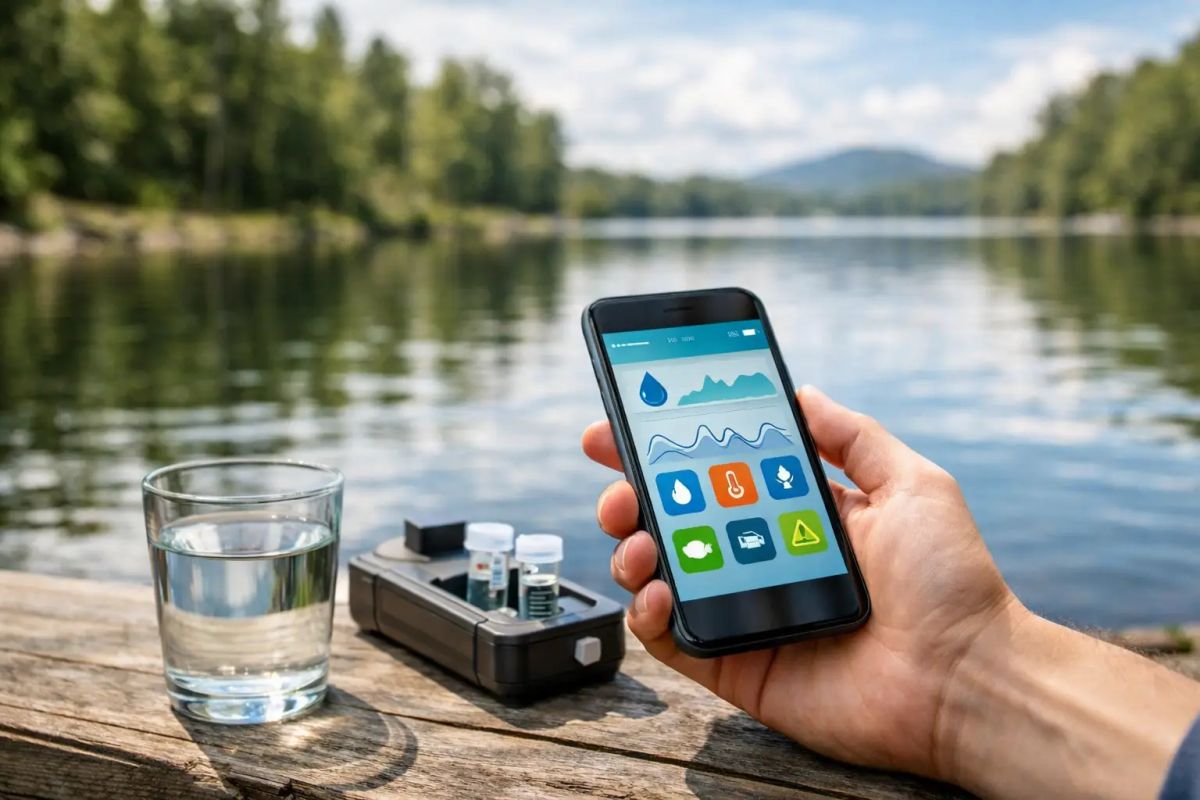
A label says spring water. Another says artesian. A third highlights electrolytes in oversized type and leaves the rest to guesswork. If you care about what is actually in your glass, a water quality app should do more than flatter the packaging. It should translate the bottle into something precise, useful, and surprisingly sensory.
That matters because bottled water is not one thing. It has structure, origin, mineral balance, and taste. Calcium can sharpen the profile. Magnesium can add a subtle bitterness or depth. Sodium can round the palate. Bicarbonate can change the feel of the water and the way it sits alongside food. When those details are hidden behind marketing language, choosing a bottle becomes mostly theater. When they are visible, water becomes legible.
Why a water quality app needs to go beyond pH
Many people start with pH because it is familiar. The number looks scientific, it is easy to compare, and it has become shorthand for quality in everyday conversation. But pH alone tells you very little about the full character of a bottled water.
A water with a higher pH can still be low in mineral complexity. A neutral pH water can still be beautifully balanced and ideal for a meal. TDS, or total dissolved solids, adds another layer, but even that is only part of the story. Two waters can have similar TDS levels and taste completely different depending on whether the dissolved minerals lean toward calcium, magnesium, sodium, silica, or bicarbonate.
A strong app should present pH and TDS as context, not as the whole verdict. The more useful question is not, "Is this good?" It is, "What kind of water is this, and is it right for what I want right now?"
That shift changes everything. Suddenly, water is not just a purity contest. It becomes a choice shaped by taste, setting, and intent.
What the best water quality app experience actually looks like
The right app should remove friction. Point your camera at a bottle. Get the facts immediately. No searching through technical PDFs. No trying to decode a dense label while standing in a grocery aisle or reviewing a beverage list before service.
But convenience alone is not enough. Speed without depth is just novelty. A serious water quality app should reveal mineral composition in a way that helps the user make sense of it. That means showing core minerals clearly, then connecting them to practical interpretation.
If a water is high in calcium and magnesium, the app should help you understand the profile will likely feel more structured and mineral-forward. If sodium is elevated, that may matter to someone tracking intake or simply preferring a softer style. If bicarbonate is prominent, the water may feel different with food than one with a cleaner, lighter mineral signature.
This is where a premium experience separates itself. Data is useful. Curated interpretation is what makes it memorable.
The information that matters most
A thoughtful app should start with the essential chemistry: calcium, magnesium, sodium, potassium, bicarbonate, pH, and TDS. These are not decorative stats. They shape mouthfeel, taste, and the overall identity of the water.
Source origin matters just as much. A bottle from a protected mountain spring communicates something different from water drawn from deep underground aquifers. Origin gives context to composition. It also adds the cultural layer that many drinkers now expect from premium food and beverage categories. People increasingly want to know not just what they are consuming, but where it comes from and why it tastes the way it does.
Then there is compatibility. Not in a medical sense, and not as a cure-all fantasy, but in the practical sense of fit. Some drinkers prefer low-sodium water. Some want a crisper, lighter profile for all-day drinking. Some gravitate toward assertive mineral waters that can stand up to rich food. A good app should help users filter bottled water through their own preferences and routines.
Tasting notes can also be far more useful than they sound. Describing a water as silky, chalky, bright, saline, soft, or intensely mineral gives the drinker an entry point that numbers alone cannot. For hospitality professionals, writers, and premium consumers, that language is not fluff. It is applied sensory understanding.
Water quality and water taste are connected
People often separate quality from flavor, as if one is technical and the other is subjective. In bottled water, they are linked. Mineral composition shapes sensory character. Sensory character influences when and how a water shines.
A low-mineral water may feel delicate, almost transparent, making it suitable in moments when you want refreshment without interference. A high-mineral water can feel architectural - more texture, more presence, a longer finish. Neither is automatically better. It depends on the context.
That is why food pairing belongs inside the conversation. Water served with oysters should not behave the same way as water poured with a steak, citrus-forward dish, or aged cheese. In fine dining, this has been understood for years. Now the technology exists to make that level of curation accessible to anyone with a phone.
For the home user, that may mean choosing a cleaner water with sushi and a more mineral-driven bottle with roasted meats. For restaurant teams, it can sharpen the guest experience. For wellness-minded consumers, it adds another layer of intention to a purchase they were already making.
A scanner is helpful. A guide is better.
There are plenty of apps that can identify things. Far fewer can interpret them with taste, clarity, and confidence. That distinction matters.
A bottle scanner without editorial intelligence tells you what is there. A stronger platform tells you what it means. That is especially valuable in a category where many users are curious but not technical. They may know they want to compare bottled waters, understand mineral levels, or choose more thoughtfully, but they do not want to become chemists to do it.
This is where design and language matter. The information should feel expert, not academic. Precise, not intimidating. Refined, not vague. The best experiences make mineral science feel intuitive. They respect the user's intelligence while removing unnecessary complexity.
One app that approaches the category this way is Water Sommelier, which identifies bottled waters by camera scan and presents mineral composition, source, pH, TDS, tasting profile, and pairing context in a format that feels immediate rather than clinical. That matters because there is a world inside every bottle, but only if the technology knows how to reveal it.
Who benefits most from using a water quality app
If you are health-conscious, the obvious benefit is visibility. You can see what you are drinking instead of relying on front-label language. If you are an athlete or someone who pays close attention to routine, mineral composition becomes part of how you choose with intention.
If you work in hospitality, the value is even more layered. Water can complement or clash with a dish. It can support the rhythm of a tasting menu or distract from it. An app that clarifies sensory profile and pairing potential turns water from an afterthought into a tool.
For premium lifestyle consumers, the appeal is simpler and more emotional. Better information heightens appreciation. Knowing the origin, composition, and character of a bottle makes the act of drinking feel considered rather than automatic.
And for the naturally curious, it is just satisfying. Point. Shoot. Know.
The trade-offs to keep in mind
Not every user needs the same depth. Some want a quick read on mineral balance. Others want a tasting journal and a broader education in water styles. The ideal app handles both without flattening the experience.
There is also the matter of database quality. A beautiful interface means very little if the bottle library is thin, outdated, or inconsistent. The same goes for interpretation. Too much simplification and the information becomes generic. Too much technical detail and the app becomes work.
The sweet spot is curation with substance. Immediate enough for everyday use. Detailed enough to reward repeat use.
That is ultimately what people are looking for when they search for a water quality app. Not just measurement. Meaning. Not just labels. Literacy. A better bottle choice starts with better visibility, but the real pleasure comes after that, when the numbers begin to tell a story and the story changes the way the water tastes.
Scan any bottle. Discover its minerals, origin, and character. Get the Water Sommelier app