
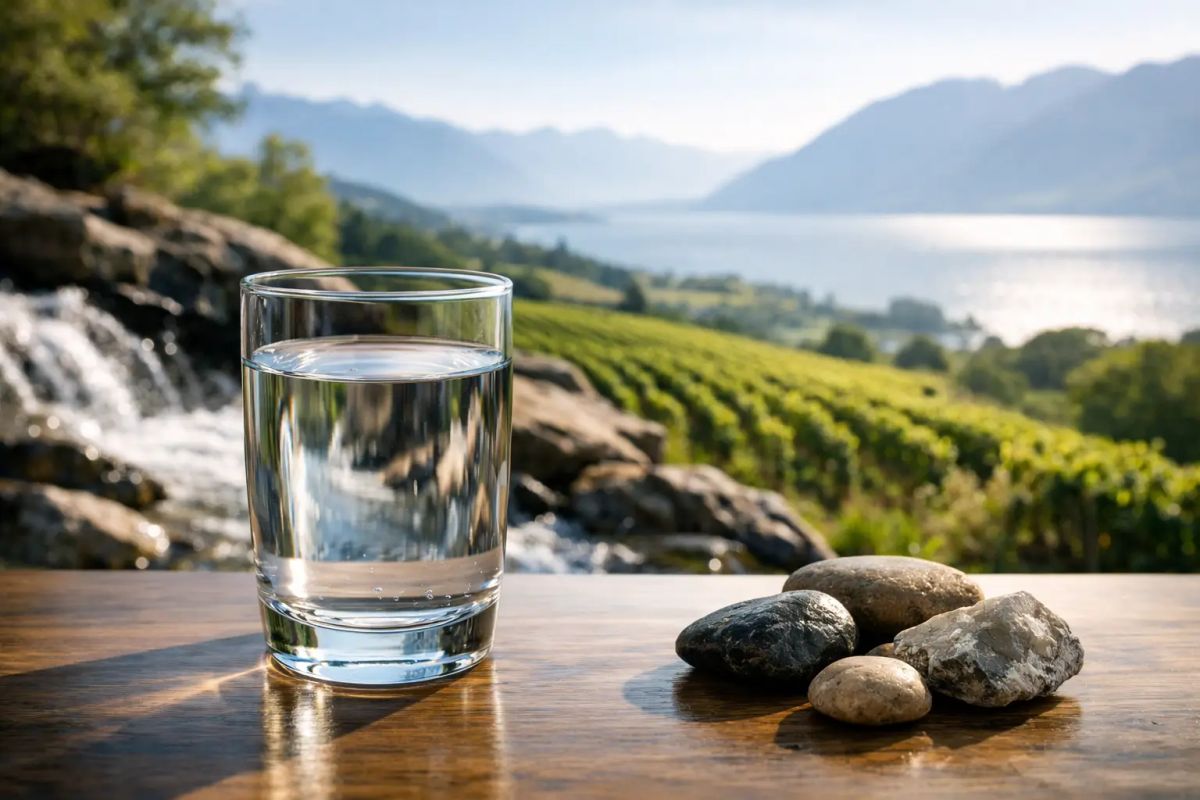
You can taste it within seconds. One water feels silky and rounded. Another lands crisp, stony, almost electric on the palate. If you have ever wondered why two clear, still waters can feel so different, water terroir meaning is the answer. It is the idea that a water’s place of origin - its geology, altitude, climate, and underground journey - shapes what ends up in the glass.
This is where water stops being generic. Source matters. So does the path the water takes before bottling. Just as coffee reflects origin and wine reflects vineyard conditions, fine water expresses landscape in a quieter, more mineral-driven way.
What water terroir meaning actually refers to
At its simplest, water terroir meaning is the relationship between a water and the environment that formed it. That environment includes the rock the water touched, the time it spent underground, the pressure and temperature conditions around the source, and even the local ecosystem protecting that aquifer or spring.
Terroir in water is not about romance for its own sake. It has sensory consequences. Calcium can bring structure. Magnesium can add a slight bitterness or tension. Bicarbonate can soften perception and create a smoother mouthfeel. Sodium can make a water seem rounder or subtly sweeter, even when no sweetness is present. These are not abstract numbers on a label. They shape texture, finish, and overall character.
That is why terroir matters more in some waters than others. A very low-mineral spring water may present as delicate, light, and almost airy. A highly mineralized natural mineral water may taste dense, savory, or persistent. Neither is automatically better. It depends on what you value, what you are eating, and how sensitive your palate is.
Why terroir matters in water
Most people are taught to think of water as neutral. Clean, cold, and finished. But premium water behaves more like a category of taste. Once you recognize terroir, you stop asking only whether a water is still or sparkling. You start asking where it comes from, what minerals define it, and how that profile changes the drinking experience.
For wellness-minded drinkers, terroir offers a more precise way to understand what is in a bottle. For athletes and performance-focused consumers, mineral composition can become part of a more intentional selection process. For chefs, sommeliers, and anyone in hospitality, terroir creates a framework for pairing water with food instead of treating it as background.
There is also a cultural layer. Water terroir connects a bottle to a landscape. Alpine snowmelt filtered through limestone tells a different story than volcanic water drawn from deep aquifers. The bottle may look minimal and modern, but the water itself can reflect decades, centuries, sometimes much longer, of geological contact.
The elements that shape water terroir meaning
Geology is the foundation
Rock type is the clearest driver of mineral identity. Water moving through limestone often absorbs calcium and bicarbonate, which can create a balanced, gentle profile. Water passing through dolomite may pick up magnesium as well, adding firmness and a more pronounced finish. Volcanic terrain can contribute a different set of trace minerals and a sharper mineral signature.
This is why source descriptions matter. Spring, artesian, glacial, volcanic, and mountain are not just marketing words when they are used accurately. They point to the terrain that influenced the water before bottling.
Time changes concentration and character
Not all waters spend the same amount of time underground. Some move relatively quickly through rock layers. Others remain in aquifers for long periods, slowly dissolving minerals along the way. The longer and more complex that journey, the more opportunity for the water to develop a distinct profile.
Still, more contact time does not always mean more pleasure. A highly mineralized water can be fascinating with food but feel too assertive on its own. A low-TDS water can seem elegantly restrained in one setting and too quiet in another. Taste is contextual.
Climate and altitude play supporting roles
Climate influences recharge patterns, source protection, and seasonal conditions around a spring. Altitude can shape purity perception and source environment, though it is not a guarantee of quality on its own. A mountain source sounds pristine because the setting is dramatic, but the real story is what the water encountered beneath the surface.
That distinction matters. Terroir is not scenery. It is interaction.
How terroir shows up in the glass
A useful way to understand water terroir meaning is to think in terms of texture, flavor impression, and finish.
Texture is often the first clue. Some waters feel light, almost weightless. Others feel creamy, velvety, chalky, or structured. This is one reason professional tasting of water focuses so much on mouthfeel. The palate picks up mineral architecture even before the mind identifies specific notes.
Flavor in water is subtle, but it is real. You may notice saline hints, chalk, wet stone, softness, or a faint metallic edge. These are usually reflections of dissolved minerals rather than impurities. Then comes the finish. Does the sensation disappear quickly, or does it linger with a savory, mineral trace? A long finish often signals a more expressive composition.
Temperature changes perception too. Colder water can mute complexity. Slightly warmer serving temperatures may reveal more texture and mineral detail. Sparkling waters add another variable, since carbonation can amplify acidity, sharpen structure, and shift how minerals present.
Water terroir is real, but not mystical
There is a temptation to overstate terroir and turn every bottle into mythology. That misses the point. Water terroir is meaningful because it is measurable as well as sensory. Mineral composition, pH, and total dissolved solids give structure to what the palate experiences.
This also keeps the conversation honest. If two waters come from different origins but have similar mineral profiles, they may taste surprisingly close. If one water has dramatic branding but a very light composition, it may drink more quietly than expected. Terroir is not about prestige language. It is about source-driven character you can identify in both data and taste.
That balance between romance and evidence is where the subject becomes most interesting. There is a world inside every bottle, but it is not hidden. It can be read.
How to taste terroir more clearly
If you want to train your palate, compare two or three waters side by side rather than tasting one in isolation. Start with still waters before introducing sparkling. Notice the attack, the mid-palate, and the finish. Ask simple questions. Does this feel soft or firm? Quiet or intense? Clean and fleeting, or savory and persistent?
Then look at the mineral composition. Calcium, magnesium, sodium, bicarbonate, and TDS often explain what you just experienced. Over time, the connection becomes intuitive. You stop tasting only coldness and start tasting structure.
This is exactly why a tool like Water Sommelier fits naturally into the category. Instead of guessing from packaging or vague source claims, you can scan a bottle and understand its mineral identity, origin, and sensory profile in seconds. Point. Shoot. Know.
The modern appeal of terroir-driven water
For a long time, food culture gave wine and coffee the language of origin while water was expected to remain invisible. That is changing. Consumers now read labels more carefully, restaurants curate water lists with intention, and premium drinkers want a better answer than just still or sparkling.
Water terroir meaning resonates because it brings discernment to something consumed every day. It allows the category to be appreciated on its own terms - not as a luxury gimmick, but as a product of place, geology, and measurable composition.
And unlike many status categories, water rewards attention immediately. You do not need a cellar, a decanter, or years of training to notice that one bottle feels softer and another feels more mineral and commanding. You only need curiosity, a clean glass, and the willingness to slow down for a moment.
The next time a bottle of water tastes unusually silky, vivid, or stony, trust that reaction. It is not your imagination. It is origin speaking in mineral form.
Scan any bottle. Discover its minerals, origin, and character. Get the Water Sommelier app