
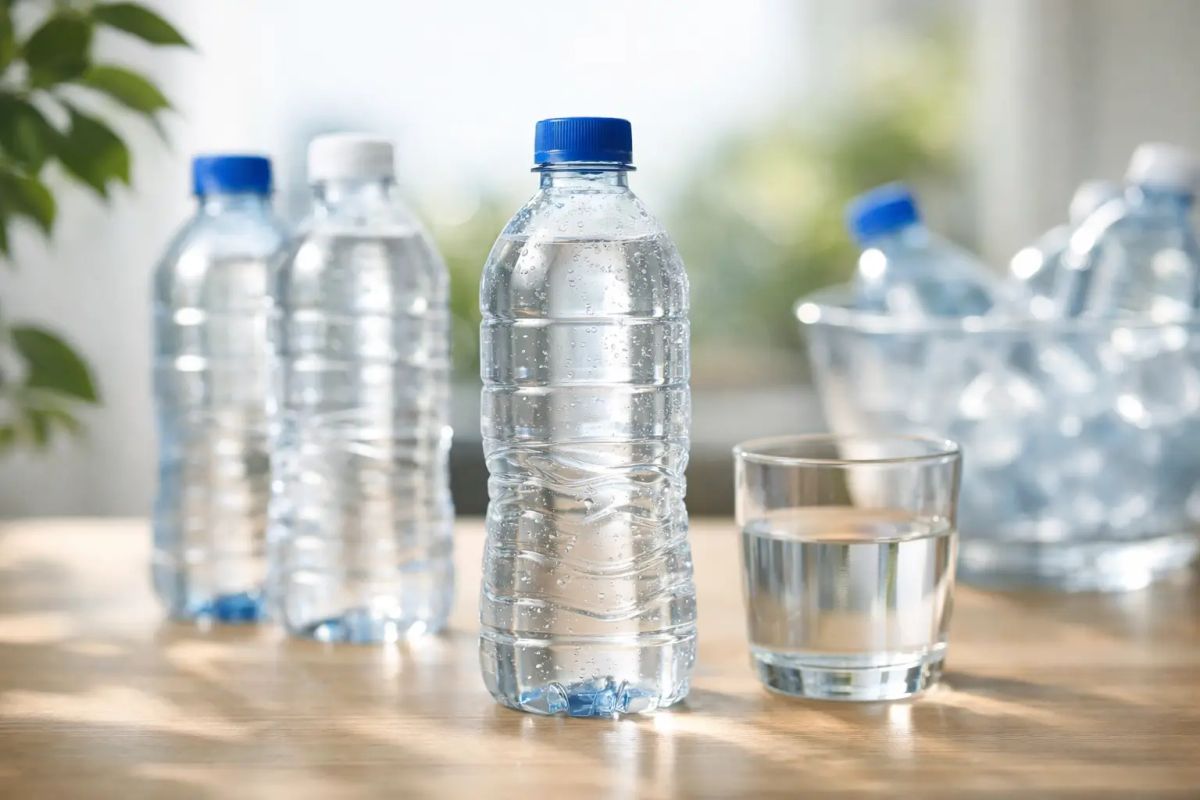
You can line up six bottled waters on a table, all dressed in clean labels and wellness language, and still end up with six very different liquids. That is the first truth behind the question what is healthy bottled water. A healthy bottle is not simply the one with the nicest branding or the highest price. It is the one whose composition fits your preferences, your diet, and the way you actually drink water.
For some people, that means a mineral-rich water with structure and presence. For others, it means a very low-sodium option with a softer profile. The healthiest bottled water is rarely defined by one number alone. It is defined by balance, transparency, and context.
What Is Healthy Bottled Water?
Healthy bottled water is bottled water with a clearly identified source, a transparent mineral profile, and a composition that makes sense for regular consumption based on your personal needs. That includes the minerals it contains, the amount of sodium it carries, its total dissolved solids, and how it tastes in the glass.
That last point deserves more respect than it usually gets. Taste is not a luxury detail. If a water tastes clean, balanced, and pleasant to you, you are more likely to choose it consistently. Water is not a blank liquid. It has texture, weight, finish, and character, all shaped by the geology of its source.
A bottle can be healthy without being extreme. In fact, extreme is often where confusion begins. Very high mineral content is not automatically better. Very alkaline water is not automatically better. The right choice depends on what you value and how those numbers fit into your broader eating and drinking habits.
The Markers That Matter Most
When people ask what makes bottled water healthy, they often go straight to pH. pH matters, but it is only one part of the picture. Mineral composition is usually far more informative.
Calcium and magnesium are two of the most useful minerals to notice. They help give water structure and can contribute to a more satisfying, substantial taste. Waters with meaningful levels of calcium and magnesium often feel more complete on the palate. They can be especially appealing to people who want their water to offer more than neutrality.
Sodium is another important marker, especially for people who are mindful of their overall intake. A little sodium is not unusual in natural mineral water, and in some waters it contributes to roundness and softness. But levels vary dramatically from brand to brand. If you drink bottled water frequently, this is one of the easiest numbers to compare.
Bicarbonate is less famous, but it plays a major role in a water’s style. It often brings smoothness and can shape a water that feels calm, broad, and polished rather than sharp or lean. Then there is TDS, or total dissolved solids, which gives you a sense of how mineralized a water is overall. Higher TDS usually means more intensity. Lower TDS often means a lighter, more delicate profile.
Healthy, then, does not mean identical. It means intentional.
Source Matters More Than Marketing
A truly good bottled water tells you where it comes from. Spring, artesian, volcanic, glacial, deep aquifer - these are not just romantic words for the label. Source origin affects mineral content, mouthfeel, and consistency.
Water acquires its profile through its journey. As it moves through limestone, granite, basalt, or other geological layers, it picks up minerals and develops a signature character. This is water’s version of terroir. Two waters can both be “natural,” yet one may be crisp and almost weightless while another feels creamy, saline, or stone-like.
That is why source transparency is a health signal in its own right. If a brand is clear about origin and composition, you can make a more informed decision. If the label says very little beyond broad lifestyle promises, you are left guessing.
Is Alkaline Water Always Healthier?
Not necessarily. Alkaline water is often treated as a shortcut answer to what is healthy bottled water, but the reality is more measured. A higher pH does not automatically make a water superior.
Some naturally alkaline waters are beautifully balanced and rich in minerals. Others may have an elevated pH but a profile that is otherwise unremarkable. pH can influence taste and style, yet it should be read alongside calcium, magnesium, bicarbonate, sodium, and TDS.
A bottle with a moderate pH and a thoughtful mineral balance may be a better daily choice for you than a bottle that leads with alkalinity but gives little context. This is where reading the full profile matters. Single-number marketing tends to flatten a far more interesting story.
The Best Bottled Water for Health Depends on the Drinker
A marathon runner, a chef, and a design director stocking the fridge for a dinner party may all choose different waters for good reason. Healthy is personal.
If you prefer a daily-drinking water that feels light and effortless, a lower TDS water with modest sodium may suit you. If you want something more substantial and expressive, you may gravitate toward a medium- or high-mineral water with stronger calcium and magnesium levels. If you are watching sodium carefully, that number may shape your decision more than pH ever will.
There is also the matter of occasion. A highly mineralized bottle can be fascinating with food, especially richer dishes, but feel a bit assertive first thing in the morning. A very soft water may be elegant on its own and disappear beautifully beside delicate cuisine, yet feel too quiet for someone who likes more texture. The healthiest choice is often the one that fits both your routine and your palate.
How to Read a Bottled Water Label Like an Insider
The smartest way to evaluate bottled water is to stop looking for halo words and start looking at composition. A good label, or a reliable product listing, should tell you the source and core minerals.
Start with calcium and magnesium if you want to understand structure. Look at sodium if you want to understand how light or savory the water may feel. Check bicarbonate for smoothness and buffering character. Then read TDS for overall mineral intensity. pH can come after that, not before.
This is also where a tool like Water Sommelier becomes useful. Point your phone at a bottle and the profile becomes visible at a glance - minerals, pH, TDS, source origin, and even tasting character. For anyone who wants to choose with more precision, that kind of clarity changes the experience from guesswork to discernment.
What Healthy Bottled Water Is Not
Healthy bottled water is not the bottle with the loudest claims. It is not automatically the most expensive. It is not always the one with the highest mineral content, the highest pH, or the most dramatic origin story.
And it is not universal. A water praised by a sommelier for its salinity and gastronomic structure may not be the best match for someone who wants a very clean, low-mineral profile. A beautifully soft water may be ideal for one person and too neutral for another. Trade-offs are normal.
That is worth emphasizing because the bottled water category often gets flattened into “good” and “bad,” when the more accurate language is “appropriate” and “less appropriate” for a given person or moment. Precision is more helpful than hype.
A Better Way to Choose
If you want a practical filter for buying bottled water, think in four layers. First, look for source transparency. Second, check the mineral profile, especially calcium, magnesium, sodium, and bicarbonate. Third, consider TDS and pH as style indicators rather than magic numbers. Fourth, pay attention to taste, because the bottle you genuinely enjoy is the one you are most likely to choose again.
This more refined approach makes bottled water feel less like a commodity and more like a category worth understanding. Just as people learn the difference between olive oils, coffees, or wines, they can learn the difference between waters. There is a world inside every bottle, and health is only part of the story. Character matters. Balance matters. Knowing what is in your glass matters.
So what is healthy bottled water, really? It is water with a disclosed origin, a mineral composition you can understand, and a profile that suits your body, your table, and your taste. Start there, and the right bottle becomes much easier to spot.
Scan any bottle. Discover its minerals, origin, and character. Get the Water Sommelier app