
You can read a bottle label in three seconds and still miss the most interesting part. The real story is not the mountain on the front or the minimalist glass design. It is the mineral structure inside the bottle - the calcium that gives shape, the magnesium that adds depth, the sodium that changes the finish, the bicarbonate that softens the edges. If you are searching for the best water app, that is usually what you want to know: what is actually in your glass, and what does it mean.
For a long time, water sat in an odd category. Everyone drinks it, few people study it, and most apps have treated it as either a reminder or a utility. That misses the point. Water is both composition and experience. It can support a performance routine, complement a meal, or simply become part of a more intentional standard for what you buy. A useful app should do more than count ounces. It should help you identify, interpret, and appreciate water with the same clarity people already expect for wine, coffee, and food.
What the best water app should actually do
The best water app is not just a digital notepad for hydration habits. It should answer the questions that matter once you move beyond the surface: Where does this water come from? What minerals define it? How high is the total dissolved solids count? What is the pH? How might it taste? Which foods will flatter it, and which will overwhelm it?
That shift matters because most people looking for a water quality scanner app or a water mineral analysis app are not chasing novelty. They want usable information. A runner may want to compare sodium and magnesium profiles between brands. A wellness-minded consumer may want to understand why one bottle tastes crisp and another feels almost creamy. A sommelier or chef may want to pair a delicate still water with raw seafood and reserve a more assertive sparkling water for richer dishes.
An app worth keeping should make those decisions easier, not more technical for the sake of it. It should translate data into language people can use.
Why mineral composition matters more than marketing
Not all bottled water is interchangeable, even when the packaging suggests otherwise. Source and mineral balance shape both function and flavor. Calcium can bring structure. Magnesium often adds a slight bitterness or firmness. Sodium can make a water feel rounder and more expressive. Bicarbonate can influence smoothness and balance. TDS helps indicate overall mineral concentration, which often affects whether a water seems light and quiet or intense and lingering.
This is where many people realize they have been buying based on branding alone. Beautiful packaging can signal quality, but it cannot explain character. If an app simply tells you a bottle is premium, natural, or pure, it is not doing enough. The best water app should let you point your phone at a bottle and move quickly from image to evidence.
That does not mean every user needs a chemistry lesson. In fact, the strongest apps remove friction. They make mineral data legible, tie it to tasting notes, and help users compare one bottle with another in a way that feels immediate.
The best water app for iPhone and Android needs both science and taste
There are two common ways water apps fall short. Some are too thin, offering little beyond reminders and basic logging. Others bury the user in raw numbers without context. The best experience sits in the middle. It respects the science and still understands that people drink with their senses.
A strong water app should show verified bottle information in a clean, fast interface. At minimum, that includes mineral composition, pH, TDS, and source origin. But the richer layer is interpretation. Does this water read as soft, bright, saline, chalky, silky, or highly sparkling? Is it versatile at the table, or is it better suited to a specific mood or meal?
That blend of analysis and sensory guidance is what turns an app from a reference tool into a daily companion. It becomes useful not only in a grocery aisle, but also in a restaurant, at a tasting, before a workout, or while building a more thoughtful home collection.
What to look for in a water quality scanner app
Speed matters. If a scanner feature takes too long or returns vague results, people stop using it. The camera experience should feel almost conversational: point, capture, understand. A label should lead to a clear profile with the details that matter most first, not hidden behind tabs and jargon.
Database quality matters just as much. An elegant interface means little if the catalog is shallow or inconsistent. The best water app should cover a broad range of bottled waters and present the data in a standardized format so comparisons are meaningful.
Personalization is another separating factor. Water preferences are not one-size-fits-all. Some people gravitate toward low-mineral still waters for all-day drinking. Others prefer higher-mineral sparkling waters with food. The most useful apps learn from what you scan, taste, save, and revisit. Over time, they should help you recognize patterns in your own palate and priorities.
And then there is trust. If an app positions itself as an authority, the information must feel curated rather than scraped together. Water is subtle. A serious platform should treat it that way.
Who benefits most from the best water app
The audience is broader than many people assume. Health-conscious consumers often start with a practical question - what minerals are in my water? From there, they begin to notice flavor, texture, and source. Biohackers and routine-driven users tend to appreciate the precision. Athletes are often interested in how different mineral profiles fit different contexts, especially around training and recovery. Food professionals approach water through pairing, balance, and sensory detail. Premium lifestyle consumers simply want to know that what they are choosing has substance behind the label.
What unites all of them is intention. They do not want generic advice. They want to understand the bottle in front of them.
That is why the category is changing. Water is no longer just background consumption for this audience. It is becoming part of a larger standard around quality, provenance, and informed choice.
A better way to choose bottled water
Once you start using a true water analysis app, shopping changes. You notice that two bottles at the same price point can offer completely different experiences. One may be low in dissolved solids and taste almost weightless. Another may carry a mineral profile that feels more structured and gastronomic. Neither is universally better. It depends on what you value in that moment.
That point is worth emphasizing. The best water app should not pretend there is one perfect water for everyone. Context matters. A bottle you love with lunch may feel too assertive on its own. A softly mineralized still water may be elegant during the workday, while a more vivid sparkling water may shine with dinner. Good guidance respects those nuances.
This is also where tasting notes and pairing suggestions become genuinely useful instead of decorative. They turn the app into a curator. You are no longer guessing based on label design or imported mystique. You are choosing with language and data that make sense together.
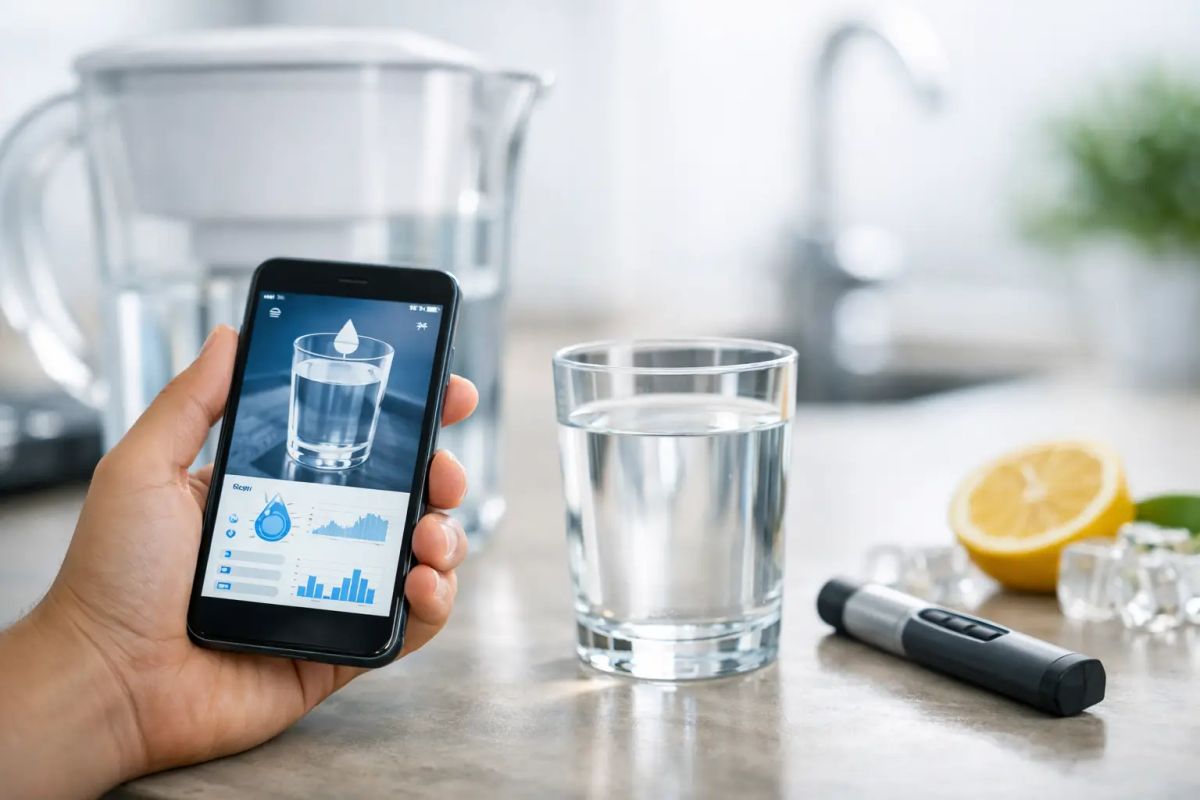
One example of this more refined approach is Water Sommelier, which uses your phone camera to identify bottled water and reveal mineral composition, pH, TDS, source details, pairing guidance, and a personal tasting profile in one place. It reflects a simple idea with real depth: there is a world inside every bottle.
The future of the best water app
The next generation of water apps will not be defined by reminders. They will be defined by recognition. Recognition of water as a product with origin, structure, and personality. Recognition that users want credible information without friction. Recognition that taste and data belong in the same conversation.
That makes this category more interesting than it first appears. A water app can be practical and pleasurable at the same time. It can help someone compare mineral profiles before a workout, select a bottle for oysters in Miami, or build a tasting journal from restaurant discoveries in New York or Los Angeles. It can serve utility without flattening the experience.
If you are deciding what deserves space on your home screen, the best water app is the one that makes bottled water more legible, more intelligent, and more enjoyable to choose. Not louder. Not trendier. Just clearer.
Because once you can read water properly, you do not really go back to guessing.
Scan any bottle. Discover its minerals, origin, and character. Get the Water Sommelier app