
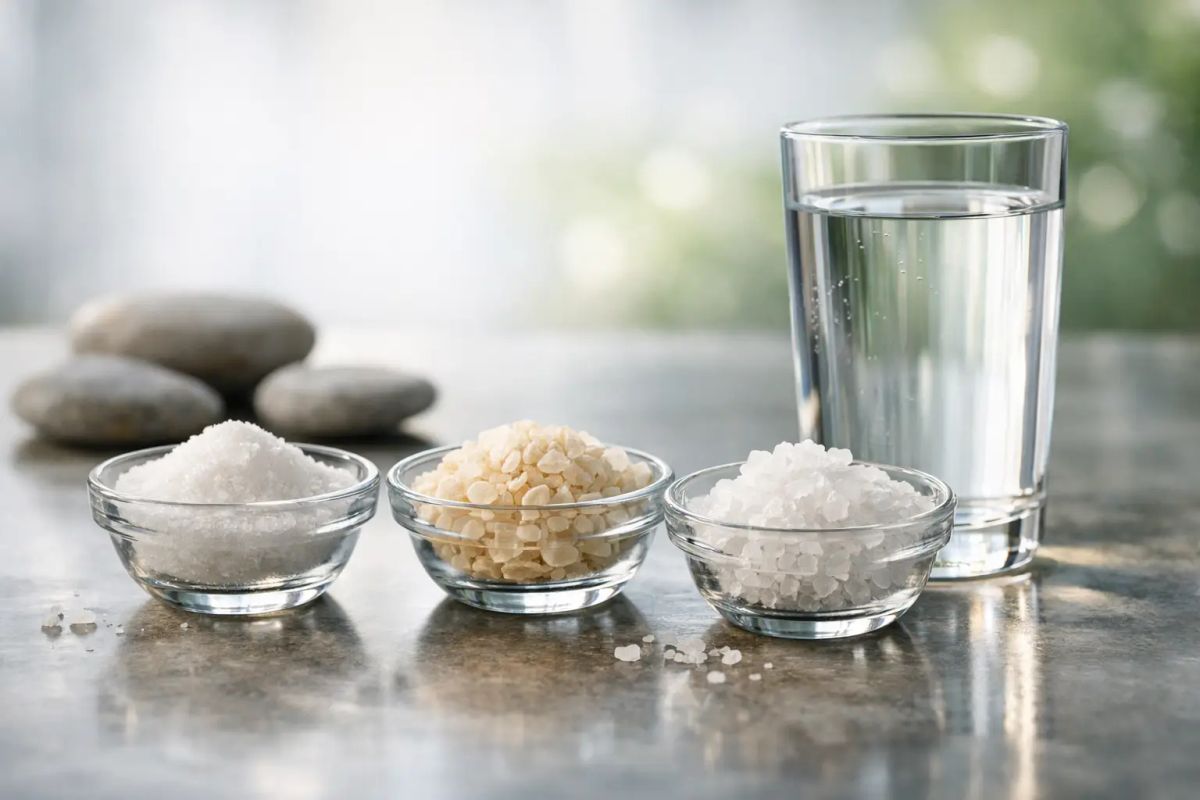
A bottle can look perfectly simple: clear glass, clean label, a promise of a distant spring. Then come the numbers. Calcium, magnesium, sodium, bicarbonate, pH, TDS. The calcium magnesium sodium water guide begins there, with a useful shift in perspective: mineral content is not a scorecard. It is the composition behind a water’s structure, texture, and finish.
There is a world inside every bottle. Learning to read it turns a routine purchase into a more considered choice - whether you are selecting water for a dinner table, a wine pairing, or simply the pleasure of noticing what is in your glass.
Read the Numbers as a Composition
Minerals on a bottled-water label are commonly listed in milligrams per liter, written as mg/L. That number describes the concentration of a mineral in one liter of water. It does not tell the whole sensory story by itself, but it provides a reliable starting point.
A water with 20 mg/L of calcium and 5 mg/L of magnesium will often present differently from one with 100 mg/L of calcium and 40 mg/L of magnesium, even if both are still and sourced from natural springs. The first may feel light and clean. The second may carry more body, a firmer texture, and a longer finish.
Think of mineral analysis as you might think of a wine’s acidity, tannin, and alcohol. No single number determines quality. Balance, source, and the way elements interact matter more than a simplistic high-versus-low judgment.
Calcium, Magnesium, and Sodium: What Each Brings
Calcium: structure and a gentle chalky note
Calcium is one of the most recognizable minerals in naturally mineralized water. In sensory terms, it can contribute a rounded, structured feel on the palate. At higher concentrations, some tasters notice a faint chalky, creamy, or stony character.
Calcium often appears alongside bicarbonate in waters that have traveled through limestone-rich geology. That pairing can create a composed, substantial profile - the kind of water that feels at home beside food rather than disappearing into the background.
A calcium-forward water is not automatically heavy. Its final character depends on magnesium, bicarbonate, total mineralization, carbonation, serving temperature, and even the glass. Still, calcium is often a useful clue when a water feels more textured than expected.
Magnesium: definition and mineral tension
Magnesium tends to bring a more assertive mineral signature. Depending on the concentration and the full composition, it may read as dry, slightly bitter, saline, or crisply mineral. Used thoughtfully in tasting language, “bitter” is not necessarily a flaw. It can provide definition, much like a pleasant bitter edge in dark chocolate or radicchio.
Waters with noticeable magnesium can be particularly interesting at the table because their structure holds its own beside rich or savory dishes. But context matters. A profile that feels vivid with food may seem angular when tasted alone at room temperature.
For someone beginning to compare bottles, magnesium is often the mineral that makes the difference between “refreshing” and “distinctive.” It gives a water a point of view.
Sodium: salinity, softness, and finish
Sodium is frequently misunderstood because readers see the word and assume it signals an inferior bottle. From a tasting perspective, sodium is simply another part of the composition. In small to moderate amounts, it can create softness, a subtly saline impression, and a rounded finish. At higher levels, its presence can become more obvious and savory.
The key is to read sodium in relation to everything else. A water with modest sodium and substantial bicarbonate may taste smooth and broad. A water with sodium alongside chloride may present a clearer saline edge. Neither is universally better. They are different styles.
For food and beverage professionals, that distinction is practical. A delicate tea, oyster course, or light white wine may call for a quieter, low-sodium water. A deeply flavored meal may welcome a bottle with more mineral presence and a touch of salinity.
A Calcium Magnesium Sodium Water Guide for Labels
When comparing bottles, start with the three minerals, then widen the frame. Calcium, magnesium, and sodium are central characters, but they do not perform alone.
Bicarbonate is especially useful to notice. It can lend softness and an almost cushioning quality, particularly in waters shaped by carbonate rock. Sulfate may add dryness or a more pronounced mineral finish. Chloride can contribute a saline impression. Together, these minerals make a profile feel light, silky, crisp, creamy, stony, savory, or boldly mineral.
TDS, or total dissolved solids, gives a broad estimate of how much material is dissolved in the water. Lower TDS waters often taste subtle and airy. Higher TDS waters can feel more concentrated and expressive. Yet TDS is not a flavor rating. Two waters with similar TDS can taste remarkably different because their mineral ratios differ.
pH is another useful piece of context, but it should not be treated as a shortcut to taste or quality. A listed pH reflects one measurement under particular conditions. It can help you understand a label, but it cannot replace tasting the water itself.
How to Compare Two Bottles Well
A side-by-side tasting reveals more than reading a label in isolation. Choose two still waters, preferably served cool rather than ice-cold. Extreme cold can mute aroma and flatten distinctions. Use clean, odor-free glasses and taste each water before eating strongly flavored food.
First, notice texture. Does the water vanish quickly, or does it seem to coat the palate? Then notice the mid-palate: is it neutral, gently sweet, stony, saline, or dry? Finally, pay attention to the finish. Some waters end with a clean snap. Others linger with a mineral echo.
Now return to the labels. The lighter, quicker water may have lower overall mineralization. The one with more structure may show higher calcium or bicarbonate. The water with a firmer, slightly savory finish may reveal more sodium, magnesium, chloride, or a combination of them. These are patterns to explore, not fixed rules.
Keep the comparison fair. Carbonated and still water should be evaluated separately at first, because bubbles change texture, aroma release, and perceived sharpness. Source origin matters too. Natural mineral water, spring water, and other bottled-water categories can reflect different treatments and source stories, so read the bottle’s stated origin alongside its analysis.
Choosing by Occasion, Not a Single “Best” Number
The most useful way to use mineral data is to match a water’s profile to the moment. For quiet drinking, many people gravitate toward a low-to-moderate mineral profile with a clean finish. For a meal, a more structured water can bring welcome contrast and presence.
Consider a few practical examples. A softly mineralized water may suit delicate raw seafood, mild fresh cheese, or a lightly brewed green tea without competing for attention. A water with more calcium and bicarbonate can feel well placed beside roasted poultry, creamy pasta, or aged cheese. A profile with a clearer magnesium or sodium presence may stand up to cured meats, grilled vegetables, or richly seasoned dishes.
These are invitations to experiment, not rules carved in stone. The same bottle can taste different with a lemony dish than it does with a buttery one. Personal preference is part of the analysis, and that is precisely what makes water worth discussing.
Use Technology as a Starting Point, Not a Substitute for Taste
Labels can be hard to compare in a shop, particularly when mineral analysis is printed in tiny type or presented in unfamiliar terms. Water Sommelier offers a simpler route: point your phone camera at a bottle to help identify the product and surface information about its mineral composition, pH, TDS, and source origin.
The value is not in reducing water to a verdict. It is in making the information easier to see, compare, and understand. Scan a bottle, consider the calcium, magnesium, sodium, and bicarbonate figures, then taste with attention. Data gives you the language. Your palate supplies the final interpretation.
A memorable water does not need to be the most mineralized, the lowest in sodium, or the most expensive on the shelf. It needs to suit the occasion and give you something worth noticing in the glass.
Scan any bottle. Discover its minerals, origin, and character. Get the Water Sommelier app