
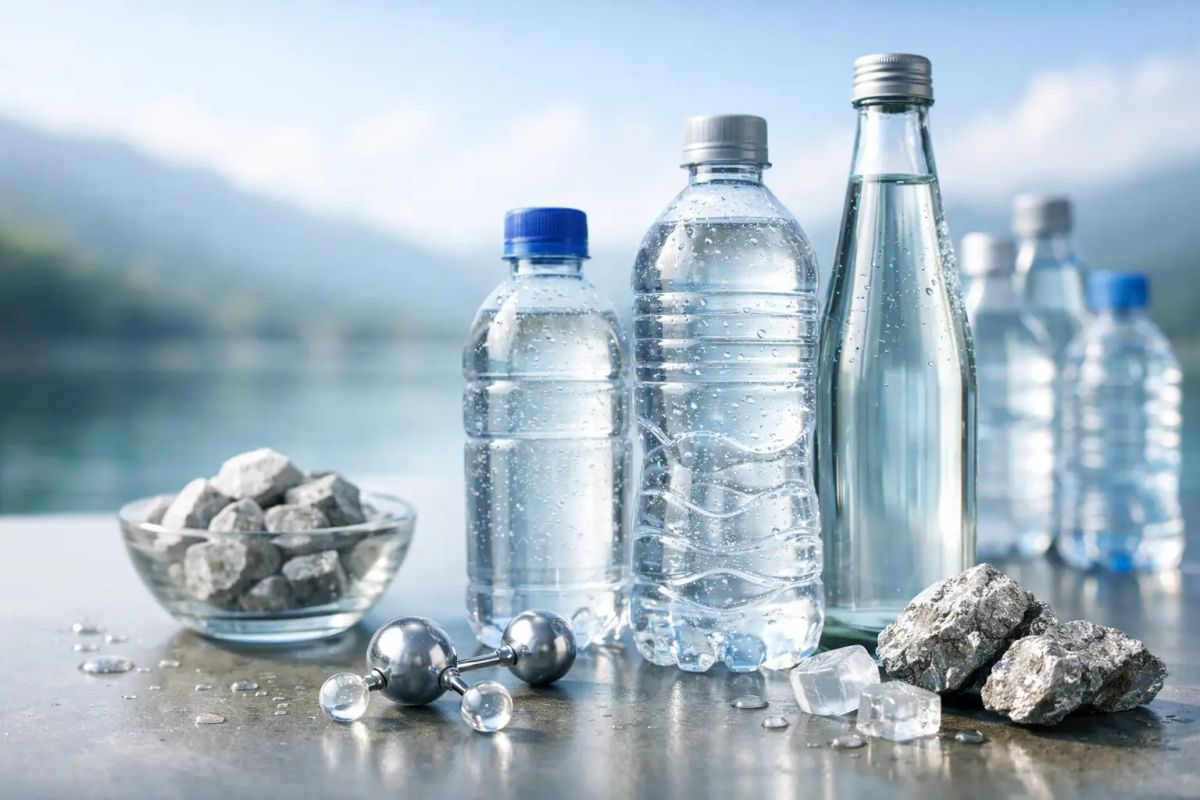
A bottle can look perfectly still while carrying the signature of an ancient aquifer, limestone passage, or volcanic landscape. If you are asking what bottled water has magnesium, the answer is broader than one brand or one water style. Many natural mineral waters contain it. The more useful question is how much magnesium is present, what else travels alongside it, and how that mineral balance changes the experience in the glass.
What bottled water has magnesium? Start with the label
Magnesium occurs naturally in many spring and mineral waters as water moves through mineral-rich rock. It is typically listed on a bottle's mineral analysis in milligrams per liter, written as mg/L. A higher number means more magnesium in each liter, but it does not tell the whole story of a water's taste.
Several widely available bottled waters are known for containing measurable magnesium. Exact figures can shift with source conditions, bottling location, and label updates, so treat the bottle in your hand as the final authority.
| Bottled water | Typical magnesium level | General style | |---|---:|---| | Gerolsteiner | About 100 mg/L or more | Highly mineralized, sparkling | | S.Pellegrino | About 50 mg/L | Mineral-forward, sparkling | | evian | About 25 mg/L | Balanced, still | | FIJI Water | About 15 mg/L | Soft, still, lightly mineralized | | Topo Chico | About 10 mg/L | Crisp, sparkling | | Perrier | About 3 mg/L | Lightly mineralized, sparkling |
This is not a ranking. It is a starting point for recognizing different mineral profiles. Gerolsteiner, for example, is often selected by people who enjoy a distinctly mineral, energetic palate. FIJI Water sits in a gentler range, while Perrier's identity is shaped more by its fine carbonation and restrained mineral presence than by magnesium alone.
Magnesium is one note in a larger composition
A mineral label is best read as a composition, not a scorecard. Magnesium may contribute a subtle dry, savory, or gently bitter edge, especially at higher levels. Yet calcium, bicarbonate, sodium, sulfate, silica, total dissolved solids, and carbonation can all alter what you perceive first and what lingers after a sip.
Consider two waters with similar magnesium numbers. One may have abundant bicarbonate and calcium, creating a broader, chalkier, more structured palate. Another may carry less total mineral content and feel cleaner or more delicate, even though magnesium is similar. The source matters because the source creates the balance.
This is why “high magnesium” does not automatically mean “better.” It means more of a particular mineral is present. For a quiet still water at the table, you may prefer a moderate level and a soft finish. With rich food, a sparkling water with more mineral structure can feel more compelling. Taste is personal, and context is part of the pleasure.
What the number on the label means
When magnesium is listed as 25 mg/L, that means there are 25 milligrams of magnesium in one liter of that water. This makes comparisons straightforward, provided you compare like with like. Look for the same units, and do not confuse magnesium with total dissolved solids, often shortened to TDS.
TDS measures the overall concentration of dissolved material, not magnesium specifically. A water can have high TDS because it contains a broad mix of minerals. It can also have a modest TDS while still showing a meaningful magnesium figure. Likewise, pH describes acidity or alkalinity, not mineral quantity. Neither pH nor TDS can substitute for reading the actual magnesium line.
Still or sparkling: which reveals magnesium more clearly?
Both still and sparkling bottled waters can contain magnesium. Carbonation changes perception, however. Bubbles lift aroma, sharpen the first impression, and make a mineral profile feel more vivid. In a sparkling water with substantial calcium and bicarbonate, magnesium may register as part of a firm, saline, almost stony finish.
Still water gives you a quieter view of its composition. Without carbonation, texture becomes easier to notice: roundness, weight, silkiness, dryness, or a faint mineral grip. A still water such as evian may reveal its mineral balance gradually, while a naturally sparkling water can announce it immediately.
There is no need to choose one style over the other. Keep a favorite still water and a favorite sparkling water side by side, then compare their labels before tasting. That small ritual turns a routine purchase into a more observant one.
How to choose a bottled water with magnesium
Begin by deciding what you want from the experience. If your interest is simply finding magnesium on the label, a water with roughly 10 to 30 mg/L gives you an easy entry point. It is enough to identify and compare without necessarily dominating the palate. If you enjoy waters with a pronounced mineral character, look toward products with 50 mg/L or more and take note of their calcium, bicarbonate, and TDS as well.
Use the source description as another clue. Natural mineral water from protected underground sources often presents a more defined mineral identity than highly purified water with a minimalist label. That does not make one category universally superior. It simply means the sensory story may be different.
When you are shopping, check four details together: magnesium in mg/L, calcium, bicarbonate, and TDS. Those figures provide a useful first read of body and mineral intensity. Sodium can also matter to flavor, particularly in waters that taste subtly saline. If the label does not list a full mineral analysis, the bottle may offer less information for a precise comparison.
Avoid choosing solely by a front-label phrase such as “electrolytes” or “mineral enhanced.” Those phrases can be broad and do not tell you the magnesium amount. The analysis panel is where the useful detail lives. It is the difference between knowing a water has minerals and understanding its character.
Compare bottles at the table, not just in the aisle
Temperature and glassware influence perception. Very cold water can mute its mineral detail, while serving it lightly chilled allows more texture and finish to emerge. A clear wine glass or small tumbler is enough. Pour, pause, and notice whether the first impression is crisp, creamy, saline, chalky, or nearly neutral.
Then return to the label. Does a higher magnesium reading correspond with the dryness or structure you noticed? Not always, but the exercise teaches you how figures and flavor intersect. There is a world inside every bottle, and the label is its first map.
A simpler way to read mineral composition
Labels are not always easy to scan in a store, especially when the mineral panel is printed in small type or tucked beneath a sleeve. Water Sommelier brings that information into a more legible format: point your phone camera at a bottle, and the app helps identify the product while surfacing details such as magnesium, calcium, sodium, bicarbonate, pH, TDS, and source origin for educational understanding.
The value is not in reducing water to a single number. It is in seeing the composition at once, then making a more informed choice based on the taste profile you are seeking. Point. Shoot. Know.
A magnesium-containing bottled water is not a rare find. The more rewarding discovery is recognizing whether you prefer a light trace, a balanced middle ground, or a vivid mineral statement - and letting the source speak for itself.
Scan any bottle. Discover its minerals, origin, and character. Get the Water Sommelier app