
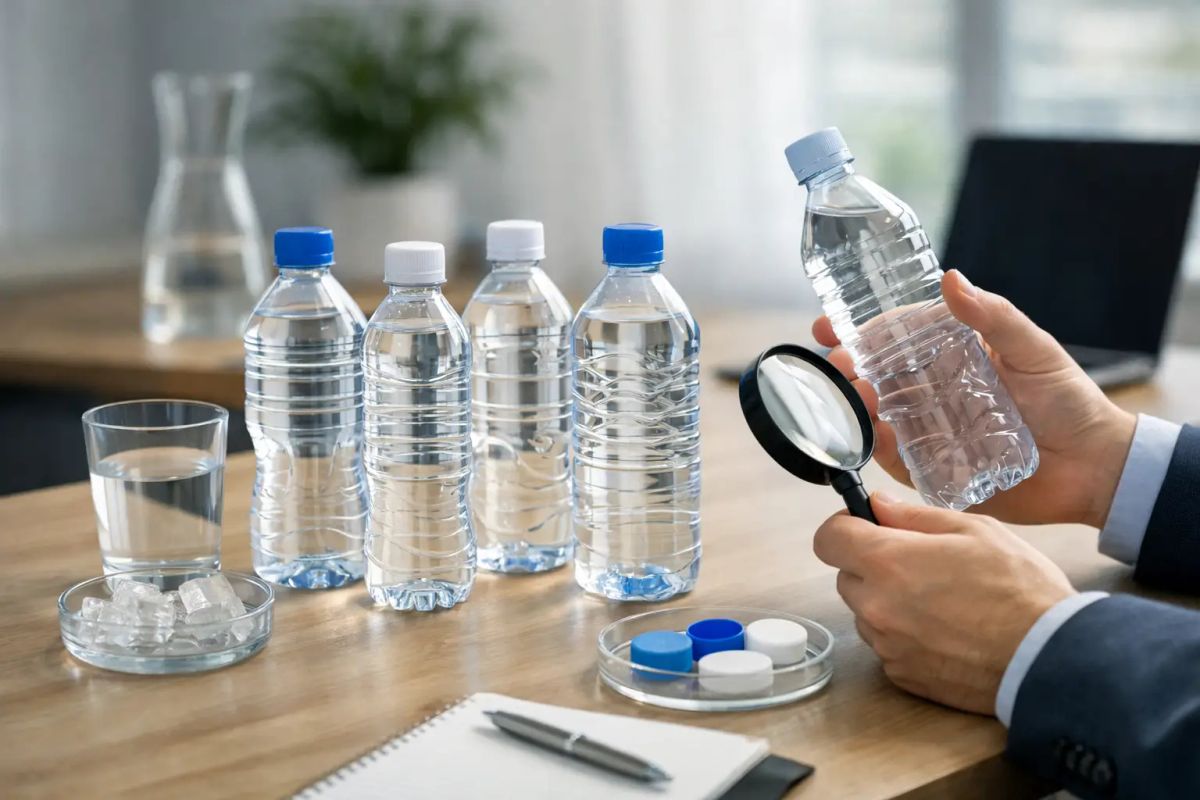
You can learn a lot from a bottle before you ever open it. The shape of the glass, the spring named on the label, the fine print listing calcium or bicarbonate - these are not decorative details. If you want to know how to compare bottled water, the real question is not which bottle looks most premium. It is which water matches your taste, your table, and your purpose.
Bottled water is often treated as interchangeable until you taste two side by side. Then the differences become obvious. One feels soft and almost weightless. Another tastes crisp, chalky, saline, or quietly sweet. Some waters work beautifully with food. Others are better on their own. Comparing them well means looking at both composition and sensory character.
How to compare bottled water without guessing
The fastest way to make sense of bottled water is to stop thinking in broad categories like good, bad, fancy, or basic. Those words hide the details that actually matter. A better comparison starts with five points: source, mineral composition, TDS, pH, and taste.
Source tells you where the water comes from and often hints at character. A protected spring, an artesian aquifer, or glacial origin can shape mineral content and texture. Source alone does not tell you everything, but it gives context. Water that spends years moving through limestone, for example, will often carry a different mineral signature than water from volcanic terrain.
Mineral composition is where the bottle becomes truly legible. Calcium, magnesium, sodium, and bicarbonate do more than appear on a label. They influence mouthfeel, structure, finish, and how the water behaves with food. Calcium can lend firmness and a chalk-like edge. Magnesium often brings a slight bitterness or savory precision. Sodium can make water feel rounder and more expressive. Bicarbonate can soften acidity and create a fuller profile.
TDS, or total dissolved solids, gives you a shorthand for concentration. Low-TDS waters tend to feel light, subtle, and clean. High-TDS waters can feel more textured, assertive, and gastronomic. Neither is automatically better. It depends on what you want. For a delicate tea or a very clean finish, lower TDS may be more appealing. For pairing with rich food, sparkling service, or a more memorable tasting experience, a higher-mineral water can be far more interesting.
pH matters too, but it is often misunderstood. It can tell you something about the water's acid-base profile, yet on its own it is not enough to judge quality or taste. A water with a higher pH is not automatically superior. What matters more is how the pH interacts with the overall mineral balance and how that translates in the glass.
Then there is taste - the part many people skip until the end, when it should be part of the comparison from the start. Water has aroma, entry, texture, mid-palate, and finish. The best comparisons happen when you notice whether a water feels silky, sharp, dry, creamy, saline, metallic, soft, or dense.
Read the label, but read between the lines
Most bottled water labels offer clues, though not all of them are equally useful. Marketing language such as pure, pristine, or premium may set a mood, but it does not help you compare one bottle to another. The analytical panel does.
Look first for the mineral breakdown. If one bottle lists substantial calcium and magnesium while another lists very low numbers across the board, you already know they will likely taste and behave differently. If sodium is present at a notable level, expect a rounder or more savory impression. If bicarbonate is high, the water may feel buffered and broad.
Next, note whether the label specifies still or sparkling, natural carbonation or added carbonation, and source location. Sparkling waters deserve their own comparison because bubbles change perception. Fine, integrated effervescence can make a water feel elegant and lifted. Aggressive bubbles can sharpen the finish and dominate subtler mineral traits.
What you may not find on every bottle is a complete picture. Some labels are sparse. Some present numbers without context. This is where a more informed approach helps. One scan with a tool like Water Sommelier can reveal mineral composition, pH, TDS, source origin, tasting profile, and food pairing cues in a format that is much easier to use than tiny back-label print.
Compare bottled water by purpose, not just prestige
A common mistake is assuming the most expensive bottle must be the best one. In reality, bottled water is situational. The right bottle for a post-workout lunch is not necessarily the right bottle for a tasting menu, a black coffee ritual, or a long afternoon at your desk.
If your focus is daily drinking, you may prefer a water with a balanced, approachable mineral profile and a clean finish that never tires the palate. If you care about athletic performance and recovery, you may look more closely at sodium and total mineral content, depending on your routine and preferences. If you work in hospitality or simply love food, you may want a water with enough structure to stand beside a dish without flattening it.
This is where comparison becomes more interesting. A low-mineral still water can be beautiful with delicate seafood, fresh fruit, or light salads because it stays out of the way. A more mineral-rich sparkling water may shine with creamy dishes, fried food, or aged cheese because it can cut through richness and refresh the palate. The better bottle is the one that serves the moment.
Taste bottled water side by side
If you really want to understand difference, compare two or three bottles at once. Serve them cold but not ice-cold, since very low temperatures mute character. Use the same glassware for each. Taste first without food, then with something simple such as plain crackers, mild cheese, or a clean bite of protein.
Pay attention to first impression, texture, and finish. Does the water arrive softly or with a mineral edge? Does it feel thin, velvety, creamy, dense, or sparklingly sharp? Does the finish disappear quickly, or does it linger with salinity, chalk, or sweetness?
This kind of tasting teaches you more than price ever will. It also reveals personal preference. Some people are drawn to very low-mineral waters because they feel almost invisible. Others want presence, structure, and a distinct signature. Neither preference is wrong. It is simply taste.
How to compare bottled water for food pairing
Water can either support a dish or compete with it. That makes pairing one of the most useful comparison tools, especially for anyone who cooks, entertains, or works in dining.
With subtle dishes, restraint usually wins. A quiet still water with low to moderate mineralization lets delicate flavors remain intact. Think raw bar selections, sashimi, tender greens, or fresh cheeses. A heavily mineralized water might overshadow those flavors.
With richer foods, more character can be an asset. Sparkling water with firm minerality can refresh the palate between bites of roast chicken, pasta in cream sauce, charcuterie, or fried dishes. Bicarbonate-rich waters often feel especially comfortable at the table because they bring breadth without heaviness.
Wine professionals have long understood that what is in the glass changes what is on the plate. The same is true for water. Compare bottled water with food in mind, and the category stops feeling simple.
Don’t let one metric decide everything
People often fixate on a single number - usually pH or TDS - and use it as a shortcut. That is understandable, but it flattens the experience. A high TDS water can be wonderfully complex or simply too heavy for your taste. A low TDS water can feel elegant or forgettable. A higher pH might appeal to you, but it does not tell you how the water will finish on the palate.
The best comparisons come from patterns, not isolated figures. Look at the whole composition, then connect it to actual sensory experience. This is especially important if you buy bottled water regularly and want a bottle that aligns with your lifestyle rather than a passing trend.
The best bottled water comparison is personal
There is science inside every bottle, but there is also preference. Two waters with respectable sourcing and clean composition can still offer completely different experiences. One may suit your morning espresso ritual. Another may belong at dinner. Another may become the bottle you keep in the car, the gym bag, or the guest room.
That is what makes bottled water worth comparing with care. It is not only about purity or prestige. It is about composition, place, texture, and fit. Once you know what to look for, every label becomes more readable and every sip becomes more specific.
The next time you pick up a bottle, pause before you twist the cap. There is a world inside every bottle - and the more precisely you compare it, the better it can meet the moment.
Scan any bottle. Discover its minerals, origin, and character. Get the Water Sommelier app