
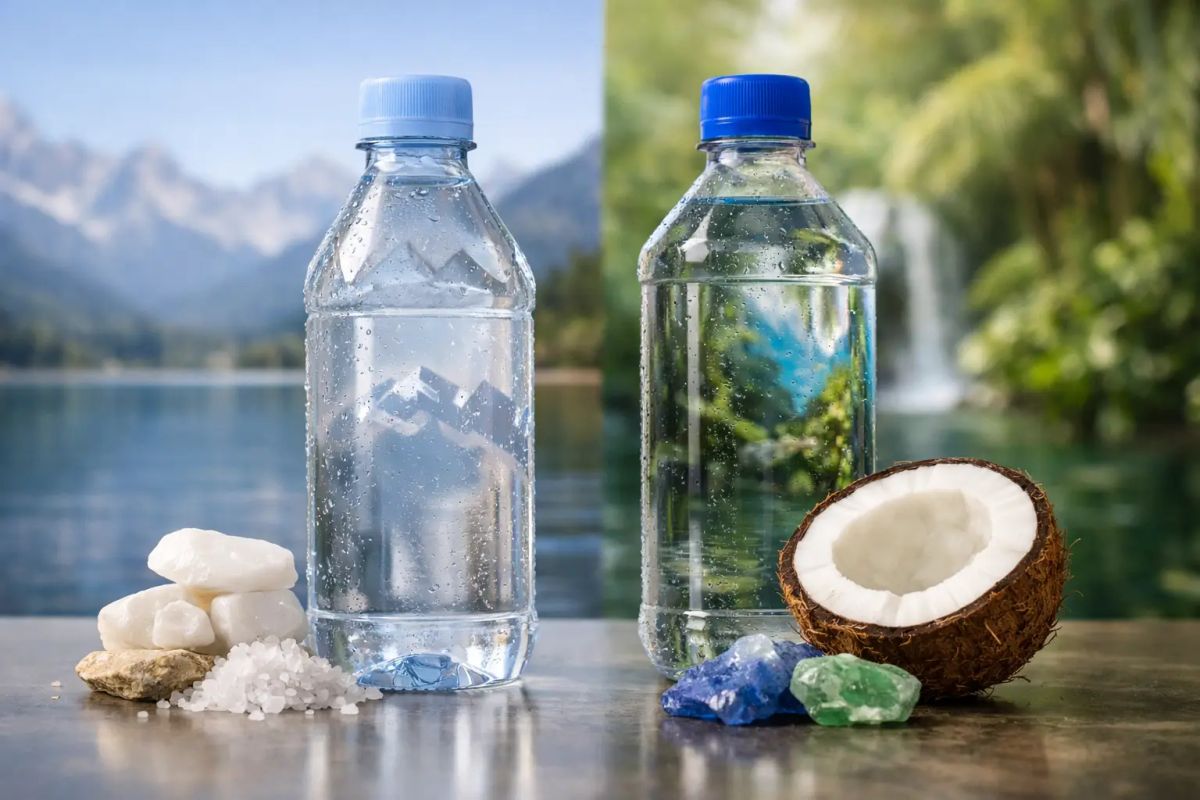
Set two premium bottles on the table and the differences seem subtle - until you read the label. That is where the real story of evian vs fiji water minerals begins. These waters are not interchangeable. They come from different geological worlds, carry different mineral signatures, and land very differently on the palate.
For anyone who pays attention to what is in the glass, this comparison matters. Mineral composition shapes taste, mouthfeel, pairing potential, and how a water fits into a routine. Evian and Fiji are both well-known natural waters, but they express two very different ideas of balance.
Evian vs Fiji water minerals at a glance
Evian is a natural spring water from the French Alps. Fiji is an artesian water from Viti Levu in Fiji. That difference in source is not just a branding detail. It explains why their mineral profiles feel so distinct.
Evian is often recognized for a balanced, classic mineral structure with notable calcium and magnesium. Fiji is known for a softer, silkier profile built around silica, with moderate bicarbonate and a comparatively low-acid impression on the palate. Both are mineral waters, but they are mineralized in different ways.
If you compare the standard label values typically reported by each brand, Evian usually contains more calcium and magnesium, while Fiji is especially associated with silica and a rounder texture. Sodium remains relatively modest in both, though the exact perception can still differ because mineral balance matters more than one number in isolation.
Why the source changes everything
Water is a record of place. As it travels through rock, it dissolves minerals according to time, pressure, temperature, and geology. This is why two natural waters can have similar prestige yet taste entirely different.
Evian spends years filtering through glacial sand and alpine rock. That long passage contributes to its measured structure and clean, mineral-driven finish. The sensation is often precise and composed.
Fiji rises from an artesian aquifer and is naturally protected until bottling. Its route through volcanic geology helps explain the presence of silica and the smoother, more cushioned texture many drinkers notice immediately. Where Evian can feel crisp and linear, Fiji tends to feel plush.
Mineral breakdown: what stands out in each bottle
Evian mineral profile
Evian is widely appreciated for a profile anchored by calcium and supported by magnesium and bicarbonate. In practical tasting terms, calcium often brings firmness and definition. Magnesium can add a faintly bitter or structured edge when present in enough quantity, though in a balanced water it contributes more to shape than harshness. Bicarbonate tends to soften acidity and support a rounded finish.
The result is a water that feels stable, balanced, and food-friendly. It has enough mineral presence to be interesting, but not so much that it becomes heavy. That balance is part of why Evian works well as an all-day premium still water for many palates.
Fiji mineral profile
Fiji’s calling card is silica. While silica is not always the first mineral casual shoppers look for, it plays a meaningful role in texture. Fiji is often described as smooth, soft, or velvety, and silica is one reason why. It also contains bicarbonate, calcium, magnesium, and sodium, but the sensory impression is less about sharp mineral edges and more about a polished, rounded mouthfeel.
This gives Fiji a different personality. It can feel gentler and broader across the tongue, with less of the chalky-mineral impression that some calcium-forward waters present. For drinkers who prioritize mouthfeel over briskness, that can be very appealing.
Evian vs Fiji water minerals and taste
Taste is where this comparison becomes useful. Not everyone reads a mineral label for the same reason. Some want a cleaner finish. Some want a richer texture. Some want a water that complements food rather than disappearing beside it.
Evian usually tastes cooler in personality - not temperature, but style. It often comes across as fresh, slightly mineral, and neatly structured. There is a sense of definition from first sip to finish. With food, that can be an advantage, especially when you want the water to refresh the palate without feeling too soft.
Fiji usually tastes broader and silkier. The texture can seem almost creamy compared with more linear waters. It often feels less angular, which makes it pleasant for slow sipping on its own. If you enjoy waters that read as smooth rather than crisp, Fiji often wins that preference test.
Neither is objectively better. It depends on whether you value structure or softness.
TDS, pH, and the numbers behind the experience
When people compare premium waters, they often look at TDS, or total dissolved solids. TDS gives you a snapshot of how mineralized a water is overall, but it does not tell the whole story. Two waters can have similar TDS and still taste very different because the mineral mix is different.
Evian typically sits in a moderate mineral range that feels present but controlled. Fiji is also moderately mineralized, yet its texture can seem softer because silica and bicarbonate influence perception differently than a profile dominated by calcium.
pH also enters the conversation, though it should be read carefully. A higher pH can sound impressive on a label, but palate and mineral balance are what most people actually notice. Fiji is often marketed with an alkaline reputation, while Evian is usually seen as balanced and neutral in style. For most drinkers choosing between them, taste and composition will be more useful than chasing a single pH number.
Which water fits which drinker?
If you like a water that feels classic, composed, and quietly mineral, Evian is an easy choice. It suits drinkers who enjoy clarity and structure, and it tends to perform well at the table. With delicate meals, it refreshes without feeling flat. With richer dishes, it can bring contrast.
If you prefer a water that feels smooth and rounded, Fiji often feels more indulgent. It is well suited to people who pay attention to mouthfeel and enjoy lingering over a still water the way they might with a fine coffee or wine. On its own, it often makes a stronger sensory impression.
For athletes and routine-focused drinkers, the answer is still personal. Some prefer the defined mineral presence of Evian. Others gravitate toward Fiji’s softer profile because it feels easier to drink in larger amounts. The label tells you the chemistry. Your palate decides the rest.
Food pairing considerations
Water pairing is still underestimated. Yet once you start paying attention, the right water can sharpen a meal or soften it.
Evian’s balanced calcium and magnesium profile makes it a strong companion for seafood, fresh salads, simple poultry, and lightly salted dishes. It has enough structure to cleanse the palate without competing with subtler flavors.
Fiji tends to work beautifully when the goal is softness and continuity. It can sit comfortably beside fruit, mild cheeses, spa cuisine, and dishes with creamy textures. Its rounded feel can echo softer foods instead of cutting through them.
This is one of the clearest trade-offs in the evian vs fiji water minerals conversation. Evian often behaves like a precise table water. Fiji often behaves like a plush sipping water. Both can pair well, but they do so differently.
Reading the label like a sommelier
The smartest way to compare bottled waters is not to look for a winner. It is to look for a profile. Start with calcium, magnesium, sodium, bicarbonate, and silica if listed. Then ask what those numbers are likely to mean in the glass.
Higher calcium often suggests more structure. Magnesium can add character and grip. Bicarbonate can bring roundness. Silica often points toward smooth texture. Sodium, depending on level and balance, may subtly change how broad or savory a water feels.
Once you read labels this way, premium water stops being a generic category. It becomes expressive. There is a world inside every bottle.
For people who want to compare waters more precisely, tools like Water Sommelier make that process far easier by revealing mineral composition, source details, tasting profile, and pairing cues with a quick scan. That kind of clarity is useful when a bottle shelf looks uniform but the drinking experience is anything but.
So if you are choosing between Evian and Fiji, start with one simple question: do you want definition or silk? The better bottle is the one that matches the moment, the meal, and your own palate.
Scan any bottle. Discover its minerals, origin, and character. Get the Water Sommelier app