
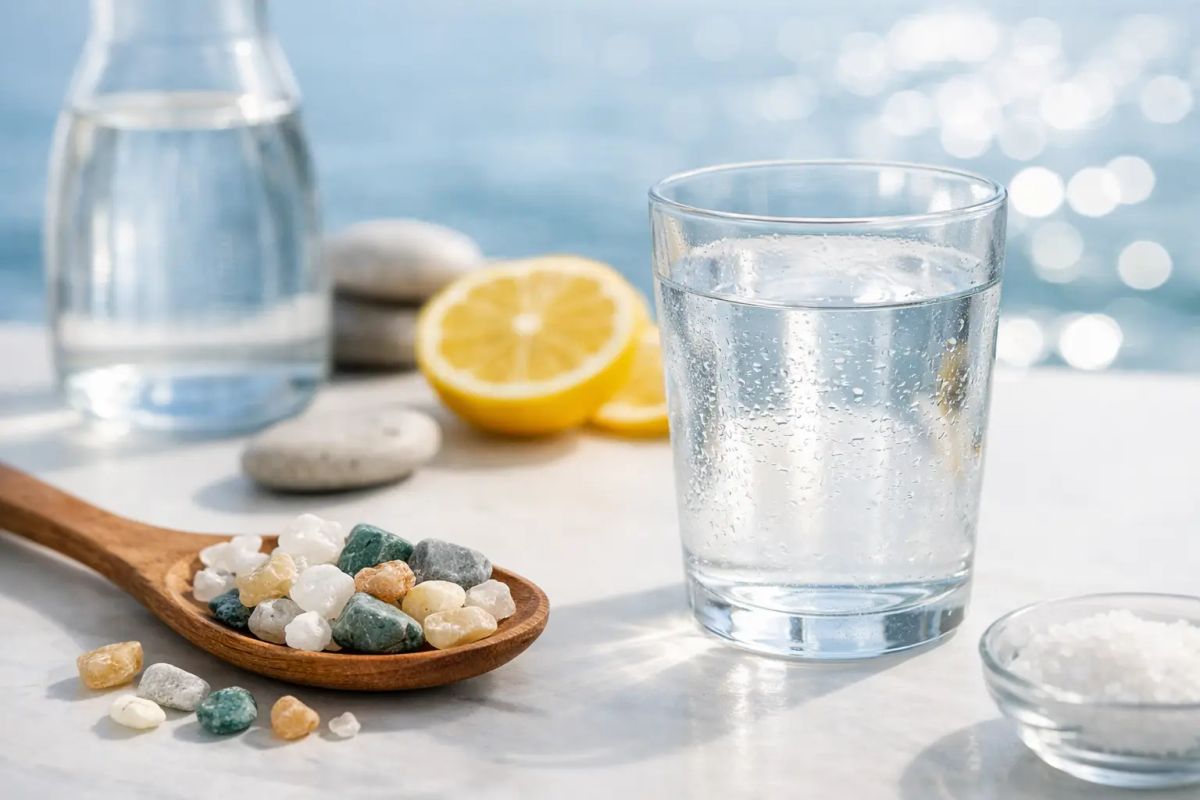
You can taste the difference between waters long before you read the label. One feels soft and almost weightless. Another lands with a chalky grip, a saline edge, or a lively, sparkling lift. That sensory contrast is not branding. It is chemistry. And when people ask about water minerals health benefits, the real answer starts there - with what is actually in the bottle, and in what proportions.
Mineral water is often discussed in vague wellness language, but the details matter. Calcium, magnesium, sodium, bicarbonate, sulfate, and silica each shape how a water feels, how it pairs with food, and how it fits into a person’s preferences and routine. The point is not that more minerals are always better. It is that mineral composition changes the drinking experience and can contribute meaningfully to your overall intake, depending on the water you choose and how often you drink it.
What water minerals actually are
Water picks up minerals as it moves through rock formations and underground aquifers. That journey leaves a signature. Limestone-rich regions may yield higher calcium levels. Volcanic geology can influence silica and trace mineral content. The source matters because terroir matters, even in water.
When you look at a label, the most common minerals are measured in milligrams per liter. These figures are not decorative. They tell you whether a water is light and low-mineral or dense and structured with a more pronounced profile. TDS, or total dissolved solids, gives a broad sense of overall mineralization, but it does not tell the whole story. Two waters can have similar TDS and taste entirely different because their mineral balance is different.
That balance is where interpretation becomes useful. A water high in calcium and bicarbonate will not behave the same way on the palate as one led by magnesium and sulfate. For people who care about performance, taste, or nutritional contribution, that distinction is worth understanding.
Water minerals health benefits depend on composition
The phrase water minerals health benefits sounds simple, but it covers several different questions. Are you interested in nutritional value, taste preference, training recovery, or everyday compatibility with meals and routines? Those are related, but they are not identical.
Some bottled waters contain enough minerals to make a notable contribution to daily intake. Others are so low in mineral content that their role is mostly about clean, neutral refreshment. Neither category is automatically superior. It depends on what you want from the bottle.
For a health-conscious consumer reading labels closely, mineral water can be a practical source of certain nutrients. For an athlete, sodium and bicarbonate levels may stand out more than tasting notes. For a fine dining professional, hardness, carbonation, and minerality may matter because they affect how a water supports or interrupts a dish. A smart choice is less about chasing a single number and more about matching the composition to the moment.
Calcium and magnesium are the headline minerals
Calcium and magnesium usually get the most attention, and for good reason. They are familiar minerals with established roles in the body, and some waters contain them in meaningful amounts.
Calcium tends to give water a firmer, more structured mouthfeel. In tasting terms, it can feel clean, chalky, or linear depending on the source. From a nutritional standpoint, calcium in water can add to your overall dietary intake. That can be appealing for people who are already ingredient-conscious and want every part of the day to work a little harder.
Magnesium often brings a different texture. It can create a slight bitterness at higher levels, but in balance it contributes depth and character. Some drinkers actively prefer magnesium-rich waters because they feel more substantial and more gastronomic. In practical terms, magnesium content is one of the key numbers many wellness-focused consumers look for when comparing bottles.
Still, there is a trade-off. High levels of either mineral may improve perceived substance and nutritional interest, but they can also make a water less neutral. If you want a bottle that disappears into the background with food, a heavily mineralized profile may not always be the right fit.
Sodium is not always a negative
Sodium in water is often misunderstood. Many people see it and assume it should be avoided, yet context matters. Some waters have only trace sodium. Others have enough to create a rounder, slightly savory taste.
For certain drinkers, especially those paying attention to electrolyte balance around exercise, sodium may be a relevant part of the label. For others, especially those who are intentionally limiting sodium intake from all sources, a lower-sodium water may be the better choice. This is where blanket advice fails. The best water for one person’s lifestyle may be wrong for another’s.
On the sensory side, sodium can make a water feel softer and more approachable. It can also improve pairing with certain foods by complementing salinity and enhancing texture. In a dining setting, that matters more than most people realize.
Bicarbonate shapes both feel and function
Bicarbonate deserves more attention than it gets. It influences taste, texture, and overall balance, often giving water a smoother, rounder profile. In highly mineralized waters, bicarbonate can help soften sharper edges from other components.
It is also one of the reasons some waters feel especially composed at the table. A bicarbonate-rich water can seem calm, polished, almost creamy on the palate. If you have ever had a bottle that felt unusually elegant despite high mineral content, bicarbonate was likely part of that story.
From a practical standpoint, people drawn to mineral-rich waters often watch bicarbonate alongside calcium, magnesium, and sodium because it helps explain why one water feels harmonious and another feels aggressive.
Why taste is part of the equation
Health-minded consumers sometimes treat taste as secondary, but taste drives consistency. If you genuinely enjoy a water’s profile, you are more likely to choose it regularly. That makes sensory preference more than a luxury detail. It becomes part of daily behavior.
This is where mineral analysis becomes more useful than marketing language. Terms like pure, crisp, or premium tell you very little. Actual mineral data tells you why a water tastes the way it does. It also helps you predict whether you will enjoy it.
A low-mineral water may feel silky, quiet, and versatile. A high-mineral water may feel assertive, saline, or stony. Sparkling water adds another layer, since carbonation can sharpen acidity and alter how minerality is perceived. None of these are flaws. They are style differences.
For anyone building a more intentional drinking routine, understanding this is powerful. One bottle may suit a workout bag, another a tasting menu, another a long workday when you want something elegant and unobtrusive.
Reading the label like a sommelier
The easiest mistake is focusing on one mineral in isolation. A better approach is to read the label as a whole composition.
Start with TDS to understand whether the water is broadly low, medium, or high in mineralization. Then look at calcium and magnesium for structure and substance. Check sodium if you care about both flavor and dietary context. Look at bicarbonate for smoothness and balance. pH can add useful context, but on its own it tells you less than many people assume.
This is exactly why tools that translate label data into something readable have become so valuable. Water Sommelier, for example, lets you point your camera at a bottle and instantly see mineral composition, pH, TDS, source origin, and tasting profile in a way that feels clear rather than clinical. For people who want expert-level understanding without turning every bottle into homework, that kind of interpretation changes the experience.
Choosing the right mineral profile for your routine
There is no universal best bottled water for health because the better question is best for what. If you want a subtle everyday bottle, lower mineralization may be more appealing. If you want a water that contributes more noticeably to mineral intake and offers a stronger sensory presence, a higher-mineral option may make more sense.
Athletes may pay closer attention to sodium and overall composition after intense training. Wellness enthusiasts may compare magnesium-forward waters for daily use. Food professionals may choose waters based on how they behave with oysters, cheese, citrus, or tannic wine. Premium lifestyle consumers often want all of this at once - good taste, clear provenance, and numbers that justify the choice.
That is the pleasure of understanding water at a deeper level. There is a world inside every bottle, but not every world suits every moment.
The most useful habit is simple: stop asking whether mineral water is good in the abstract, and start asking what kind of mineral profile belongs in your glass today.
Scan any bottle. Discover its minerals, origin, and character. Get the Water Sommelier app