
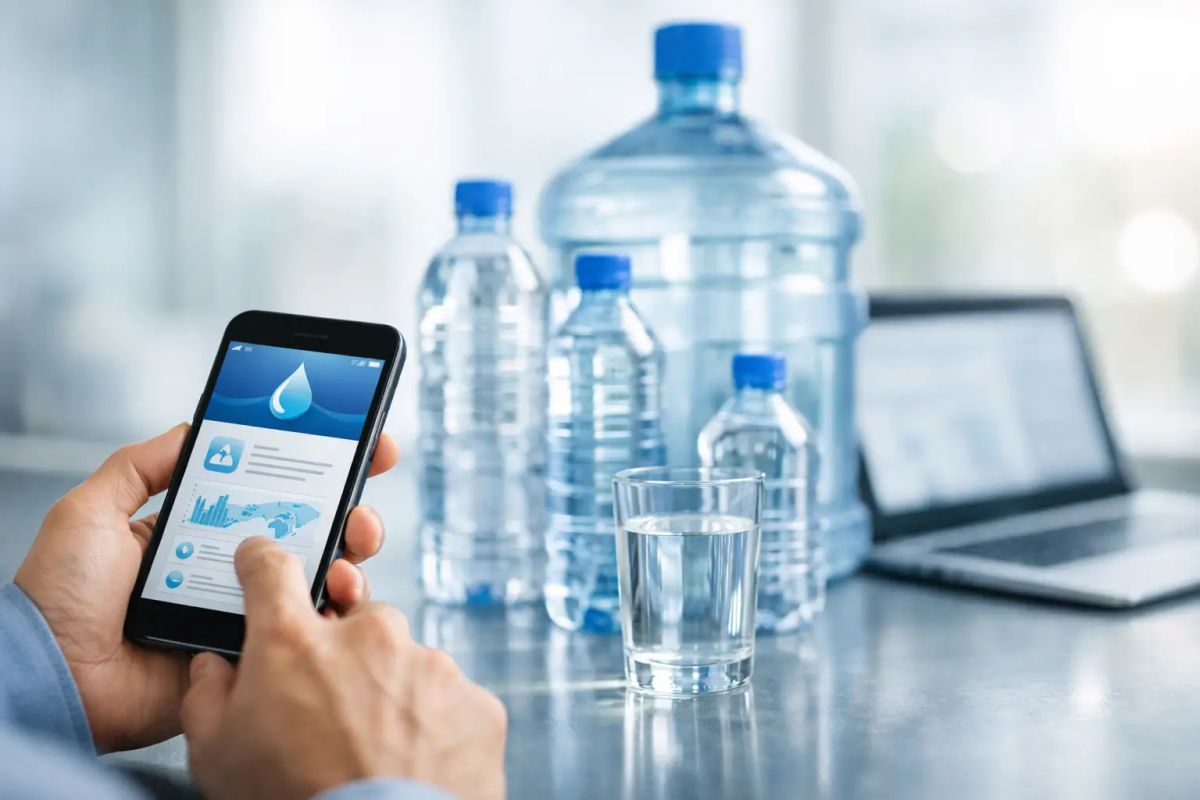
You can read the front of a water bottle in two seconds. What takes longer is understanding what any of it actually means. Alpine source, artesian, naturally alkaline, mineral-rich - the language sounds impressive, but if you care about taste, composition, and choosing with intention, you need more than branding. That is where the best app for bottled water earns its place.
A good bottled water app should do one thing exceptionally well: turn a label into knowledge you can use. Not vague lifestyle language. Not marketing gloss. Actual information about what is in the bottle, where it comes from, how it may taste, and why one water feels crisp and light while another feels dense, savory, or softly sweet.
What makes the best app for bottled water?
The answer is not simply barcode scanning. Plenty of apps can identify a product. That is a convenience feature, not a standard of expertise. The best app for bottled water should help you interpret mineral composition in a way that feels immediate, elegant, and useful.
That starts with core data. If an app shows calcium, magnesium, sodium, bicarbonate, pH, and TDS, you are already looking at a stronger tool than one that stops at brand name and packaging. These numbers shape the character of the water. They influence mouthfeel, perceived freshness, texture, and overall balance. For a health-conscious user, that data supports more informed choices. For a dining professional, it adds context to pairing. For a curious drinker, it transforms water from a commodity into a category.
But raw data alone is not enough. Most people do not want to decode a chemistry sheet every time they open a bottle. The app should translate. It should tell you whether a water is light and low-mineral or structured and mineral-forward. It should make source origin matter. It should connect composition to sensory experience.
Why bottled water deserves better tools
There is a tendency to treat bottled water as simple. In reality, there is a world inside every bottle. Geological origin, mineral balance, carbonation level, and source conditions all contribute to what lands on the palate. Two premium waters can look nearly identical on a shelf and taste completely different in the glass.
That difference matters more than many people realize. If you are building a routine around precision, whether in wellness, athletics, hospitality, or food writing, the details are the point. You may want a water with a softer profile for all-day drinking, or one with a higher mineral structure for a richer meal. You may prefer low sodium. You may simply want to remember the bottle you loved at a restaurant in Miami or the one you picked up before a flight from Los Angeles.
Without a proper app, that knowledge disappears as soon as the bottle is empty.
The features that actually matter
When people search for a bottled water scanner, they often think first about speed. Speed matters. Point, shoot, know. But after that first moment, the real value comes from depth.
A strong app should reveal mineral composition clearly, not bury it in a cluttered interface. It should present source information with enough context to feel meaningful. If the water comes from a protected spring, a volcanic region, or a deep aquifer, that should not read like trivia. It should help explain the water's identity.
Tasting notes are another mark of a better experience. Water has texture, finish, and balance. Some are almost invisible on the palate. Others leave a chalky grip, a saline flicker, or a creamy softness. An app that captures those distinctions gives bottled water the level of attention already common in wine, coffee, and tea.
Personal tracking also matters more than people expect. Taste is memory-driven. You try a bottle in Chicago during dinner service, another after training in Austin, another at home in New York, and after a month the details blur together. A tasting journal solves that. It lets you build your own reference point instead of relying on packaging claims or half-remembered impressions.
Then there is recommendation logic. This is where many apps become too generic. The best ones do not just suggest what is popular. They help you discover patterns in your own preferences. If you consistently like low TDS waters with a clean, delicate finish, the app should begin to recognize that. If you gravitate toward firmer mineral profiles with more structure at the table, it should reflect that too.
Best app for bottled water for different kinds of users
Not everyone is looking for the same thing, and that is worth acknowledging. The ideal app should be flexible enough to serve multiple kinds of drinkers without feeling diluted.
For health-conscious consumers, clarity is everything. They want a fast way to see what minerals are in the bottle and make choices based on facts rather than front-label language. They do not need a lecture. They need clean, credible information.
For wellness enthusiasts and biohackers, the appeal is precision. They are already tracking inputs across food, sleep, training, and supplements. Water belongs in that conversation. An app that surfaces pH, TDS, and mineral balance in a readable format fits naturally into that mindset.
For athletes, context matters. Not every bottle feels the same before training, during travel, or after a demanding day. While preferences vary, an app can help them observe patterns in what they reach for and why. The key is informed selection, not one-size-fits-all advice.
For sommeliers, chefs, food writers, and hospitality teams, bottled water is a pairing subject. A delicate still water can preserve nuance in a tasting menu. A more assertive mineral water can stand up to richer dishes. Here, the app becomes less of a utility and more of a professional reference.
For premium lifestyle users, the appeal is curation. They care about design, provenance, quality, and the story behind what they consume. A well-made water app speaks their language because it treats water as a serious object of taste.
How to tell if an app is truly useful
The fastest test is simple: after scanning one bottle, do you know more than you did before in a way you can actually use?
If the app only repeats the label, it is not enough. If it gives you numbers without interpretation, it may impress at first but wear thin quickly. If it makes water feel flat or purely functional, it misses the category entirely.
A truly useful app gives you both authority and ease. It should feel polished, but never vague. It should respect the science while keeping the experience intuitive. It should help you compare bottles, remember favorites, and notice nuances you might otherwise miss.
This is the standard that makes Water Sommelier stand out. Point your phone at a bottle and the app reveals mineral composition, pH, TDS, source origin, compatibility insights, food pairing guidance, and a personal tasting profile. It gives bottled water the kind of analysis usually reserved for more celebrated drinks, while keeping the experience immediate enough for everyday use.
A better question than “which bottle is best?”
People often ask for the best bottled water as if there were one universal answer. There is not. It depends on what you value.
Some drinkers want delicacy. Some want minerality. Some care most about provenance. Others care about building a personal record of what they enjoy. The right app does not force one definition of quality. It helps you understand the bottle in front of you, then decide whether it fits your taste, your table, or your routine.
That shift matters. Once you start reading water properly, you stop buying blindly. You notice why one bottle feels lively and another feels round. You begin to recognize source as more than geography. You understand that mineral content is not background detail - it is character.
And that is the real value of the best app for bottled water. It does not just help you scan faster. It teaches you to see more, taste more, and choose with a sharper palate.
The next time you pick up a bottle, pause before the first sip. There may be far more in that glass than the label ever told you.
Scan any bottle. Discover its minerals, origin, and character. Get the Water Sommelier app