
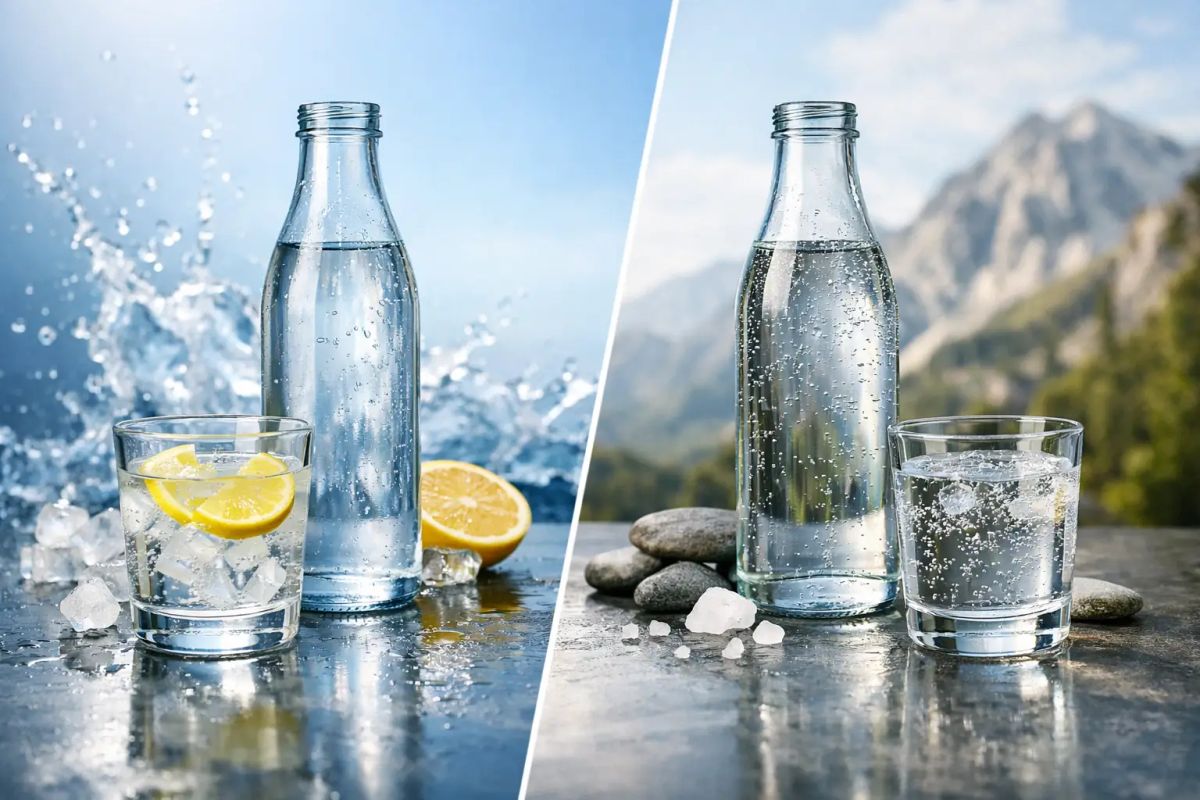
You can taste the difference long before you read the label. One water feels crisp and almost neutral, built for function. Another arrives with texture, length, and a distinct mineral signature that lingers on the palate. In the question of electrolyte water vs mineral water, the real distinction is not which one is better. It is what kind of drinking experience - and mineral profile - you actually want.
Water is often treated as interchangeable. It is not. The source, the dissolved minerals, and the way those minerals are added or retained shape everything from mouthfeel to intended use. For people who read labels with the same care they bring to coffee, wine, or olive oil, that difference matters.
Electrolyte water vs mineral water: the core difference
Electrolyte water is defined by function. It contains electrically charged minerals such as sodium, potassium, magnesium, and calcium, often added during processing to support a specific formulation. The goal is consistency and utility. In many cases, the base water is purified first, then electrolytes are introduced in measured amounts.
Mineral water begins with origin. It comes from a protected underground source and contains naturally occurring minerals from the geology it passes through. Those minerals are not simply ingredients. They are part of the water's identity, shaped by terroir, depth, rock contact, and time.
That difference sounds technical, but it changes the entire character of the bottle. Electrolyte water is usually designed. Mineral water is discovered.
Source matters more than most labels suggest
If you pick up a bottle of electrolyte water, the label may highlight performance, pH, or added minerals. What it often will not emphasize is a singular sense of place. That is because many electrolyte waters start as purified water, then gain their final composition through formulation.
There is nothing inherently wrong with that. Precision has its advantages. A controlled mineral blend can create a clean, predictable result and a flavor profile that stays the same from bottle to bottle.
Mineral water works differently. Its composition reflects where it comes from. A water moving through limestone may show notable calcium and bicarbonate. A source influenced by volcanic geology may present a very different balance, perhaps with more silica or a softer texture. This is why serious tasters speak about water with the same language used for other terroir-driven products. There is a world inside every bottle, and geology writes the first draft.
What counts as an electrolyte, and what counts as a mineral?
This is where the conversation gets muddy. Electrolytes are minerals that carry an electric charge when dissolved in water. Sodium, potassium, calcium, and magnesium all qualify. So yes, mineral water can contain electrolytes too.
The real issue is not whether minerals are present. It is how they got there, in what balance, and for what purpose. Electrolyte water usually emphasizes selected minerals associated with a functional profile. Mineral water expresses the full composition that occurs naturally at the source, often including bicarbonate, sulfate, silica, and trace elements that influence taste as much as utility.
That means the phrase electrolyte water vs mineral water can be slightly misleading if taken too literally. Many mineral waters contain electrolytes. Many electrolyte waters contain minerals. The sharper distinction is formulated function versus natural composition.
Taste is where the difference becomes obvious
If you care about sensory detail, this category becomes much more interesting.
Electrolyte water often tastes streamlined. Depending on the formula, it may come across as soft, neutral, or faintly saline. The intention is usually drinkability without distraction. Some bottles are engineered to feel smooth and easy, especially when consumed quickly.
Mineral water tends to show more personality. Calcium can create firmness. Magnesium can bring a slight bitterness if present at higher levels. Bicarbonate often gives a rounded, buffered feel. Sodium can enhance softness and make flavors seem more open. High TDS waters may feel dense, structured, even velvety. Low mineral waters can feel delicate and quick.
This is why one bottle works beautifully with oysters while another feels better on its own. Water is not flavorless. It is subtle, but subtle is not the same as absent.
When electrolyte water makes more sense
There are moments when a designed water profile is exactly the point. If you want a predictable composition, electrolyte water offers that clarity. For athletes, people who track intake closely, or anyone who prefers a lighter sensory footprint, that consistency can be appealing.
It can also suit people who do not want a strong mineral signature in the glass. With certain meals, coffees, or spirits, a very neutral water plays a supporting role rather than competing for attention. In those settings, precision can be elegant.
Still, not all electrolyte waters are alike. Some rely heavily on sodium, others emphasize magnesium or potassium, and the overall balance changes both taste and feel. Two bottles that make similar front-label promises can drink completely differently.
When mineral water stands apart
Mineral water shines when origin, taste, and composition matter as much as refreshment. It is especially compelling for people who approach drinking with curiosity. Sommeliers, chefs, wellness-minded consumers, and premium buyers often gravitate toward mineral water because it offers nuance rather than uniformity.
A naturally mineralized water can elevate a meal in the same way a thoughtful wine pairing can. A crisp, low-mineral still water may disappear politely beside delicate seafood. A sparkling water with higher bicarbonate and firmer structure may handle richer dishes with confidence. The water is no longer background. It becomes part of the experience.
This is also where label literacy becomes valuable. One mineral water may be rich in calcium and feel chalky or structured. Another may be sodium-led and taste almost creamy. Without reading the composition, the category name alone tells you very little.
The label tells the real story
Front-of-bottle language is often broad. The fine print is where the truth lives.
Look first at the mineral composition panel. Calcium, magnesium, sodium, potassium, and bicarbonate reveal more than marketing claims ever will. Then consider TDS, which gives a quick sense of how concentrated the dissolved mineral content is. A low TDS water usually feels lighter and more restrained. A high TDS water often feels more substantial and expressive.
pH can also be useful, but it should not be read in isolation. A water's sensory character comes from the total balance of minerals, not one number. Source description matters too. If a bottle clearly identifies a natural spring or protected underground source, that suggests a very different story from purified water with added electrolytes.
For readers who want to decode a label quickly, this is where a tool like Water Sommelier can be genuinely useful. Point your phone at the bottle and the mineral profile becomes easier to understand in practical, sensory terms.
Which one is better?
Usually, neither. Better for what is the right question.
If you want control, consistency, and a clean functional profile, electrolyte water may be the smarter choice. If you want authenticity of source, natural mineral complexity, and a more expressive tasting experience, mineral water often offers more depth.
There are trade-offs. A highly mineralized natural water can be fascinating, but not everyone wants that intensity every day. A formulated electrolyte water can feel precise and approachable, but it may lack the sense of place and layered character that makes fine water memorable.
Price also enters the conversation. Premium mineral waters often command more because the source itself is part of the value. You are not only paying for water. You are paying for geology, rarity, and a composition that cannot simply be replicated in a lab.
A more useful way to choose
Instead of asking which category wins, ask what kind of bottle belongs in the moment.
For training, convenience, or a deliberately neutral profile, electrolyte water can be a practical fit. For the table, for tasting, for pairing, or for people who appreciate natural variation, mineral water brings more dimension. Some drinkers will want both in rotation for different reasons.
The best choice starts with attention. Read the source. Read the numbers. Taste with intention. Notice whether the water feels sharp, soft, chalky, saline, round, or weightless. Once you begin doing that, the category stops being abstract.
It becomes personal.
And that is where water gets interesting. Not when it makes the loudest promise, but when you can finally tell what is in the glass - and why it tastes the way it does.
Frequently asked questions
What counts as an electrolyte, and what counts as a mineral?
This is where the conversation gets muddy. Electrolytes are minerals that carry an electric charge when dissolved in water. Sodium, potassium, calcium, and magnesium all qualify. So yes, mineral water can contain electrolytes too.
Which one is better?
Usually, neither. Better for what is the right question.
Scan any bottle. Discover its minerals, origin, and character. Get the Water Sommelier app