
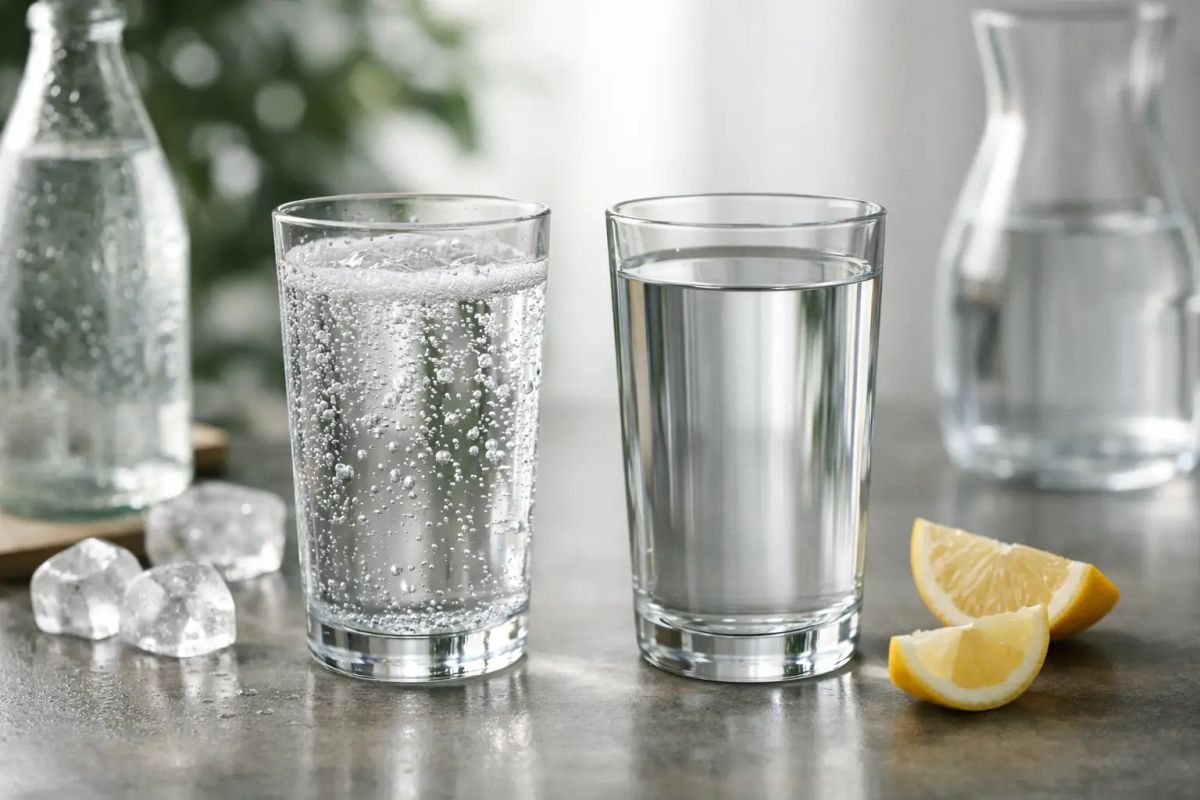
A bottle of water can arrive at the table with the quiet clarity of stillness or the bright lift of bubbles. In the conversation around sparkling water vs still water, carbonation gets most of the attention. Yet the more interesting distinction is not simply whether a water fizzes. It is how carbonation changes texture, aroma, acidity perception, and the way a water meets food.
For anyone who reads a wine list with curiosity or notices the difference between a light roast and a dark roast coffee, water deserves the same attention. There is a world inside every bottle: source, minerals, dissolved solids, and, in sparkling waters, the character of the bubbles themselves.
Sparkling Water vs Still Water: The Essential Difference
Still water contains no intentionally retained carbon dioxide, so its personality is carried primarily by its mineral composition and source. A low-mineral still water may feel soft, delicate, and almost weightless. A more mineral-rich still water can feel structured, creamy, saline, or pleasantly firm on the palate.
Sparkling water contains dissolved carbon dioxide, which creates effervescence when the bottle is opened and pressure is released. Those bubbles do more than create a visual effect. They bring movement to the palate, lift aromatic impressions, and add a subtle tang through carbonic acid, which forms when carbon dioxide interacts with water.
That tang is why sparkling water often feels sharper or more refreshing than a still water with a similar mineral profile. It is a sensory effect, not a judgment of quality. One is not inherently better than the other. They offer different experiences and different roles at the table.
Natural Sparkling Water and Added Carbonation
Not every sparkling water reaches the bottle the same way. Some emerge from a source with naturally occurring carbonation. Others begin as still mineral or spring water and have carbon dioxide added before bottling. Both can be excellent.
The distinction matters because naturally occurring carbonation and added carbonation may create different bubble textures and may be presented differently on a label. Natural mineral composition can also vary significantly from one source to another. The best approach is to look beyond the word “sparkling” and consider the full profile: origin, mineral content, total dissolved solids, and carbonation style.
What Carbonation Changes in the Glass
Sparkling water is kinetic. Its bubbles carry aroma upward, create a crisp opening impression, and reset the palate between bites. A lively, high-pressure sparkle can feel energetic and assertive. A gentler mousse, with finer bubbles, can feel more polished and restrained.
Still water offers another kind of precision. Without effervescence, mineral notes are easier to isolate. Calcium may contribute a firm, chalk-like structure. Magnesium can read as subtly bitter. Sodium may bring a faint savory quality. Bicarbonate often gives water a rounder, smoother impression. None of these notes should be considered flaws on their own. They are part of water’s vocabulary.
Carbonation can also shift how those minerals are perceived. A mineral-rich sparkling water may feel more vivid and expansive, while the same general level of dissolved minerals in still water may feel denser or more contemplative. This is why comparing two waters by pH alone rarely tells the full story.
pH and TDS Are Useful, but Not the Whole Taste Story
Two figures commonly appear in water conversations: pH and TDS. pH describes acidity or alkalinity, while TDS, or total dissolved solids, gives a broad measure of dissolved mineral material. Both can provide context, but neither is a complete tasting note.
Carbonated water generally has a lower pH than its still counterpart because dissolved carbon dioxide creates carbonic acid. That does not automatically explain whether the water will taste elegant, aggressive, light, or mineral-driven. The amount and balance of calcium, magnesium, sodium, bicarbonate, sulfate, and other constituents matter too.
TDS is equally useful as a reference point, not a verdict. A low-TDS water may be clean and delicate. A high-TDS water may be complex, saline, and substantial. A water’s character comes from the balance of individual minerals, the source, and the presence or absence of carbonation.
Choosing Still Water for Food and Conversation
Still water is often the more discreet companion at a meal. It can support the flavors of food without adding acidity or bubbles, particularly when a dish is subtle, creamy, or aromatic. A soft still water can sit gracefully beside delicate seafood, fresh vegetables, mild cheeses, or tea service.
More mineral-forward still waters can bring their own sense of structure. They can stand comfortably beside roasted vegetables, richer grains, or composed dishes where a little saline or stony character feels appropriate. The goal is not to make water compete with the plate. It is to choose a profile that feels proportionate.
Still water also rewards slower tasting. Take a small sip and notice the entry, mid-palate, and finish. Does it disappear quickly? Does it feel silky? Is there a saline edge or a mineral linger? Without bubbles, these details have room to speak.
When Sparkling Water Belongs on the Table
Sparkling water is naturally at home with foods that benefit from contrast. Its acidity and effervescence can feel especially well matched with fried dishes, rich sauces, cured meats, salty snacks, and creamy textures. The bubbles create a lively interruption between bites, while the water’s mineral profile can either soften or amplify the food’s savory elements.
It can also be a compelling aperitif. Served well chilled in a proper glass, sparkling water brings ceremony before a meal without asking for elaborate preparation. For a dinner party, offering both still and sparkling is not an afterthought. It is a mark of considered hospitality.
The style of sparkle matters. A forceful, boldly carbonated water can be ideal when you want a crisp, energetic contrast. A fine, restrained effervescence may suit a long meal where the water should feel elegant rather than insistent. Temperature matters as well: chilling sparkling water preserves its tension, while serving it too cold can obscure its mineral personality.
How to Read a Bottle Beyond “Sparkling” or “Still”
A bottle label can tell a more complete story if you know where to look. Start with the source description. Is it spring water, mineral water, or another declared category? Then look for the mineral analysis, often presented in milligrams per liter.
Pay particular attention to calcium, magnesium, sodium, and bicarbonate. These are not shortcuts to a universal ranking. They are clues to taste and texture. Calcium and bicarbonate together may suggest a firmer, more structured profile. Magnesium may add a drier edge. Sodium can make a water feel rounder or subtly savory, depending on the amount and the broader composition.
If the label lists TDS, use it to anticipate weight rather than quality. Lower numbers often suggest delicacy; higher numbers can signal a more pronounced mineral presence. Then consider whether the water is still, naturally sparkling, or carbonated. The combination gives you a much richer expectation than either category alone.
Water Sommelier makes this process more immediate: point your phone camera at a bottle to identify the water and view educational details on its mineral composition, pH, TDS, and source origin. Point. Shoot. Know. The value is not merely data. It is having a clearer language for what is in your glass.
A Better Way to Compare the Two
Taste sparkling and still water side by side when possible, rather than assuming one style is your default. Use identical glasses and serve both chilled, though not ice-cold. Begin with the still water to notice its mineral structure without the distraction of bubbles. Then taste the sparkling water and pay attention to bubble size, acidity, and finish.
Ask a few simple questions. Does the sparkling water feel brisk or creamy? Does the still water feel light, round, or saline? Which one suits the food in front of you? Which one suits the moment?
The answer may change from lunch to dinner, from a quiet desk to a celebratory table. That is the pleasure of understanding water more closely: every choice becomes less automatic, and every bottle has something to say.
Scan any bottle. Discover its minerals, origin, and character. Get the Water Sommelier app