
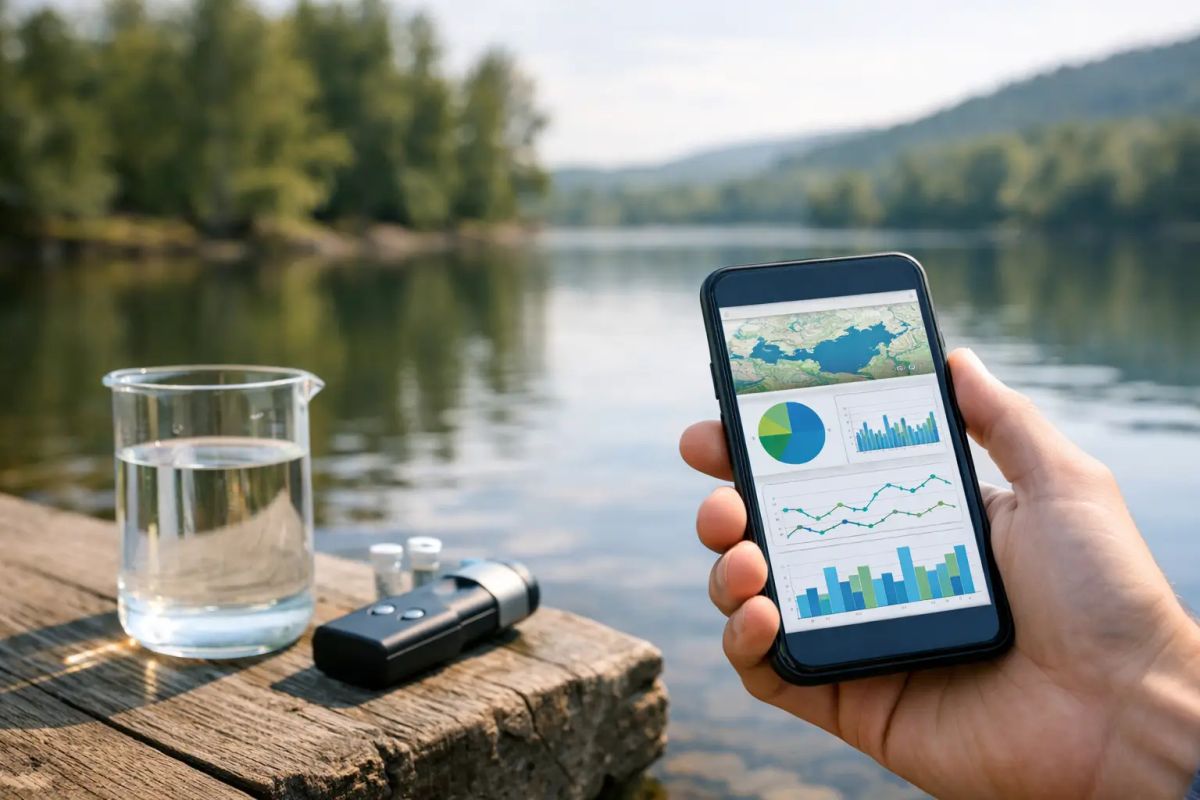
A bottle can look pristine and still leave its most interesting details unexplained. Where did the water begin? What minerals shape its texture? Is its crispness the result of low mineral content, or a particular balance of calcium, magnesium, sodium, and bicarbonate? A water source transparency app gives those questions a place to land - turning a label into a more legible story.
For people who choose bottled water with the same attention they give coffee, wine, or olive oil, transparency is not about finding a single “best” bottle. It is about understanding character. There is a world inside every bottle, and its source and composition are part of what makes it distinct.
What a water source transparency app should make clear
At its most useful, a water source transparency app connects a recognizable bottle to the facts that give it context: source origin, mineral composition, pH, and TDS, or total dissolved solids. These are not decorative details. They are the vocabulary of the water in your glass.
Source origin tells you where the water is drawn or collected, whether that is a spring, an artesian source, a mineral water source, or another declared origin. The wording matters. A source is a geographic and geological story, not simply a marketing backdrop. Water moving through different rock formations can take on a different mineral profile, which can influence how it presents on the palate.
Mineral information gives that story more definition. Calcium, magnesium, sodium, and bicarbonate are among the figures drinkers often encounter. Reading them together is more revealing than fixating on one number. A mineral profile is a composition, much like a wine’s acidity, structure, and finish work together rather than in isolation.
pH and TDS offer further context. pH describes acidity or alkalinity on a scale, while TDS refers to the amount of dissolved material measured in the water. Neither figure is a verdict on quality. They are reference points that help explain style, particularly when compared with a bottle’s mineral profile and stated origin.
Why bottle recognition changes the experience
A bottle label is often crowded, designed to communicate mood as much as information. Some details are printed in small type. Others may be absent from the front label altogether. Even when a mineral analysis is available, it can be difficult to interpret while standing in a restaurant, browsing a specialty market, or selecting a bottle for dinner.
This is where the camera matters. Water Sommelier lets users point a phone camera at a water bottle to help identify the product and surface educational information about its mineral composition, pH, TDS, and source origin. Point. Shoot. Know.
The value is not merely speed. It is continuity. Instead of treating each bottle as an isolated purchase, you can begin to recognize the profiles you enjoy. Perhaps you notice that you prefer a delicate, low-TDS water alongside a subtle dish, or that a more mineral-forward profile feels especially suited to a rich meal. Those are taste observations, not rules, and they become more meaningful when you can see the composition behind them.
Recognition also reduces a familiar friction: uncertainty. Two bottles may share a similar visual language but come from entirely different source environments. Two waters with the same broad source category can carry markedly different mineral balances. A transparency app helps move the decision beyond packaging and price alone.
How to read the information without reducing water to a score
The temptation with any app is to search for the highest or lowest number. Water deserves a more considered reading. Higher TDS does not automatically mean better, and lower TDS does not automatically mean purer in a sensory sense. The figure describes dissolved solids, not a universal ranking.
The same is true of individual minerals. Sodium may be present at a low, moderate, or more pronounced level. Calcium and magnesium can contribute to a water’s overall profile. Bicarbonate often appears alongside other mineral data and can help form part of the picture. What matters for a curious drinker is how these details relate to one another and how the water tastes to them.
Start with three questions: What is the declared source? What does the mineral composition look like as a whole? What do the pH and TDS figures add to the picture? Then taste the water at a neutral moment, rather than immediately after strong coffee, spicy food, or mint. Notice its opening impression, texture through the mid-palate, and finish.
You might describe a water as light, rounded, crisp, mineral-led, soft, or structured. These are personal sensory impressions, not scientific guarantees. The data does not replace taste. It gives taste a language.
Origin is more than a place name
A credible source story should feel specific enough to be useful. “From the mountains” may create an appealing image, but it tells a reader less than a clear origin designation. Source transparency is the difference between atmosphere and information.
That distinction matters in a premium category. Wine drinkers look to region, elevation, soil, and producer. Coffee drinkers consider origin, processing, and roast. Water has its own equivalent conversation: source environment, mineral balance, and sensory profile. The purpose is not to force water into another category. It is to give it the attention it has long deserved.
Still, there are limits to what a bottle and an app can tell you. Mineral analyses may be reported in different formats, and labels can vary by market or production run. Source terminology can also be nuanced. A thoughtful user treats displayed data as educational context and looks for the complete picture rather than making assumptions from a single figure.
Choosing a bottle for the table
Water becomes particularly expressive when food is involved. A very delicate dish may call for a water that does not dominate it. A fuller, more savory meal can invite a water with more presence and mineral character. Sparkling or still is another element of the experience, though carbonation is separate from mineral composition and should not be confused with it.
There is no fixed pairing chart that can account for every palate, cuisine, or occasion. A softly textured water may feel ideal with one preparation and less compelling with another. Temperature, glassware, and the pace of the meal all play a part. The useful habit is simple: compare intentionally.
Order or select two distinct bottles when the occasion allows. Read their source and composition first. Taste each on its own, then with the food. Over time, patterns emerge. You are no longer choosing blindly. You are building a personal reference library of what you appreciate.
Transparency is an invitation to pay attention
The best water source transparency app does not pretend that data alone can capture pleasure. It makes the data available, readable, and relevant, then leaves room for discernment. It respects the difference between information and experience.
That is especially valuable for a category often treated as interchangeable. Water can be practical and still be particular. Its origin can be real. Its minerals can be legible. Its character can be worth noticing.
The next time a bottle catches your eye, pause before you open it. Look beyond the shape of the glass and the language on the label. Ask where it came from, what is dissolved within it, and what that may mean for its taste. Curiosity is a fine place to begin.
Scan any bottle. Discover its minerals, origin, and character. Get the Water Sommelier app