
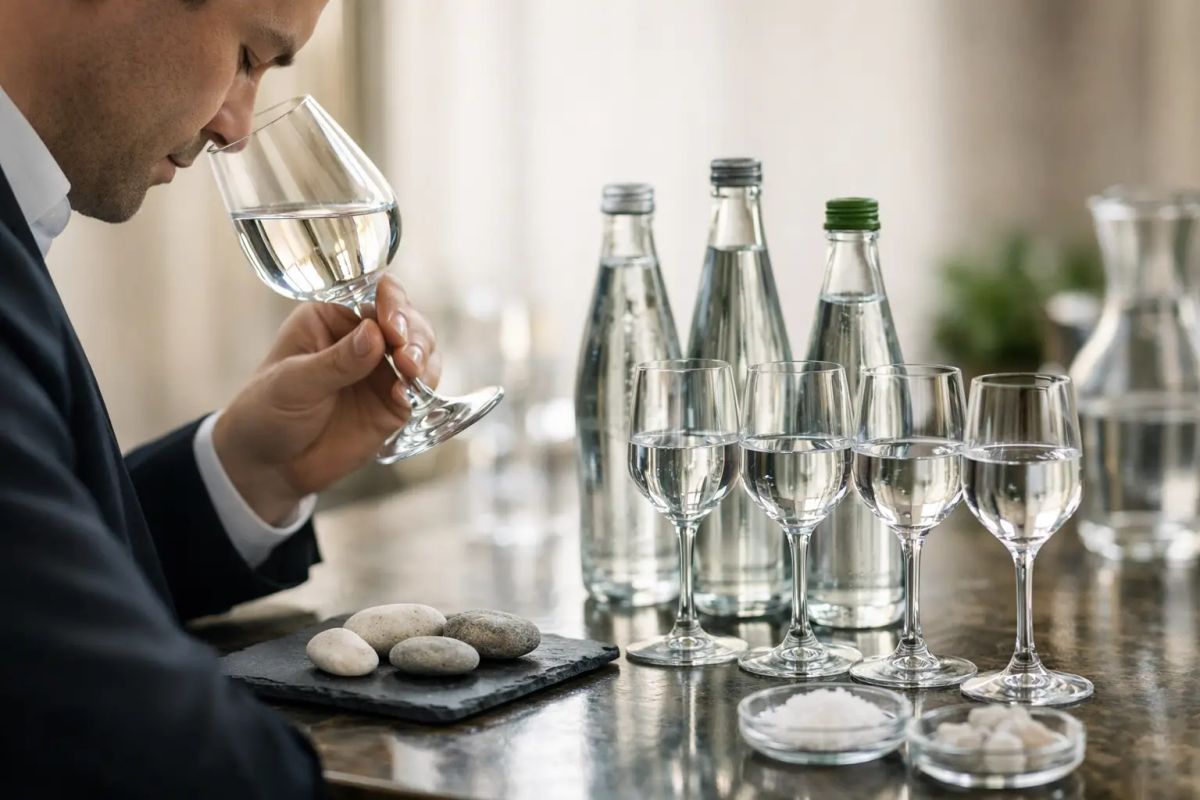
A bottle of mineral water can look perfectly still and taste anything but plain. One may arrive crisp and featherlight; another feels rounded, almost silky, with a gentle saline finish. The difference is not imagination. It is source, geology, dissolved minerals, carbonation, temperature, and the attention you bring to the glass.
Learning how to taste mineral water changes the experience from a quick sip into a small act of discernment. You do not need a cellar, specialized training, or dramatic vocabulary. You need a clean glass, a neutral palate, and enough patience to notice what is already there.
Start With the Right Setting
Taste mineral water before coffee, wine, strongly flavored food, gum, or mint. These can flatten subtle aromas and make a low-mineral water seem less expressive than it is. A quiet moment helps, too. Water is delicate. Its character is often revealed in small contrasts rather than big, obvious flavors.
Use a clear, odor-free glass. A stemmed wine glass is excellent because it lets you observe the water and capture any aroma, but a clean tumbler works well. Avoid plastic cups when possible, as they can bring their own scent and can blur the impression of a finely balanced water.
Still mineral water is best tasted cool rather than ice-cold, roughly 50 to 55°F. At this range, texture and mineral character remain clear. Very cold water can feel refreshing, but it suppresses nuance. Sparkling mineral water can be served colder, around 42 to 48°F, to keep its carbonation precise and lively.
If you are comparing more than one water, pour each into identical glasses and taste from lowest to highest mineral intensity. Begin with still waters before sparkling waters. Give each bottle a number rather than looking at its label throughout the tasting. A blind comparison is one of the fastest ways to discover your own preferences.
Look Before You Sip
Water should generally appear clear and bright, though a naturally sparkling water may show a stream of fine bubbles rising steadily through the glass. Observe the bubble size and pace rather than treating carbonation as a simple yes-or-no feature.
Fine, persistent bubbles often create a creamy or polished sensation. Larger, more forceful bubbles can feel energetic and assertive. Neither is inherently better. The question is whether the carbonation suits the water's mineral structure. A delicate, low-mineral sparkling water may feel graceful and airy. A highly mineralized water may carry its fizz with more weight and grip.
With still water, visual cues are restrained, which is part of the point. The absence of spectacle asks you to pay attention to texture, temperature, and finish.
Smell for Subtle Clues
Bring the glass close and take a gentle inhale. Mineral water should not have a loud aroma, but some waters offer faint impressions: wet stone after rain, cool limestone, a trace of salinity, or a clean, neutral freshness. Sparkling water may release these cues more readily as bubbles lift them toward the surface.
Be careful with the word “clean.” It is useful, but vague. Try to identify what kind of clean impression you mean. Is it crisp and stony? Soft and nearly scentless? Brisk with a subtle ocean-air character? The goal is not to force a poetic description. It is to become more specific with each taste.
How to Taste Mineral Water in Three Sips
The first sip is orientation. Take a modest sip and let it move across your tongue before swallowing. Notice the initial feeling: light, sharp, soft, bright, dense, smooth, or saline. Do not rush to name minerals yet. Start with the physical shape of the water.
The second sip is for texture. Hold the water briefly in your mouth and pay attention to weight. Does it seem lean and quick, or does it have a rounder, more coating presence? Calcium and magnesium often contribute to a firmer, more structured palate. Bicarbonate can create a softer, velvety impression. Sodium may register as a subtle savory or saline note, particularly when present at a noticeable level.
The third sip is for the finish. After you swallow, what remains? Some waters disappear almost immediately, leaving a clean, short finish. Others linger with a chalky, mineral, slightly sweet, or gently salty echo. In sparkling water, consider whether the bubbles finish softly or with a sharp, drying lift.
A useful shorthand is to evaluate four dimensions: body, minerality, carbonation, and finish. Together, they give you a more complete picture than pH or a single mineral number ever could on its own.
Read the Label Without Letting It Decide for You
A mineral label offers context, not a verdict. Calcium, magnesium, sodium, bicarbonate, sulfate, and total dissolved solids, or TDS, can help explain why a water tastes as it does. They cannot tell you whether you will enjoy it.
TDS refers to the combined amount of dissolved minerals in water. In broad terms, lower-TDS waters often feel lighter and more neutral, while higher-TDS waters may show more weight, salinity, or mineral persistence. But the mineral mix matters as much as the total. Two waters with similar TDS can taste markedly different if one is rich in bicarbonate and the other carries more sulfate or sodium.
pH is another useful detail, but it should not be treated as a flavor score. It describes acidity or alkalinity, while your sensory experience is shaped by the water's full composition, temperature, and carbonation. Taste first. Then read the label and see whether the data gives language to what you noticed.
Water Sommelier can make that process more immediate. Point your phone camera at a bottle to identify the product and view educational details such as mineral composition, pH, TDS, and source origin. Use the information as a tasting companion, not a substitute for your palate.
Build Your Vocabulary Through Contrast
The easiest way to develop taste is not by memorizing definitions. It is by comparing waters side by side. Choose a light still water and a more mineral-forward still water. Then compare a softly sparkling water with one that has more vigorous carbonation. The contrasts will make texture and finish easier to recognize.
Keep notes, but keep them simple. Record the serving temperature, whether the water was still or sparkling, and three impressions: first sip, texture, and finish. You may find that words such as crisp, creamy, stony, saline, dry, round, delicate, and structured become more meaningful after only a few tastings.
Preference is personal. A water that feels beautifully restrained with oysters may seem too quiet beside a rich meal. A water with pronounced minerality can be compelling at the table but overpowering when you simply want a subtle, unobtrusive drink. There is no universal best bottle, only a better fit for the moment.
Try Thoughtful Food Pairings
Mineral water belongs at the table because it can complement food without competing for attention. Delicate still waters suit mild seafood, fresh fruit, and lighter dishes where you want the food to remain center stage. Waters with more mineral structure can stand beside roasted vegetables, aged cheese, cured meats, or dishes with a savory depth.
Sparkling water brings another dimension. Fine, gentle bubbles can feel elegant with raw bar selections or light appetizers. More assertive carbonation can hold its own with richer, saltier preparations. As with wine, the most useful pairing question is not “What is best?” but “What does this water emphasize in the dish?”
Avoid treating pairing as a rigid rulebook. A water's source and mineral profile can create surprising combinations, and your own taste should have the final say.
Taste the Place Inside the Bottle
Every natural mineral water begins with a landscape. Rain or snow travels through rock and soil, collecting minerals over time before reaching a protected source. That journey is why one water can suggest limestone, another volcanic stone, and another a gentle saline edge.
The next time you open a bottle, give it three deliberate sips before moving on. Notice its entry, its texture, and the memory it leaves behind. There is a world inside every bottle, and tasting is how you meet it.
Scan any bottle. Discover its minerals, origin, and character. Get the Water Sommelier app