
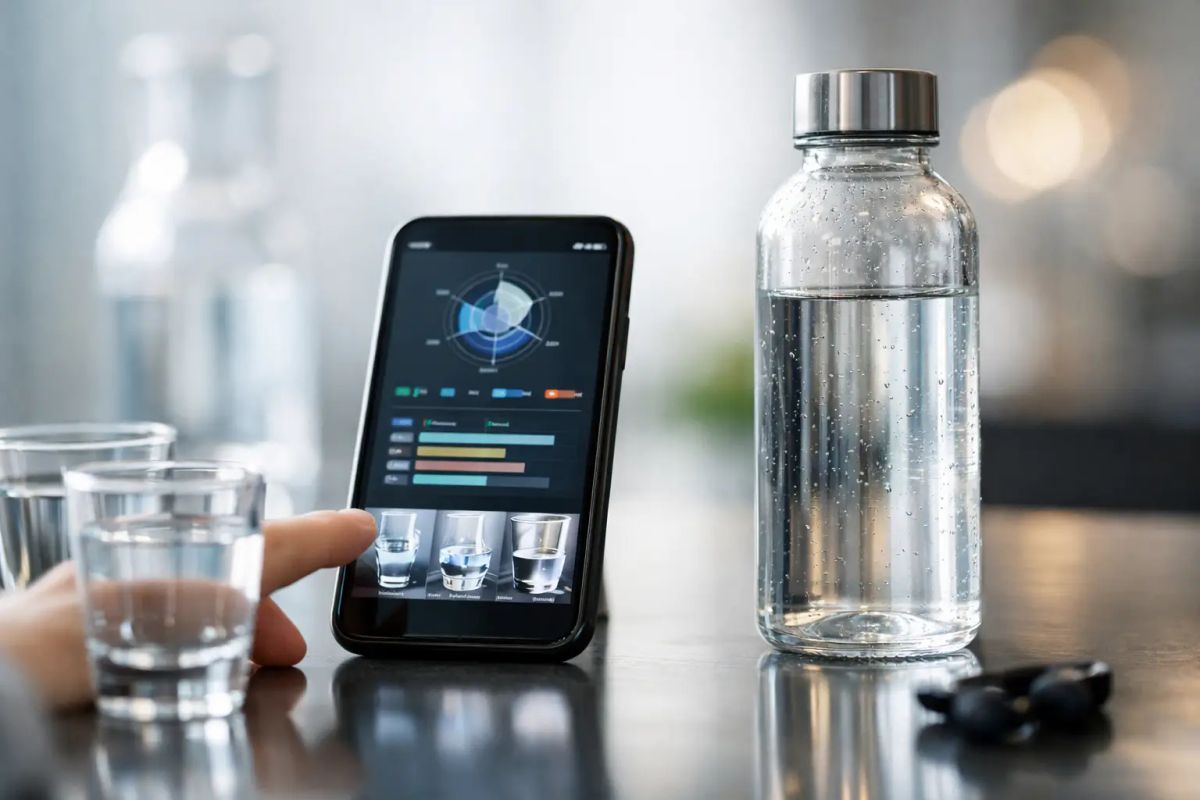
A bottle of water can look deceptively simple: a name, a mountain image, perhaps a few numbers in small type. Yet there is a world inside every bottle. A water tasting app gives those details a readable context, turning a quick glance at the shelf or table into a more informed encounter with source, mineral composition, and style.
For people who choose coffee by origin or wine by region, water deserves the same attention. It is not about declaring one bottle universally better than another. It is about recognizing that waters differ - sometimes quietly, sometimes dramatically - because their journeys through rock, soil, and source are different.
Why bottled water has a taste story
Water is often described as neutral. Pure H2O is close to that ideal, but most naturally sourced bottled waters carry dissolved minerals acquired along their route from source to bottle. Calcium, magnesium, sodium, potassium, bicarbonate, sulfate, chloride, and silica can all contribute to a water’s profile.
That profile may register as soft and delicate, crisp and mineral-forward, gently saline, or rounded and textured. These are sensory descriptions, not quality rankings. A low-mineral water can feel clean and light; a higher-mineral water can feel more structured and persistent. Preference depends on the moment, the food, and the person tasting.
The label may offer clues, but labels are not always designed for comparison. Numbers can be tiny, terminology varies, and the source story is often reduced to a line or two. A tasting-oriented app organizes the information so the bottle becomes easier to understand on its own terms.
What a water tasting app helps you read
The most useful water information is not a single score. It is a collection of facts that explain character. When you point a phone camera at a bottle in Water Sommelier, the app helps identify the product and presents educational information about its origin and composition. Point. Shoot. Know.
Mineral composition
Mineral figures are commonly shown in milligrams per liter. They are a snapshot of what is dissolved in the water, and they offer a practical vocabulary for comparing bottles.
Calcium and magnesium are often among the first numbers people notice because they can shape the sense of body and texture. Sodium may influence a water’s savory or saline edge, particularly when present at a more noticeable level. Bicarbonate is associated with alkalinity and can lend a rounded, sometimes almost silky impression. Sulfate and chloride can add their own subtle structure.
No single mineral tells the whole story. A water with modest calcium can still feel distinctive because of bicarbonate, sodium, or its overall dissolved-mineral level. Reading the profile as a composition, rather than chasing one number, is the more revealing habit.
TDS: the measure of dissolved character
TDS stands for total dissolved solids. In practical terms, it reflects the combined concentration of dissolved minerals and other naturally occurring solids in a water. It is often expressed in milligrams per liter.
TDS can be a useful first signal of style. Lower-TDS waters often present with a lighter, more restrained palate. Higher-TDS waters may feel more pronounced, mineral, or textural. But TDS is not a flavor map by itself: two waters with similar totals can taste notably different because the minerals within those totals are not the same.
Think of TDS as the volume setting, not the playlist. It suggests intensity; the individual mineral composition helps explain the character.
pH: useful context, not a verdict
pH describes how acidic or alkaline a water is on a scale. It is frequently printed on bottles and frequently misunderstood. The number can be interesting context, especially beside bicarbonate and mineral data, but it does not tell you everything about taste, origin, or composition.
A higher pH is not a shorthand for superior water, and a lower pH is not an automatic sign of inferior water. Natural source waters vary. Processing, carbonation, and bottling can also affect what is shown. Read pH as one element of the profile, not as the headline.
Origin and source type
A water’s origin brings its data to life. Is it drawn from a spring, an artesian source, a protected aquifer, or a mineral source? Geography is more than marketing language when it is tied to a specific source. The geology surrounding that source influences the minerals the water encounters before it reaches the bottle.
This is where water becomes cultural as well as technical. A volcanic landscape, limestone aquifer, or deep underground source can suggest different mineral pathways. The point is not to make assumptions from a romantic label. It is to connect documented origin with the composition in the glass.
How to taste water with more attention
A formal ceremony is unnecessary. What matters is consistency. If you are comparing two bottles, serve them at a similar cool temperature and use clean, odor-free glassware. Very cold water can mute nuance, so a few moments out of the refrigerator may make the profile easier to notice.
Start by smelling, even if the aroma seems faint. Then take a small sip and let it move across the palate before swallowing. Notice the opening impression, the texture through the middle, and the finish. Does it disappear quickly? Does it leave a mineral echo? Does it seem crisp, creamy, dry, saline, or softly rounded?
Avoid trying to force a perfect word on the first sip. Sensory language gets clearer through contrast. Taste a light, low-TDS water next to a more mineral-forward bottle, and the differences become easier to identify. The goal is curiosity, not performance.
From shelf decision to table conversation
A water tasting app is particularly useful at the moments when comparison matters. In a specialty market, it can help you look past label design and see how two unfamiliar bottles differ. At a restaurant, it gives beverage professionals and diners a shared language for discussing what is being poured. At home, it can turn a routine purchase into a small act of discernment.
Food pairing can be approached with the same humility. Delicate dishes may sit comfortably beside a light, subtle water, while richer or salt-forward foods can stand up to a more assertive mineral profile. There are no fixed rules. A water that works beautifully with oysters may not be the one you want beside a simple piece of fruit. Taste, context, and personal preference remain central.
For writers, sommeliers, and hosts, this vocabulary also makes water easier to describe without resorting to vague claims. Instead of calling a bottle “good,” you can say it is low in dissolved minerals, spring-sourced, softly textured, or defined by a brisk mineral finish. Those observations invite a better conversation.
The difference between data and discernment
Numbers are valuable because they make comparison more transparent. They do not replace your palate. A label or app record can explain why a water may feel a certain way, but the experience still happens at the table.
There is also a practical limit to any bottle profile. Mineral values can be listed differently across brands, and natural-source waters may show variation over time. Treat the information as an informed guide rather than an absolute tasting script. The most rewarding approach combines the measured details with what you actually notice.
Water Sommelier is free to download for iPhone and Android, offering a simple way to bring that guide into the aisle, the dining room, or the kitchen. Its value is not in making water complicated. It is in making the existing complexity visible.
The next time you open a bottle, pause before the first sip. Read the source. Look at the minerals. Let the texture register. A more considered glass begins with a simple question: what, exactly, am I tasting?
Scan any bottle. Discover its minerals, origin, and character. Get the Water Sommelier app