
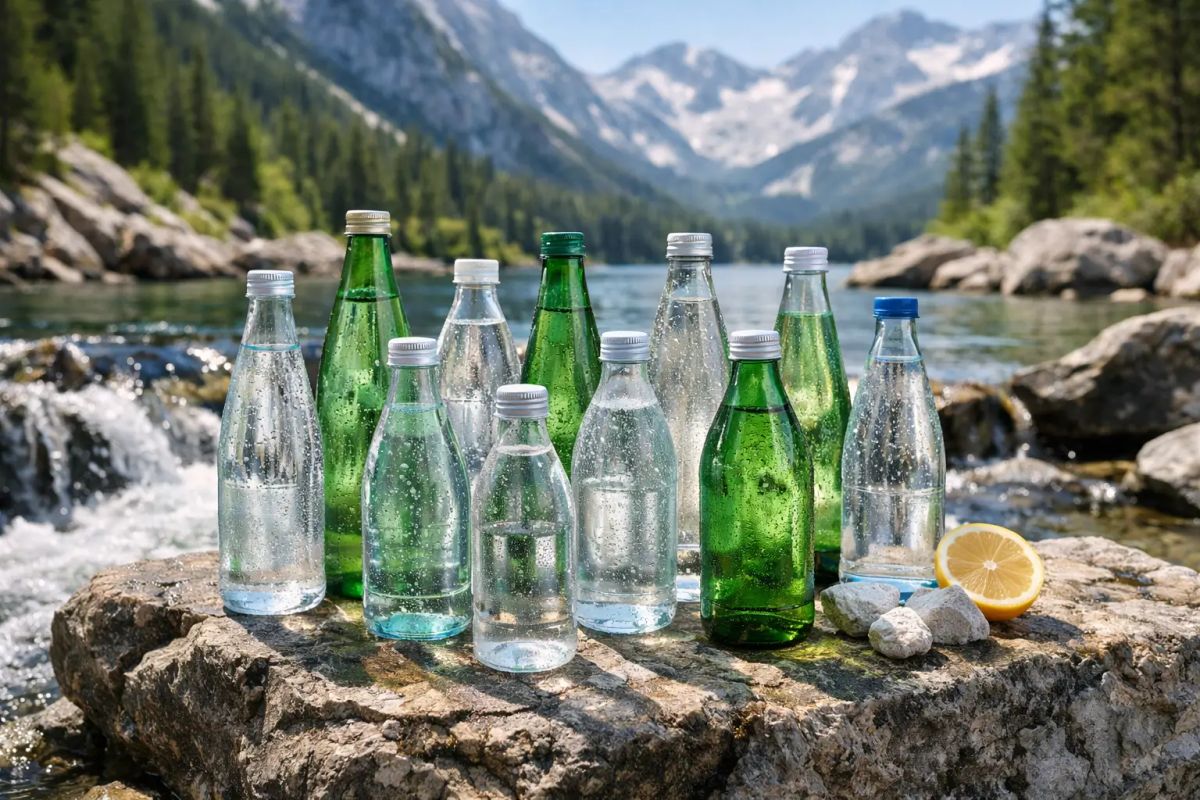
Some waters arrive quietly. Others announce themselves from the first sip - saline, chalky, creamy, flinty, almost architectural in the mouth. That is the appeal of high mineral water brands. They do not taste neutral, and they are not meant to. Their value lies in composition: the dissolved minerals that shape texture, finish, and the overall drinking experience.
For anyone who reads labels closely, shops with intention, or thinks about pairing water the way a sommelier thinks about wine, “high mineral” is more than a marketing phrase. It usually points to a water with elevated total dissolved solids, often supported by notable levels of calcium, magnesium, bicarbonate, sodium, or sulfate. But the category is broader than it first appears. A high-mineral water can feel silky and rounded, or brisk and savory. It depends on the balance.
What makes high mineral water brands different
The simplest marker is TDS, or total dissolved solids. In bottled water, that number gives you a shorthand sense of concentration. Higher TDS often means a more assertive profile, but it does not tell the whole story. Two waters can sit in a similar range and taste completely different because their mineral makeup is different.
Calcium often brings a firm, chalk-like structure. Magnesium can add bitterness in higher amounts, but in balance it contributes precision and lift. Bicarbonate tends to soften acidity and create a smooth, buffered impression. Sodium can make a water feel savory, almost gastronomic, while sulfate may sharpen the finish. This is why high mineral water brands attract such loyal followings. People are not just choosing a bottle. They are choosing a mineral signature.
That distinction matters if your goal is taste, pairing, or routine. A high-calcium still water may feel ideal with a rich meal. A sodium-bicarbonate sparkling water may cut through fat beautifully. Another bottle with very high mineralization may be fascinating in small pours, but too intense as an all-day companion. Good selection starts with knowing what kind of intensity you actually enjoy.
High mineral water brands to know
There is no single threshold that every retailer or consumer uses for “high mineral,” but the following brands are widely recognized for having distinctly elevated mineral content or a noticeably mineral-forward taste profile.
Gerolsteiner
A benchmark in the category. Gerolsteiner is often one of the first names that comes up when people begin exploring mineral composition because it combines substantial calcium, magnesium, and bicarbonate with a profile that remains remarkably drinkable. It is sparkling, vivid, and structured without feeling punishingly heavy. For many palates, it is the easiest entry into high-mineral water.
San Pellegrino
San Pellegrino is familiar, but its familiarity can obscure what makes it interesting. This is not an aggressively mineral water, yet it clearly sits in the mineral conversation thanks to its balanced dissolved solids and savory elegance. It has enough structure to stand beside food, especially richer dishes, without dominating the table.
Acqua Panna
Acqua Panna is usually discussed as a smooth still water rather than a high-mineral statement bottle, yet it earns a place in the broader conversation because it shows the other side of mineral presence. Its profile is calmer, softer, and less forceful. It is useful as a reminder that mineral character is not only about power. Sometimes refinement comes through restraint.
Borjomi
Borjomi is unmistakable. With a volcanic origin and a strong sodium-bicarbonate profile, it has a bold, almost medicinal savoriness in sensory terms - not as a health claim, but as a flavor description. This is a water for people who want to taste the geology immediately. It is polarizing in the best way. Some call it intense. Others call it addictive.
Vichy Catalan
Vichy Catalan is another classic for those who appreciate salinity and presence. It is sparkling, highly distinctive, and often favored at the table because it behaves almost like a pairing ingredient. With food, especially dishes with fat, salt, or char, it can feel sharply purposeful.
S.Pellegrino Essenza-style expectations? Not quite
This is where category confusion often appears. Flavor-added sparkling waters may feel bright or premium, but they are not the same as naturally high mineral waters. The category we are discussing is defined by source composition, not branding cues or carbonation alone. For serious buyers, the label panel matters more than the bottle silhouette.
Donat Mg
Known for its exceptionally high magnesium content, Donat Mg sits at the more specialized end of the spectrum. This is not a casual “grab any bottle” water for most drinkers. It is intensely mineral and highly specific in taste. If you are curious about how one dominant mineral can shape the entire sensory experience, it is a compelling example.
Contrex
Contrex is often recognized for its high calcium content and firm, clean structure. It can feel crisp and chalk-toned rather than lush. For some, that directness is the appeal. It tastes disciplined.
Hépar
Hépar is another French name frequently mentioned in mineral-focused discussions. It has a pronounced composition and a stronger mouthfeel than many mainstream still waters. It is a good example of how still water can still be highly expressive.
Rogaska Donat and similar heritage mineral waters
Some heritage European mineral waters are less common in everyday US retail but highly respected among enthusiasts. They often come from historic spa regions and carry very high mineral loads that reflect a particular geological identity. These are waters to approach with curiosity and context. They are often best appreciated when you know the numbers behind the taste.
Saratoga Spring Water
In the US market, Saratoga is better known for presentation and dining-room presence, but it also appeals to drinkers who want a clearly defined mineral profile rather than anonymous neutrality. It is not among the most extreme examples, yet it belongs in the conversation because premium water culture is not only about extremes. It is also about consistency, source identity, and the experience of the bottle.
ROI and other niche imported labels
For collectors and hospitality professionals, niche imported waters can be the most exciting part of the category. Some have high sodium and dramatic salinity. Others are calcium-led and almost creamy. Availability shifts by market, which is why reading composition matters more than chasing a single brand name.
How to choose among high mineral water brands
Start with the label, but read it like a taster, not just a shopper. TDS gives you a first clue about overall intensity. Then look at calcium, magnesium, sodium, and bicarbonate. If sodium is high, expect more savoriness. If calcium and magnesium are prominent, expect more structure and grip. If bicarbonate is elevated, the water may feel smoother and more buffered, especially alongside food.
Carbonation changes the experience too. Sparkling high-mineral waters often feel sharper and more expressive because bubbles amplify perception. Still high-mineral waters can seem broader, quieter, and more textural. Neither is better. It depends on whether you want lift or depth.
Context matters. At lunch, a clean but mineral-forward sparkling water may feel ideal. With a tasting menu, a more complex bottle can become part of the pairing. At your desk, a very intense water may be fascinating for a few glasses but not something you reach for all day. This is where preference becomes practical.
Why taste can matter as much as the numbers
People often search for the “best” high mineral water brands as if there were a universal ranking. There is not. A water with extreme mineral content may be impressive on paper and exhausting in the glass. Another with a more moderate composition may feel beautifully complete.
Think of mineral water the way you would think of olive oil or coffee. Composition tells you what is there. Taste tells you whether it belongs in your routine. The ideal bottle is not necessarily the one with the biggest numbers. It is the one whose balance suits the moment.
For that reason, comparison is more useful than absolute judgment. Taste two or three side by side. Notice texture first, then salinity, then finish. Ask whether the water clears the palate, coats it, or leaves a mineral echo. Those details are where preference becomes knowledge.
If you want to get more precise, using a tool like Water Sommelier can turn the label into something far more readable. Point your phone at a bottle, and the mineral profile becomes immediately understandable - not just as data, but as taste, compatibility, and character.
A more intelligent way to shop high mineral water brands
The smartest buyers do not memorize brand reputations alone. They learn patterns. They begin to notice that they like high bicarbonate sparkling waters with dinner, or calcium-rich still waters with a firm, clean finish. Once that happens, the category opens up. You are no longer choosing by habit or packaging. You are choosing by profile.
There is a world inside every bottle, but not every bottle will be your world. The pleasure is in finding the mineral signature that feels unmistakably yours.
Scan any bottle. Discover its minerals, origin, and character. Get the Water Sommelier app