
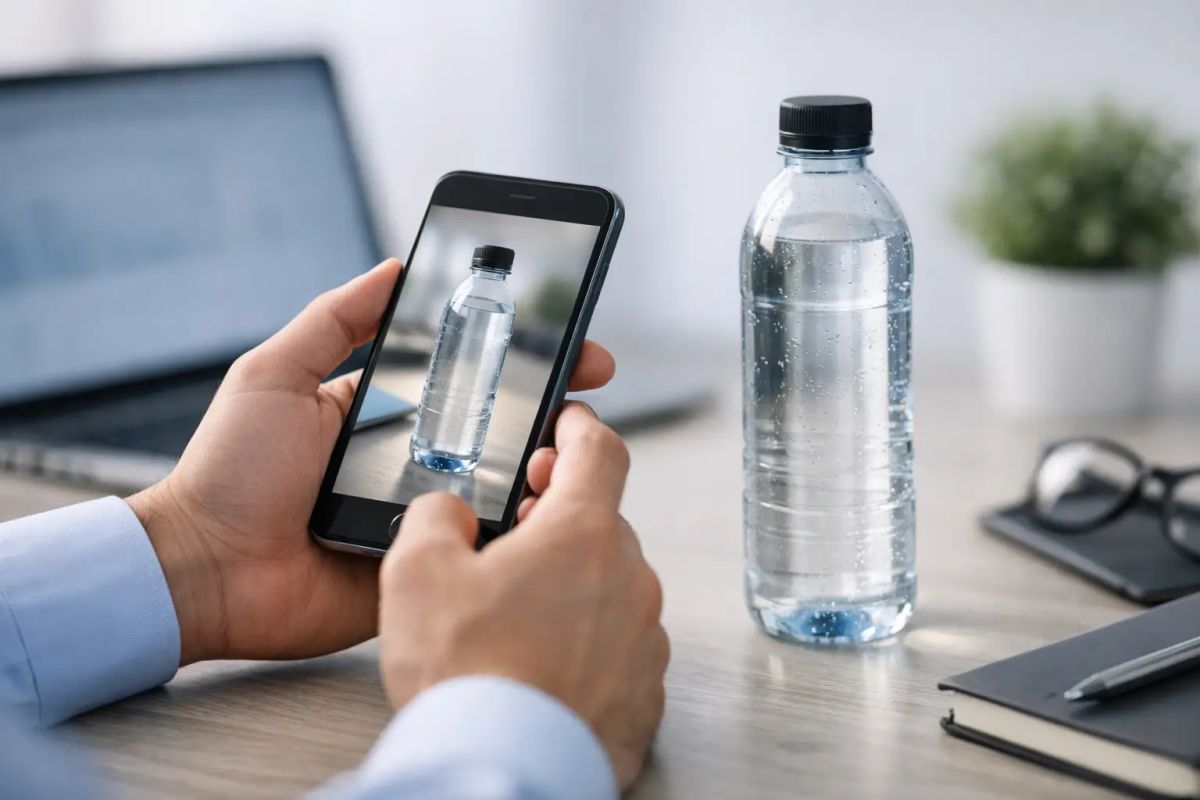
You are standing in front of a wall of bottled water that all claims to be pure, premium, or sourced from somewhere pristine. The label looks elegant. The bottle feels expensive. But if you use a scan water bottle app, the real question is not what the branding says. It is what the water actually contains.
That is where the category becomes interesting. A good water app should not stop at recognizing a bottle. It should translate the contents into something useful, whether you care about mineral intake, sensory profile, source character, or how a given water might suit a meal, a workout routine, or your personal taste.
Why a scan water bottle app matters
There is a world inside every bottle. Some waters are soft and quiet, with low minerality and a clean, fleeting finish. Others are structured and assertive, carrying notable levels of calcium, magnesium, sodium, and bicarbonate that shape both mouthfeel and taste.
Most people were never taught to read bottled water beyond a marketing phrase or a pH number on the front. That leaves a gap between what is printed on the label and what a thoughtful drinker actually wants to know. A scan water bottle app can close that gap in seconds, as long as it is built to interpret water rather than simply catalog packaging.
For health-conscious consumers, that means seeing the mineral composition in a way that is easy to compare. For athletes, it may mean understanding which waters are lighter and which have a more substantial mineral presence. For chefs, sommeliers, and food writers, it means treating water with the same respect given to wine, tea, or coffee. For premium lifestyle users, it means making a more informed choice without turning a simple purchase into homework.
What a scan water bottle app should actually tell you
Bottle recognition is the starting line, not the finish. Once an app identifies the water, the next layer of information matters far more.
Mineral composition
This is the heart of the experience. If the app cannot show calcium, magnesium, sodium, and bicarbonate levels clearly, it is missing the point. These values shape how water feels on the palate and how it fits into different preferences.
Calcium can contribute structure. Magnesium often adds a slight bitterness or tension that some drinkers love and others notice immediately. Sodium affects roundness and can make a water feel softer or more integrated. Bicarbonate influences balance and can create a more substantial impression. None of this is abstract once you start tasting with intention.
The best apps present mineral data in a way that is both exact and readable. Precision matters, but so does interpretation. Raw numbers alone are useful only to a small group of experts.
pH and TDS
These are two of the most searched water metrics, and both deserve context. pH is often overemphasized in marketing, yet it is only one part of the profile. TDS, or total dissolved solids, gives a sense of how mineral-rich a water may be overall, but it does not tell you which minerals are present.
That trade-off matters. A high TDS water can be bold and complex, but not every drinker wants that intensity all day. A low TDS water can feel elegant and refreshing, though some people may find it too neutral for certain meals or occasions. The value of the app is not just displaying the number. It is helping you understand what that number means in the glass.
Source origin
Origin shapes perception for good reason. The geology behind a source often explains the mineral profile and, by extension, the sensory experience. A water from one region may be naturally soft and delicate. Another may carry a distinctly mineral, almost savory signature.
A well-designed app should make origin feel relevant rather than decorative. Not every user needs a geology lesson, but many want to know whether a water comes from a spring, an artesian source, or another protected origin, and how that source influences taste.
Taste profile
This is where information becomes memorable. Numbers explain composition, but tasting language helps people connect the data to experience. Is the water crisp, creamy, saline, dry, silky, lively, or dense? Does it finish clean or linger with mineral grip?
A strong app turns analysis into sensory understanding. That is the difference between reading a label and developing taste.
The best use case is not just shopping
It is easy to assume a scan water bottle app is mainly for standing in an aisle and deciding what to buy. That is certainly one use. But it is not the most exciting one.
The richer use case is building a personal reference point over time. Once you begin scanning bottles regularly, patterns emerge. You may notice that you prefer waters with moderate calcium and lower sodium. You may realize that highly mineralized waters are better with food, while softer waters suit long workdays or travel. You may find that the bottle you thought was your favorite is one you admire more for branding than for taste.
That kind of pattern recognition is where an app becomes a guide. It moves from novelty to habit.
Who benefits most from this kind of app
The appeal is broader than it first appears. A nutrition-minded user may want a cleaner read on what is in the bottle without decoding fine print. A biohacker may want consistent data to support a more intentional routine. An athlete may care about choosing among waters with different mineral personalities depending on context. A restaurant professional may want to pair water with seafood, cheese, or tasting menus with more precision.
Then there is a group that is growing quickly in cities like New York, Los Angeles, Miami, and Austin - people who treat everyday consumption with the same curiosity they bring to coffee beans, olive oil, fragrance, or wine. For them, water is not a blank utility. It is part of a larger taste culture.
What separates a useful app from a gimmick
A beautiful interface helps, but depth matters more. If the app simply scans a label and returns a product name, it has limited value after the first few uses. The better standard is interpretation, personalization, and trust.
That means a credible global database, consistent mineral reporting, and profiles that help users compare waters side by side. It also means features that support long-term engagement, such as tasting notes, saved favorites, curated collections, and recommendations based on what you actually enjoy.
One example is Water Sommelier, which approaches bottled water with the precision usually reserved for fine beverages. Point your camera at a bottle and the app reveals mineral composition, pH, TDS, source origin, compatibility insights, food pairings, and a personal tasting profile. That framing matters because it treats water as something to understand, not merely consume.
Why interpretation matters more than raw data
Data without language can feel cold. Language without data can feel vague. The best scan experiences combine both.
If an app tells you that one bottle contains more magnesium and bicarbonate than another, that is useful. If it also explains that this may create a firmer, more mineral-forward taste with greater presence on the palate, that is actionable. Suddenly the numbers are attached to preference.
This is especially important for users who are new to water tasting. You should not need formal training to understand what is in your bottle. A well-made app meets beginners with clarity and still gives experts enough detail to care.
A note on expectations
Not every bottle needs deep analysis for every person. Sometimes you just want a quick answer while shopping. Sometimes you want to compare three waters before a dinner party. Sometimes you are building a tasting journal because you have become unexpectedly fascinated by minerality and source character.
A good app should work across all three situations. Fast when you want speed. Rich when you want depth. That balance is harder to build than it sounds, and it is often what separates a polished product from one you forget after a week.
The broader shift is cultural. People are asking better questions about what they eat and drink. Water belongs in that conversation. Not because it needs hype, but because it deserves clarity.
Point. Shoot. Know. Then taste again, this time with a little more context and a lot more pleasure.
Scan any bottle. Discover its minerals, origin, and character. Get the Water Sommelier app